
18 is the legal baseline in Illinois, and that's the age when a person can sign a binding purchase contract and mortgage documents. Lenders still set their own minimums, and anyone under 18 almost always needs an adult co-signer, while buyers under 21 often need stronger income and credit documentation.
If you're a parent in Melrose Park watching your 19-year-old scroll condo listings, or you're the 18-year-old who's convinced graduation money should go straight into a place of your own, the question isn't just whether you can buy. It's whether you can buy, finance, and close without getting stuck halfway through the process.
Table of Contents
- The Short Answer for Illinois Buyers
- What Legal Age Actually Means in Real Estate
- Why Being Allowed to Buy Is Not the Same as Getting the Loan
- How Co-Signers and Adult Partners Make It Work
- The Case for Waiting a Few Years
- Real Paths Young Buyers Actually Take
- Your Next Move as a Young Buyer or Parent
The Short Answer for Illinois Buyers
A parent with a teenager in the car, a stack of screenshots from Zillow, and a serious look on their face is usually asking the same thing. Can my kid buy a house now, or is this just internet fantasy?
In Illinois, the short answer is simple, 18 is the legal age of majority for home purchase contracts and title ownership. That means an 18-year-old can sign a purchase agreement, sign mortgage papers, and hold title in their own name, because they can legally enter a binding contract (OpenDoor). That's the baseline in the state, and it's the baseline most buyers run into in the world.
The catch is just as important. If someone is under 18, they generally can't independently buy a house because they can't sign an enforceable real estate contract. No amount of graduation cash changes that. If a minor ends up on title through inheritance, trust, or guardianship, that still doesn't give them full authority to borrow and close on their own (Legal Knowledge Base).
The real-world gatekeeping
A young buyer has to clear three gates, not one. First is legal capacity, which starts at 18 in Illinois. Second is mortgage approval, which is where income, credit, and debt get tested. Third is the lender's own minimums, and those often act like a second age check even when the law says yes.
Practical rule: If the buyer can't sign a binding contract alone, the deal isn't theirs yet. If the buyer can sign but can't prove they can repay, the lender still gets the final say.
That's why I tell young buyers and their parents to stop asking only, “What age can you buy a house?” and start asking, “What age can you buy and finance a house without creating a mess?” In Chicagoland, those are not the same question.
What Legal Age Actually Means in Real Estate
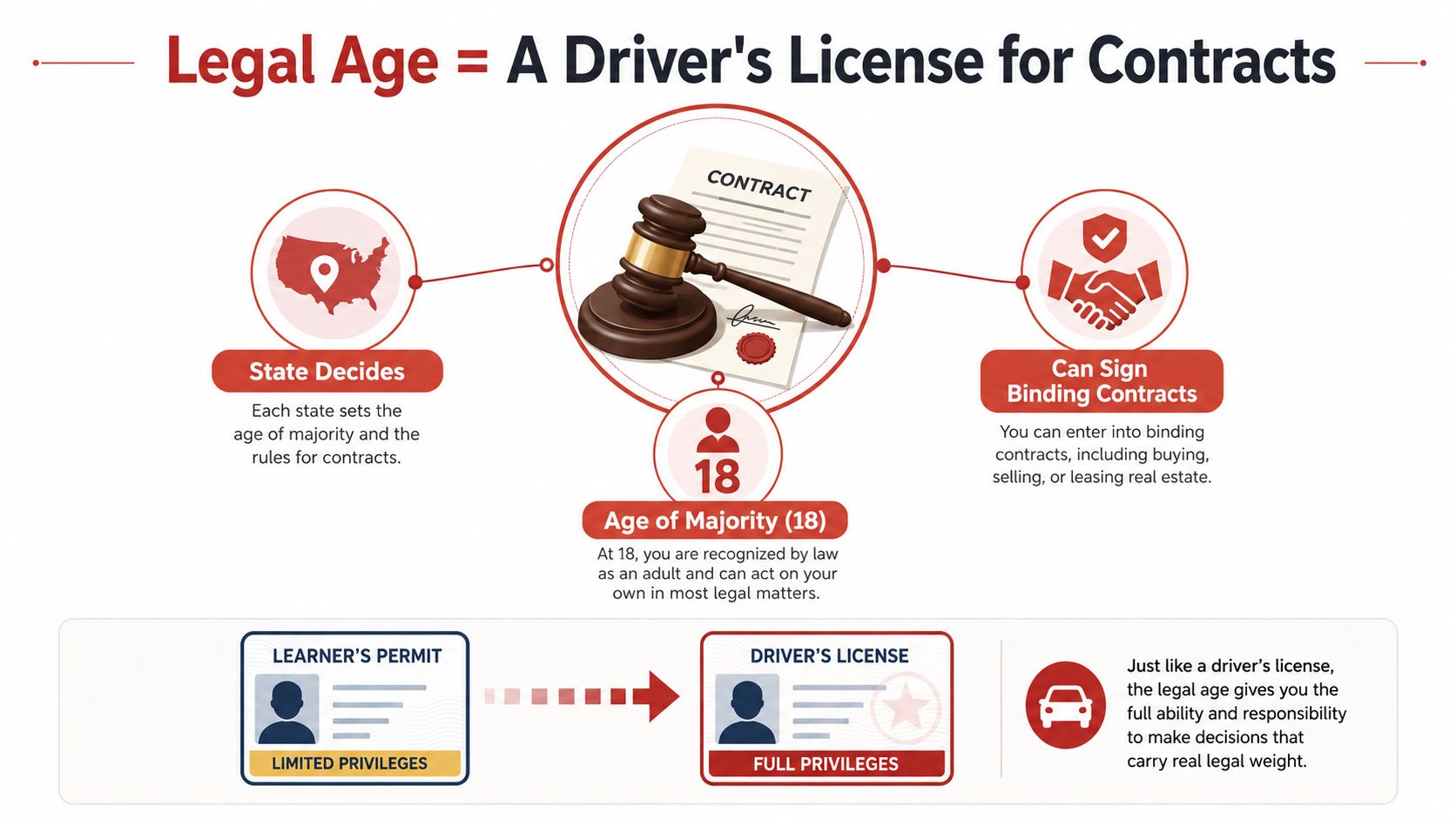
Legal age in real estate works a lot like a driver's license. The state decides when you're allowed to operate on your own, and until you reach that line, someone else has to hold the wheel.
At 18 in Illinois, a person has full contractual capacity for a normal home purchase. That means they can sign a purchase agreement, execute deed paperwork, and sign mortgage documents in their own name (OpenDoor). Once that happens, the law treats them like any other adult buyer. The mortgage company doesn't care whether they just graduated or have been working since freshman year, it cares whether the borrower can legally and financially stand behind the debt.
Minors and voidable contracts
A minor usually can't lock themselves into an enforceable real estate deal. If a minor signs a contract, the agreement is typically voidable, which means the minor can later challenge or avoid it. That's not a clean way to buy property, and no seller wants that risk hanging over a closing.
A parent or guardian can still buy property for a child through a trust, custodial arrangement, or another ownership structure, but that's different from letting the child personally sign and borrow. The adult is doing the legal heavy lifting until the child reaches majority, and the lender still wants a legally competent borrower for the debt side of the file (Legal Knowledge Base).
Why the title side and the debt side are different
Here's the clean way to think about it. Title is ownership, and mortgage debt is the loan. You can have one without the other in some family setups, but if you're buying the usual way, you need both to line up.
Ownership without financing is easy to misunderstand. A child can be listed in a trust. That does not mean a lender will hand that child a mortgage.
Parents sometimes assume that if a child can receive property, they can also close on a house. Not true. The deed and the note are separate documents, and the lender cares about the note. That's where age, income, and capacity all collide.
Why Being Allowed to Buy Is Not the Same as Getting the Loan
An 18-year-old can be legally ready to sign. That doesn't mean a lender will be ready to approve them.
Mortgage approval is a different test. Lenders want a borrower who can show verifiable income, stable work history, credit that supports the payment, and enough cushion to survive the first year of ownership. A cash buyer has fewer hurdles, but most young buyers are financing, and financing is where the scrutiny starts.
What underwriters actually look for
The underwriter isn't impressed by enthusiasm. They want documentation. For a young buyer, that usually means paystubs, W-2s, tax returns if needed, bank statements, and a credit file that shows the borrower has handled debt without chaos. If the buyer is under 21, many lenders ask for extra proof because thin credit files and short employment histories make the file harder to justify.
The legal age to sign and the lender's comfort level are not the same thing. A borrower can be old enough to buy and still be too thin on income or credit to qualify on their own.
Lenders don't fund potential. They fund repayment ability.
Legal capacity vs. mortgage approval at a glance
| Requirement | Legal Capacity (Title) | Mortgage Approval |
|---|---|---|
| Age to sign | 18 in Illinois | Usually 18 or older on the note |
| Can enter contract | Yes, at majority | Only if credit and income qualify |
| Can hold title | Yes | Yes, if the loan closes |
| Needs credit history | No | Yes |
| Needs verifiable income | No | Yes |
| Needs adult help if under 18 | Yes | Yes, and usually non-negotiable |
The biggest mistake young buyers make is assuming the law is the hard part. It isn't. The hard part is convincing a lender that a short work history, limited reserves, and a brand-new credit profile can support a mortgage payment for the long haul.
How Co-Signers and Adult Partners Make It Work
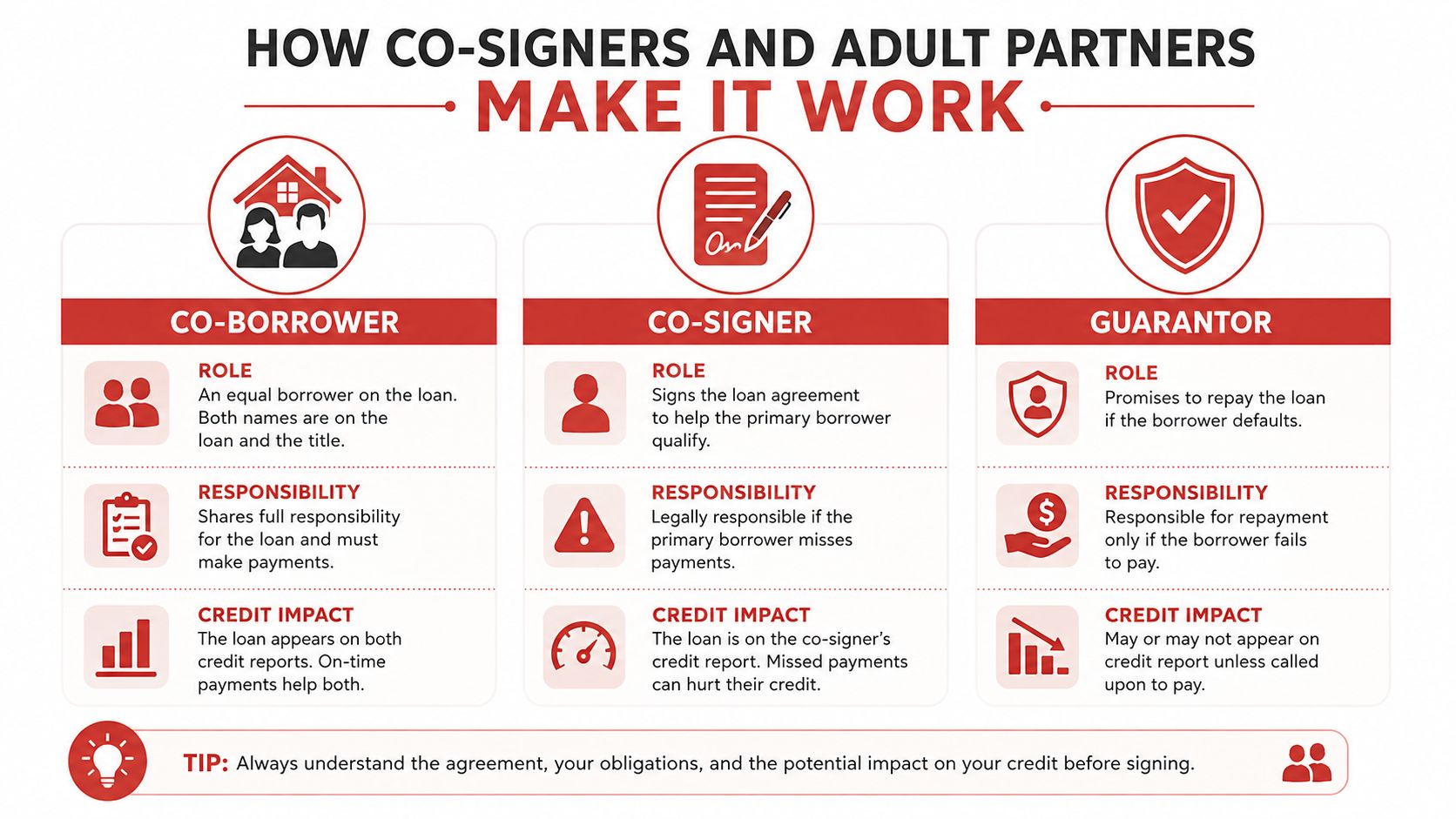
A parent, aunt, uncle, or trusted adult can make a young buyer's file bankable, but only if everyone understands the role they're taking on. The adult isn't doing a favor on paper and walking away. They're tying their own credit and legal liability to the loan.
The three roles get mixed up all the time, so keep them straight. A co-borrower is on the loan and usually on title. A co-signer is on the debt and promises repayment if the primary borrower doesn't perform. A guarantor backstops the obligation, and the exact mechanics depend on the loan structure. In every case, the adult's credit, income, and debt load can help the file qualify, but they also become part of the risk.
What the lender wants from the adult
The adult side of the file has to be clean. That means solid income, stable W-2 work or clearly documented self-employment, decent credit, and a debt-to-income picture that still works when their own obligations are counted. If the adult is already stretched, adding a young buyer's loan can sink the deal instead of saving it.
A Melrose Park condo example makes this real. An 18-year-old recent grad wants to buy a small place with gift money and a starter job. Alone, the file gets rejected. Add a parent with strong income and credit, and the loan may become workable because the lender now sees a stronger repayment picture. That's the difference between a dead file and a closing.
If a parent co-signs, the parent is not “just helping.” The parent is on the hook if the payment stops.
The trade-off is simple and serious. The buyer gets a shot at ownership sooner. The adult takes on legal exposure, and their credit gets tied to the mortgage for as long as the loan remains active. That's why I always tell families to treat co-signing like a real financial decision, not a family gesture.
The Case for Waiting a Few Years
I'm not against young ownership. I'm against shaky ownership. In the Chicago suburbs, especially in places like Melrose Park, Berwyn, and the surrounding western corridor, a little patience usually buys you a lot of breathing room.
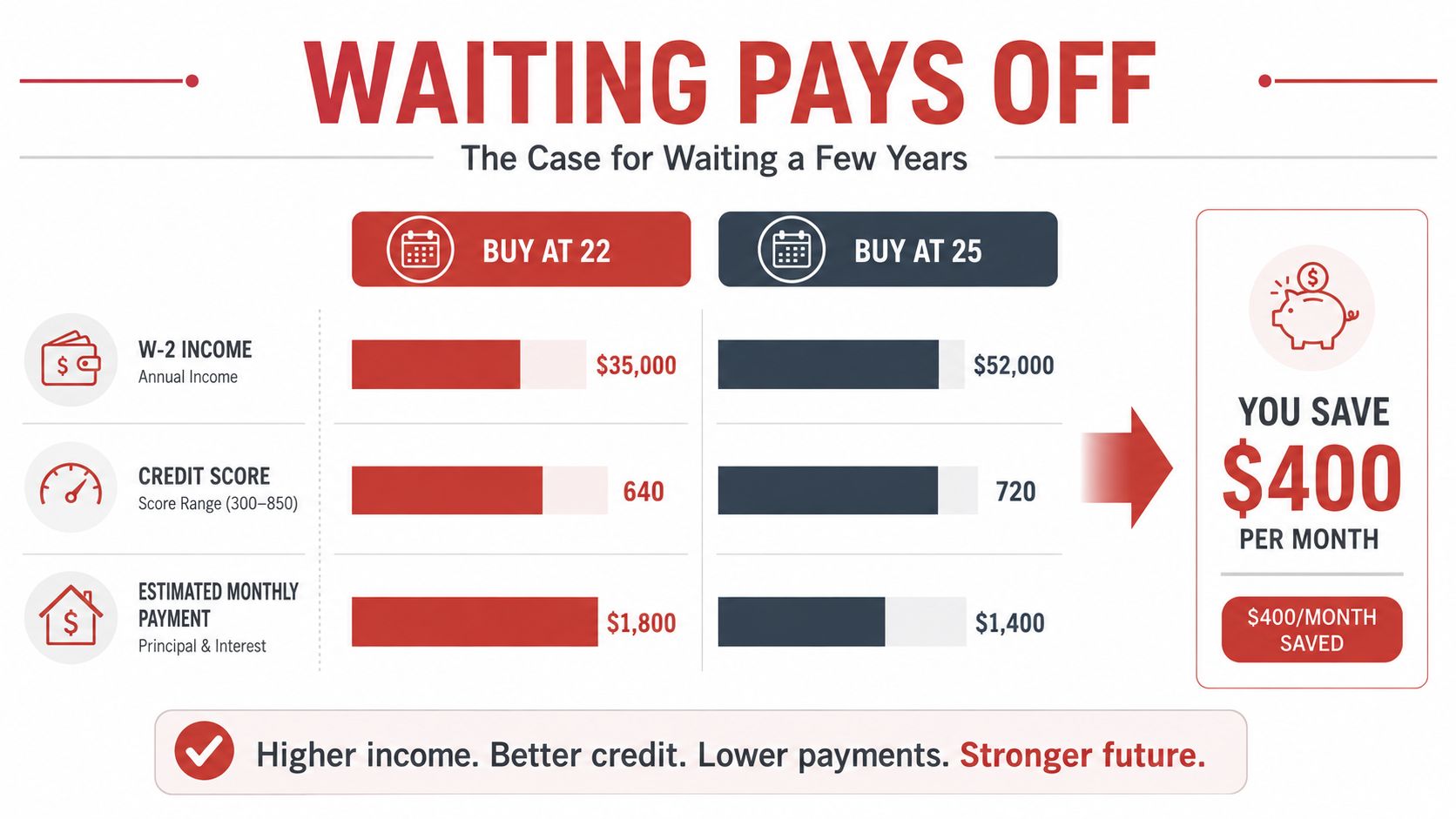
A buyer who waits a few years often walks into the market with a stronger W-2 record, cleaner credit, and a real down payment instead of a patchwork of gift funds and hope. That matters because the home itself isn't the only thing that needs to fit. The payment, the insurance, the taxes, the HOA if there is one, and the emergency repairs all show up after closing.
Why waiting usually improves the file
Age itself isn't magic. Time is. Time gives a buyer more chances to build payment history, keep one job long enough to make underwriting easier, and save without draining the account every month. It also gives a young person room to learn what they want in a home, not just what feels exciting on a listing app.
The opportunity cost is real. If someone tries to stretch too early, they often end up house-rich and cash-poor. If they wait and buy later with a bigger cushion, they usually have more flexibility to handle a repair, a move, or a job change without panic.
For buyers who want a practical planning framework, the basics are laid out in these Chicago homebuyer tips.
My straight take
If the family situation is stable and the young buyer has no urgent need to own now, I'd rather see them spend a couple of years strengthening the file than forcing a rushed purchase. That's not hesitation, that's strategy. The best first home is the one that still feels affordable after the excitement fades.
Real Paths Young Buyers Actually Take
Young Illinois buyers don't all follow the same route, and that's the point. The right path depends on income, timing, family help, and how much paperwork the lender needs before saying yes.
Three common transaction patterns
An 18-year-old with parental support can absolutely buy a small condo, but the deal usually leans on an adult co-borrower or co-signer plus a documented gift for part of the cash to close. A 22-year-old with steady W-2 income may qualify on their own after building enough history to satisfy underwriting. A young couple can also structure the file with one partner on title and the mortgage while the other provides a documented gift, but the lender will want the paper trail tight.
Gift money is only helpful when it's documented cleanly. Sloppy transfers create delays, not shortcuts.
The paperwork is where deals slow down. Gift letters, bank statements, student loan status, and condo association approval can all stall a closing if nobody handles them early. That's why the best young-buyer files are the boring ones, clean, complete, and predictable.
For buyers who want a local guide through those moving parts, this is the kind of practical advice you get in a straight-talk guide to finding a good real estate agent.
Three real paths for young Illinois buyers
| Buyer Profile | Typical Price Range | Financing Setup | Key Documentation | Common Pitfall |
|---|---|---|---|---|
| 18-year-old recent grad | Entry-level condo | Parent co-borrower or co-signer, plus financing | Paystubs, gift letter, bank statements, parent income docs | Thin credit file |
| 22-year-old W-2 earner | Starter townhouse or condo | Solo financing | Two years of income records, credit report, asset proof | Short job history or student debt issues |
| Young couple with one partner funding cash | Modest home or condo | One borrower on loan, documented gift from the other | Gift letter, sourcing of funds, borrower income docs | Transfer timing and lender review |
One more thing that catches people off guard, especially on condos, is HOA approval. A young buyer can be perfectly qualified on paper and still lose time if the association paperwork drags. In Chicagoland, that delay is common enough that I'd call it routine, not rare.
Your Next Move as a Young Buyer or Parent
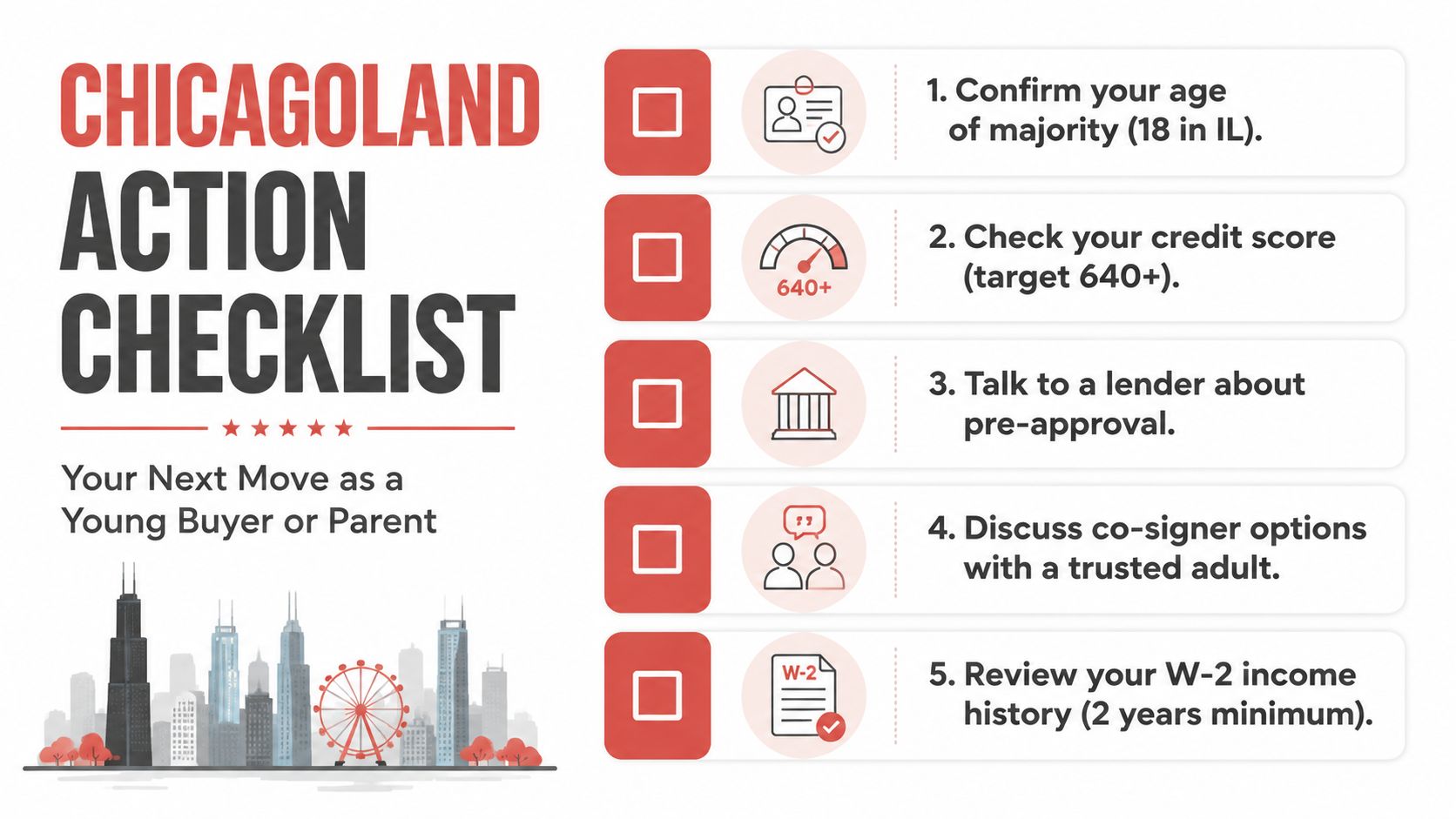
Start with the facts, not the fantasies. If you're 18 or 19 and serious about buying, pull your credit, verify your income history, and talk to a lender who will tell you the truth about what you can support right now. If you're a parent thinking about co-signing, decide whether you're comfortable being legally tied to the debt before anyone starts shopping for paint colors.
The first three moves to make this week
- Check your credit file. You need to know what's on it before a lender sees it.
- Ask a local lender about age and income documentation. The lender will tell you what they need for your exact file.
- Sit down with a Realtor who works young-buyer deals regularly. You want someone who understands first-time purchases, condo reviews, and family-assisted financing.
For buyers who want to understand costs before making an offer, this Illinois closing cost guide is worth reading before you tour the first property.
What each person should do next
An 18-year-old with family help should focus on credit cleanup, document gathering, and lender conversations before shopping. A 22-year-old W-2 earner should test whether they can qualify alone and only bring in help if the numbers need it. A parent considering co-signing should review their own debt load, their comfort with the legal risk, and whether a family attorney or financial advisor should look at the arrangement first.
Buy young if the numbers work. Wait if they don't. The goal isn't the fastest closing, it's the house you can still afford when the novelty wears off.
If you want a local advisor who handles these situations with a straight answer and no smoke, reach out to Homes By Carmen. We help Melrose Park and greater Chicagoland buyers compare timing, financing, and realistic neighborhood options so you can move forward with confidence, not guesswork.