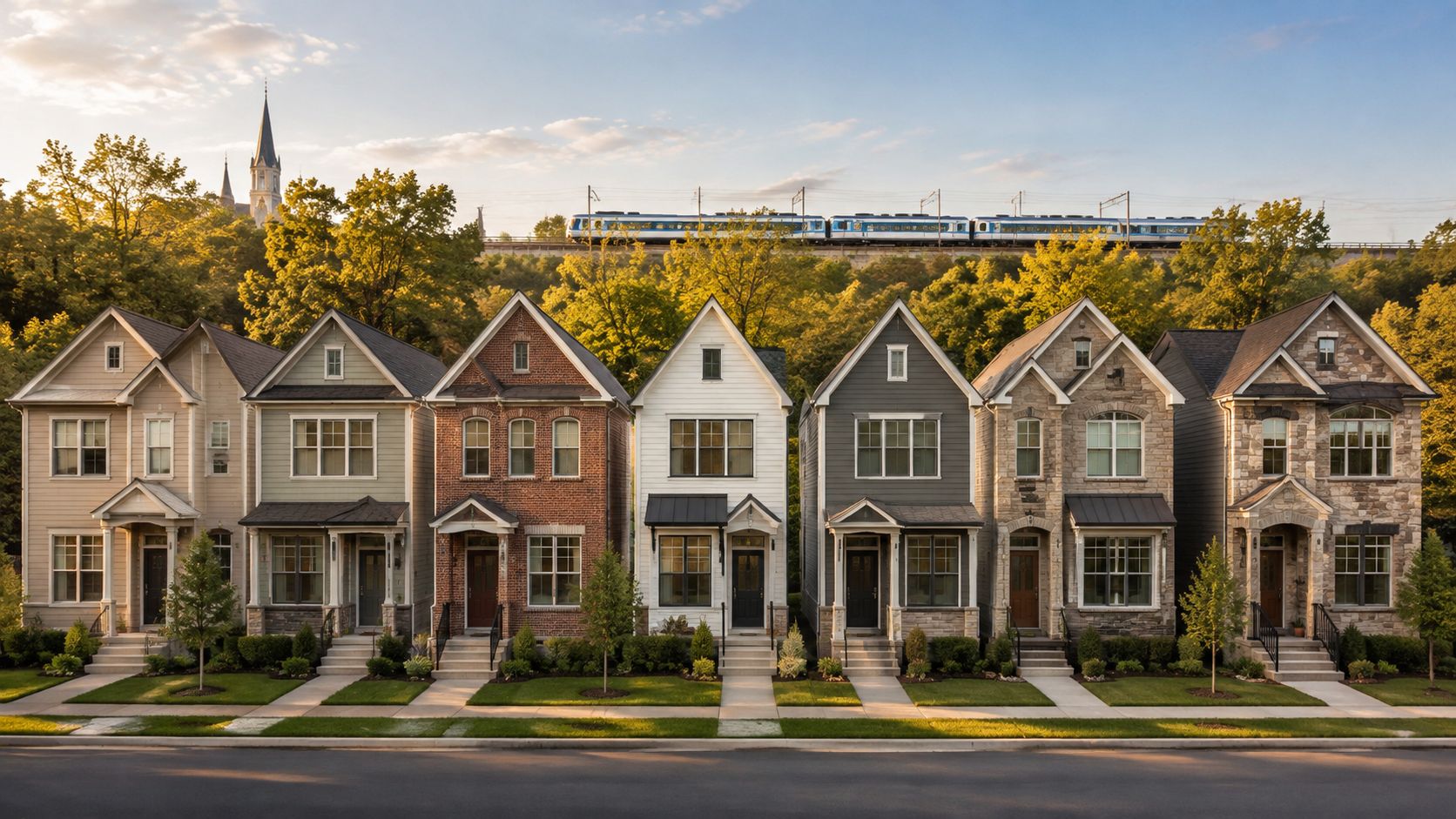
You're comparing more than asking prices. You may need a second bedroom for a growing family, a manageable commute, reliable school access, outdoor space, and a monthly payment that still works after taxes, insurance, utilities, HOA dues, and possible assessments. That's the true decision behind searching for townhomes for sale in Elmhurst, IL.
The seven profiles below organize townhomes by the buyer problem they solve, from first-time ownership and move-up space to privacy, luxury, flexible lower-level living, and rental potential. Each profile uses the same practical lens: price positioning, best-fit buyer, trade-offs, HOA questions, transit and school considerations, inspection priorities, and resale or investment implications.
Elmhurst's attached-home segment, including condos and townhomes, had a reported median value of $379,900, a 15.2% year-over-year increase, and average market time of about 43 days in one Zillow snapshot. Availability, pricing, school boundaries, HOA documents, and transit access can change by property, so verify each detail through current MLS information before you tour or offer.
Table of Contents
- 1. Modern Move-Up Townhome With Central Convenience
- 2. Renovated Heritage Townhome With Character
- 3. End-Unit Townhome For Privacy and Outdoor Space
- 4. Luxury Townhome Near Downtown and Top School Areas
- 5. Multi-Level Townhome With Flexible Lower-Level Space
- 6. Investment-Oriented Townhome With Manageable Entry Costs
- 7. First-Time Buyer Townhome With a Clear Affordability Plan
- Elmhurst Townhomes, 7-Option Comparison
- Turn the Shortlist Into a Smarter Elmhurst Offer
1. Modern Move-Up Townhome With Central Convenience
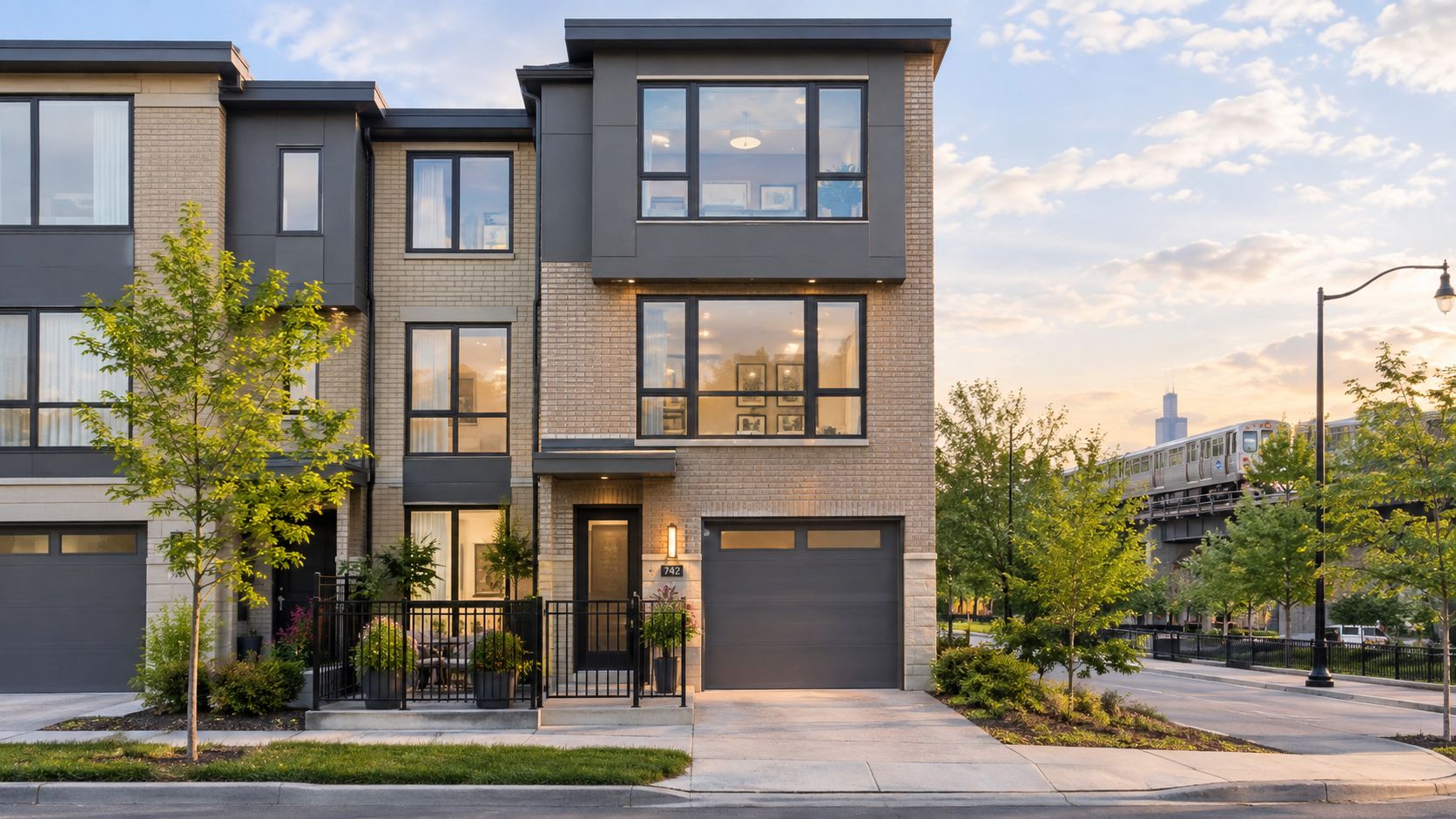
A contemporary three-bedroom, two-and-a-half-bath townhome is often the practical next step for a household that has outgrown a starter property but doesn't want the upkeep of a detached house. Open living areas, granite counters, stainless steel appliances, in-unit laundry, and a private patio make this profile appealing to buyers who want a current interior without taking on an immediate renovation.
Central Elmhurst locations can also support a shorter commute and easier access to downtown amenities. Newer communities around the York Road and Grand Avenue area, renovated properties along the Riverside Drive corridor, and townhomes near Metra access each offer a different balance of convenience, noise, parking, and price. Verify the actual walking route to transit rather than relying on a listing description.
For school-focused buyers, confirm district boundaries and enrollment details directly. A home's proximity to a school doesn't automatically establish eligibility, and boundaries can differ by address.
What to verify before offering
- HOA reserves: Request the current budget, reserve information, meeting minutes, insurance details, and any pending assessment notices during the review period.
- Parking rights: Confirm whether parking is assigned, deeded, garage-based, or dependent on street availability. A two-car household shouldn't discover this after closing.
- Sound and activity: Tour during an evening or weekend to evaluate trains, traffic, shared-wall noise, and neighbor activity.
- Closing costs: Ask whether the association charges transfer fees, move-in deposits, or other administrative costs, then consider negotiating a credit.
For broader Elmhurst real estate listings and neighborhood options, use current MLS information rather than assuming every newer development has the same fee structure or school access.
Practical rule: A modern finish package reduces cosmetic work, but it doesn't replace an HOA review, a full inspection, or confirmation of parking and school boundaries.
The main trade-off is predictability versus flexibility. You'll likely get a more efficient layout and fewer immediate updates than with an older townhome, but the association may control exterior changes, landscaping, patios, and future improvements. For resale, a central location, functional bedroom count, private outdoor area, and well-managed association can matter more than a fashionable finish.
2. Renovated Heritage Townhome With Character
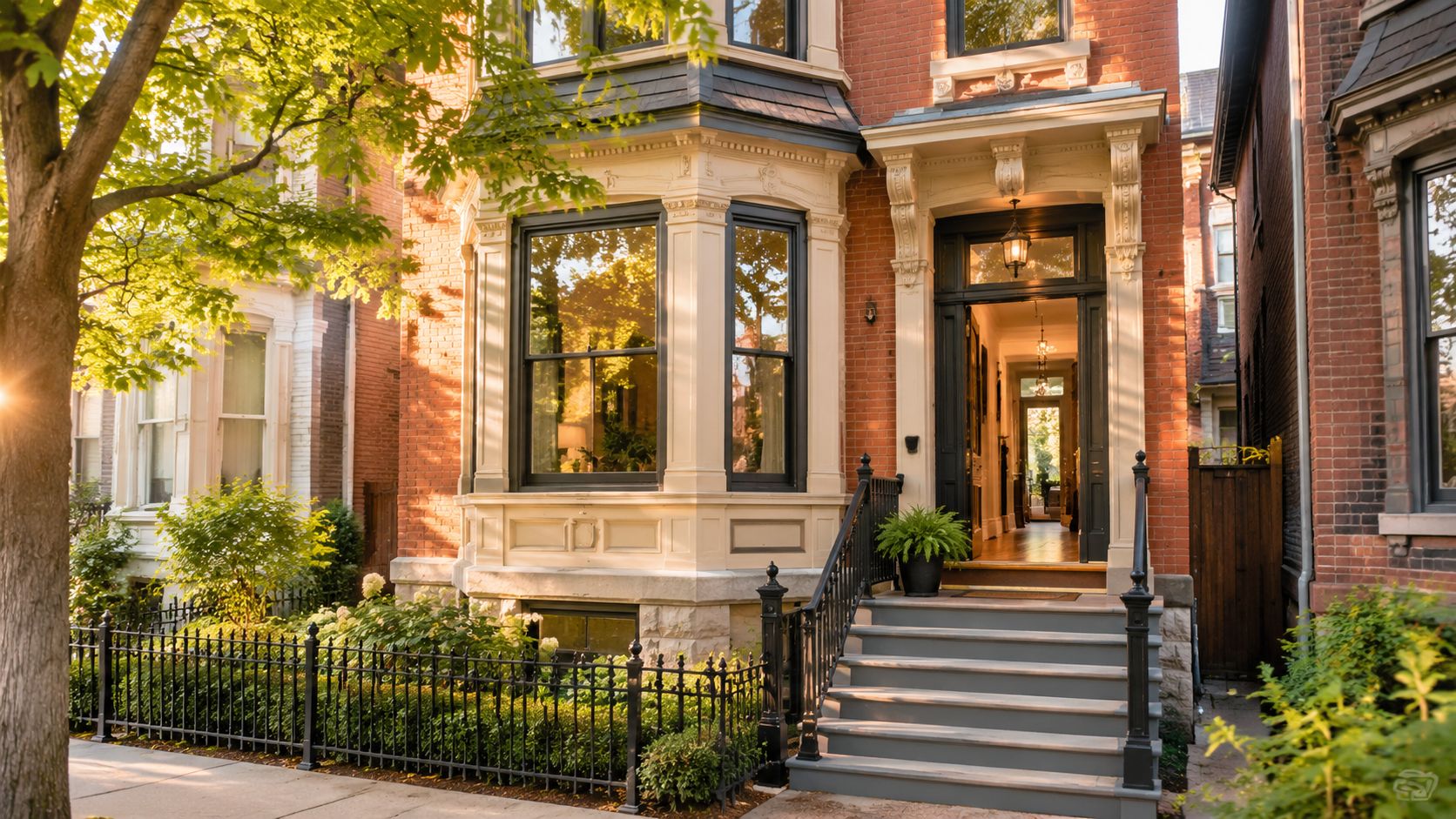
Some buyers aren't looking for a blank, new-construction interior. They want mature landscaping, established streets, architectural character, and a home that feels distinct from a row of identical units. A renovated heritage townhome can deliver that combination when the seller has updated major systems rather than only replacing cabinet fronts and light fixtures.
Older Elmhurst attached properties may feature brick exteriors, bay windows, Tudor or Victorian-inspired details, and tree-lined settings near parks, shops, and downtown streets. Properties in Elmhurst Villa, near the Clarendon Hills border, or around established downtown corridors can appeal to buyers who value atmosphere and walkability. The charm is real, but so is the need for disciplined inspection work.
A polished kitchen doesn't tell you when the roof, HVAC equipment, electrical panel, plumbing, or foundation work was completed. Ask for invoices, permits where applicable, warranties, and documentation of any environmental remediation. If lead paint or asbestos is a concern, use qualified professionals and verify that any abatement followed applicable requirements.
How to price the renovation honestly
Compare the property with updated townhomes, not just older units with new paint. A seller's renovation may be valuable, but you still need to determine whether the work addressed the expensive systems or only the visible finishes.
- Roof and HVAC: Confirm installation dates, service records, remaining warranties, and responsibility under the HOA documents.
- Older-home inspection: Hire an inspector familiar with foundations, plumbing materials, electrical systems, moisture, and environmental risks.
- Renovation value: Separate improvements that reduce future expense from decorative work that mainly affects appearance.
- Offer protection: A seller credit can be more useful than a small price reduction if a major system is approaching replacement.
A beautiful older townhome should come with a paper trail. If the seller can't document the work, value the property as though the system still needs investigation.
The resale advantage is emotional appeal and neighborhood maturity. The risk is that buyers may overpay for character while inheriting deferred maintenance. A careful inspection and realistic repair reserve turn this profile from a romantic purchase into a defensible one.
3. End-Unit Townhome For Privacy and Outdoor Space
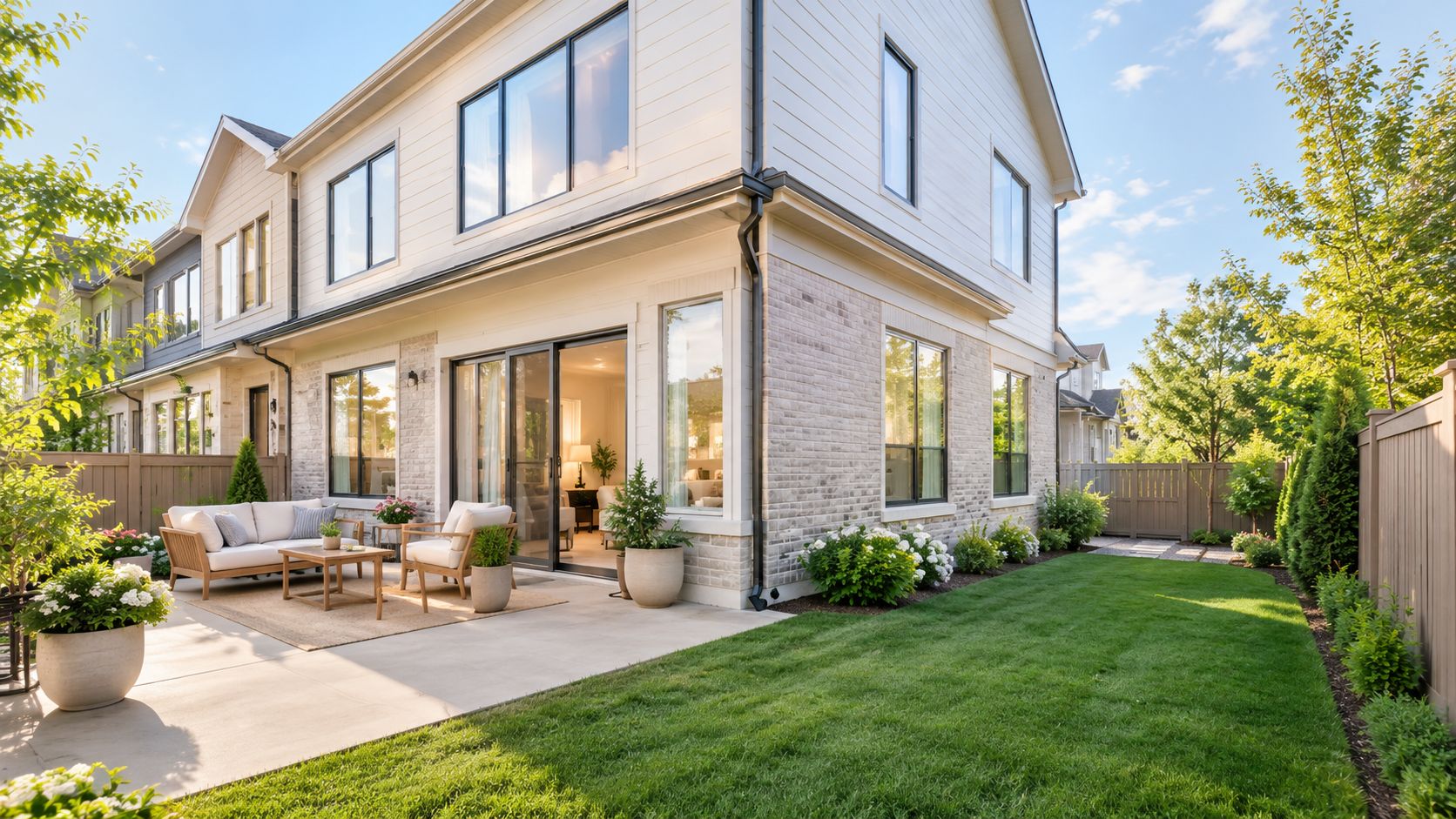
If attached living feels too exposed, an end unit may offer a more private daily routine. With more exterior walls and usually one shared side wall, it can feel closer to a small detached house while retaining the lower-maintenance structure of a townhome community.
The strongest candidates combine privacy with usable outdoor space. Look for additional windows, consistent natural light, a practical side yard, and a patio that supports everyday use. Exact placement still matters. A corner near green space may be quiet, while one beside a busy road can trade neighbor separation for traffic noise.
Compare the end unit with interior units by features rather than the listing label:
- Outdoor usability: Check whether the lawn, patio, fencing, and planting areas are assigned to the unit or controlled by the association. Request a survey, site plan, or association map.
- Exposure and condition: Inspect exposed walls, siding, masonry, flashing, windows, grading, and drainage paths for moisture or water intrusion.
- Comfort and ownership cost: Review available utility bills and ask how added exterior walls affect heating and cooling. Construction and insulation determine whether the privacy benefit brings higher operating costs.
- Future changes: Obtain written rules before planning a fence, privacy screen, planting bed, or hardscape. Approval limits can reduce the outdoor space's practical value.
The HOA documents should also identify responsibility for exterior walls, windows, roofs, landscaping, and snow removal. Those assignments affect both your repair risk and your monthly ownership cost. Do not assume an end unit automatically gives you control over every visible exterior area.
For a family, a functional side yard may matter more than modestly added interior space. For resale, buyers commonly respond to light, privacy, and outdoor areas they can use. Those benefits do not offset poor drainage, unclear boundaries, or restrictive rules.
A careful inspection should include grading around the exposed sides, signs of prior water entry, window condition, and the performance of heating and cooling systems. Then compare the unit's price and HOA dues with nearby interior options. Pay a premium only when the additional privacy, light, garage access, and outdoor usability are clear and documented.
4. Luxury Townhome Near Downtown and Top School Areas
A luxury townhome makes sense for buyers who want a polished home and less exterior maintenance than a detached property. High-end finishes, smart-home features, premium appliances, private garages, and distinctive architecture can give the home an executive feel, but only if the upkeep, HOA rules, and resale profile support the price.
The likely buyer is often a move-up household, a relocating professional, or an owner who values design and location together. Downtown-adjacent settings, newer developments near major Elmhurst corridors, and homes close to preferred school boundaries can draw interest from buyers who care about convenience as much as interior space. Those traits can help marketability, yet they do not ensure the market will fully reward every upgrade.
Start with how the home will hold up as an ownership decision, not just a showing piece. A custom kitchen, specialty HVAC system, or integrated technology package may be expensive to install and even more expensive to replace, while buyers in the local market may still price the property mainly by location, size, condition, and comparable sales.
Review the details that affect both use and long-term cost.
- Specialty systems: Ask for service records on smart controls, appliances, heating and cooling equipment, security systems, and any other nonstandard components.
- Warranty transfer: Confirm whether warranties transfer to the next owner and whether local service providers can support the equipment.
- Association obligations: Review reserve funding, exterior maintenance duties, insurance coverage, transfer fees, and rules that affect leasing or renovations.
- Rental feasibility: If rental use is part of the plan, compare actual comparable rents and verify association restrictions before relying on income projections.
Higher purchase prices can magnify ordinary ownership costs. Specialty components may need more expensive repairs, and a high monthly HOA charge can affect both personal affordability and future rental demand. A downtown address helps with convenience, but it does not automatically translate to stronger appreciation.
The better resale case usually comes from a location buyers already understand, solid construction, practical room sizes, parking, and an association they trust. Design still matters, but the next buyer may care more about function and upkeep than about highly personalized finishes.
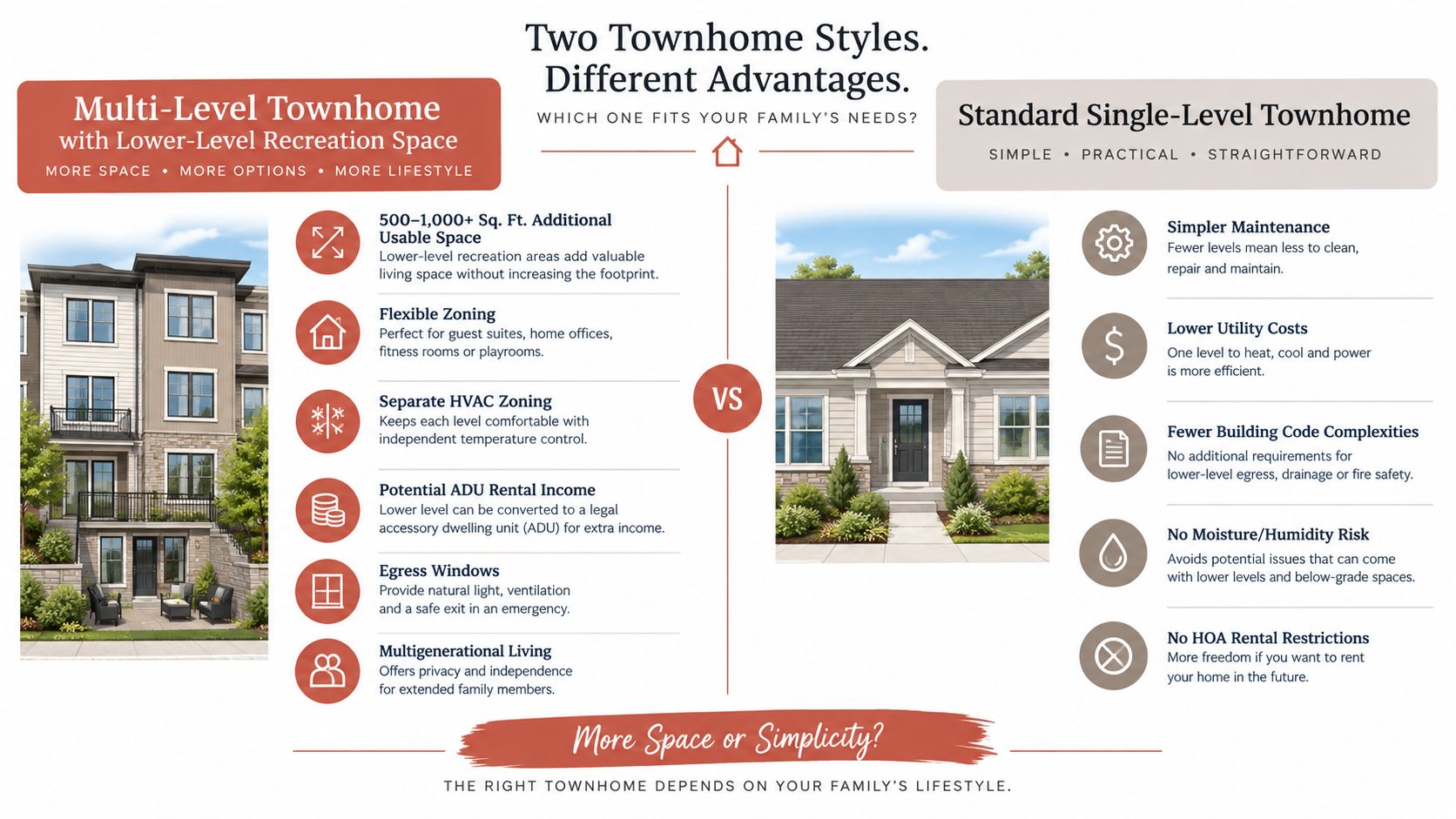
5. Multi-Level Townhome With Flexible Lower-Level Space
A lower level can solve a space problem without requiring a detached home. Depending on its condition and approvals, it may serve as a home office, playroom, gym, media room, guest area, or quiet retreat for a multigenerational household. Work-from-home buyers may value that separation more than another decorative upgrade on the main level.
Start by defining the intended use, then verify whether the property supports it. In established developments, the lower level may be a basement or garden-level area. Marketing language about rental or in-law potential does not establish a legally separate dwelling. A second kitchen, private entrance, or sleeping area can raise zoning, building, fire-safety, and HOA questions.
Let the lower level determine the offer strategy
Moisture should receive the closest inspection attention. Fresh paint can hide staining, odors, cracks, or earlier drainage issues, so a visual walkthrough is not enough.
Ask the inspector to assess:
- Moisture testing: Check humidity, wall moisture, floor conditions, drainage, and evidence of previous water entry.
- Foundation review: Examine cracks, settlement indicators, masonry condition, and documented repairs.
- Sump protection: Request service records and confirm whether the pump has backup power or a backup system, along with a reliable discharge route.
- Use restrictions: Obtain written HOA approval for rental use, separate occupancy, exterior access, or structural changes.
- Municipal compliance: Consult appropriate local professionals before planning an accessory dwelling arrangement or separate lease.
The plan notes identify a possible 10% to 20% higher annual expense for multi-zoned properties, but that estimate is not verified and should not guide the budget. Request actual utility records instead. Identify which equipment serves each level, then set a property-specific reserve for repairs and maintenance.
A dry, finished, permitted lower level can broaden resale appeal and support flexible household use. Unfinished or unapproved space should not be counted as guaranteed living or rental area. That distinction affects financing, inspections, insurance, and future buyer confidence.
The trade-off is straightforward: more usable capacity, paired with greater maintenance complexity and possible moisture exposure. Buyers who need office or guest space may accept that burden. Buyers relying on rental income should verify approvals and association rules before assigning any value to a separate-occupancy plan.
6. Investment-Oriented Townhome With Manageable Entry Costs
An investment-oriented townhome needs a property-level review before it deserves a place on a rental shortlist. Start with leasing permission, expected rent, taxes, insurance, association dues, maintenance responsibility, and the unit's ability to compete with nearby alternatives. A low purchase price alone does not create a sound investment.
Elmhurst's broader market has shown strong buyer activity. Redfin reported a median sale price of $702,000, a median of 44 days to sell, an average of 4 offers per home, and a median price per square foot of $360 during the stated recent period. Those citywide results do not establish rent or cash flow for a particular townhome. They do, however, reinforce the need to separate market momentum from the property's own numbers.
What the documents should prove
Request the current lease, payment history, tax bill, insurance quote, HOA budget, meeting minutes, and maintenance records. Review them before assigning value to projected income. A short vacancy, a repair reserve, or a future assessment can materially change the result.
Use this review order:
- Association authority: Confirm rental caps, minimum lease terms, application procedures, tenant screening rules, approval requirements, and penalties for violations.
- Owner-paid costs: Budget for property taxes, insurance, HOA dues, utilities, repairs, capital replacements, turnover, legal expenses, and management time.
- Tenant record: Check payment history, deposits, notices, lease conditions, and documented maintenance requests.
- Resale audience: Consider whether the next buyer is more likely to be an owner-occupant, an investor, or either group.
For broader context, review current Chicago housing market trends, then compare Elmhurst rental listings directly. Tour competing units and assess whether this townhome's parking, laundry, outdoor space, finishes, and transit access support its expected rent. School proximity may broaden the owner-occupant resale audience, but it should not replace rental evidence.
The investment trade-off is income potential with less exterior-maintenance responsibility, balanced against HOA dependence and limited control. A rental restriction, special assessment, or extended turnover period can weaken returns quickly. Require positive cash flow after realistic expenses, not from the list price alone.
7. First-Time Buyer Townhome With a Clear Affordability Plan
A first-time buyer often needs a townhome that keeps the monthly payment predictable while still supporting work, errands, and a possible household change. Two or three bedrooms, shared exterior maintenance, and practical common space can make ownership more manageable than a detached home, provided the association and tax costs fit the budget.
Start with the full monthly obligation. One Elmhurst parcel had a property tax bill of $6,713.56, while a market summary cited a 2.72% property tax rate and HOA fees commonly ranging from $200 to $400 per month (DuPage County property lookup). Those figures do not apply uniformly, so request the address-specific tax history, current assessment, insurance cost, and association budget before comparing homes.
Build the affordability plan before making an offer
Obtain pre-approval before serious touring. Have the lender model taxes, insurance, HOA dues, and any required mortgage insurance alongside the loan payment. Assistance programs and financing options may impose property, income, occupancy, or documentation conditions. Confirm eligibility with a qualified lender rather than relying on the listing.
Use the inspection and document review to protect both cash and flexibility:
- Reserve review: Read the association budget, reserve information, insurance policy, meeting minutes, and pending assessment disclosures.
- Inspection: Check the home even if it appears ready for occupancy. Older systems and deferred maintenance can create early ownership costs.
- Cash planning: Ask the lender and attorney about seller credits, closing requirements, prepaid costs, and association deposits.
- Long-term fit: Test the layout against likely changes in household size, parking needs, commute, and school access.
The lowest list price may hide high taxes, weak reserves, or dues that leave little room in the monthly budget. Elmhurst's reported supply differed between 115 active units in one 2026 snapshot and 123 active listings in another, so preparation matters, but the figures do not justify skipping due diligence (Zillow's Elmhurst housing data, Realtor.com's Elmhurst market information). A buyer should be ready to act when the numbers work, not pressured to overlook unanswered questions.
Budget for costs outside the purchase price with this guide to Illinois closing costs for buyers. The strongest starter townhome is one the buyer can carry comfortably, inspect confidently, and resell without excessive dues, inadequate reserves, or a layout tied only to current circumstances.
Elmhurst Townhomes, 7-Option Comparison
| Property Type | Implementation complexity | Resource requirements | Expected outcomes | Ideal use cases | Key advantages |
|---|---|---|---|---|---|
| Modern Move-Up Townhome (3 bed, 2.5 bath) | Moderate, standard inspections, HOA review | Moderate down payment; possible HOA fees; updated systems reduce immediate capex | Comfortable family living; moderate appreciation; rental demand (approx. 4–6% cash-on-cash for investors) | Growing families, move-up buyers, commuter professionals | More space than condos; ownership of structure; transit and school access; cost advantage vs single-family |
| Renovated Heritage Townhome (Victorian-era updates) | Moderate–High, specialist inspections for vintage systems, lead/asbestos checks | Lower acquisition premium than new; verify system replacement documents; periodic specialized maintenance | Character-driven appeal; stable appreciation (≈3–5%); rental yield ~5–7% | Buyers valuing charm and established neighborhoods; long-term buy-and-hold investors | Unique architectural character; mature landscaping; renovations often already completed |
| End-Unit Townhome | Moderate, inspect additional exterior walls and yard boundaries; review HOA yard rules | Price premium (≈10–20%); potentially higher exterior maintenance exposure | Higher resale and rent premiums; faster appreciation within same complex | Buyers seeking privacy/outdoor space; families preferring single-family feel; premium renters | More light and ventilation; larger outdoor area; reduced shared-wall noise |
| Luxury Townhome (high-end finishes) | High, complex systems, warranty verification, specialized maintenance | High acquisition cost ($400K+); higher HOA, insurance, and repair costs | Premium rents (≈15–25% higher); stronger appreciation in strong markets but greater volatility | Affluent move-up buyers, corporate relocations, institutional investors | High-end finishes and systems; low near-term upgrade needs; attracts executive tenants |
| Multi-Level Townhome with Lower-Level Recreation Space | High, moisture mitigation, egress/code compliance, ADU permitting complexity | Potential separate utilities/HVAC; higher utility and inspection costs; remediation reserves | Significant usable space increase; ADU/rental income potential (up to ~25–40% more if permitted) | Large/multigenerational families, remote workers, investors targeting ADU income | Flexible space (office, rental, guest suite); potential for additional rental income; multi-use functionality |
| Investment-Grade Townhome (entry-level, cash flow) | Low–Moderate, routine inspections and active property management | Lower purchase price ($250K–$350K); 20–25% investor down payment; maintenance and turnover reserves | Immediate positive cash flow; gross rental yields ~6–9%; slower appreciation | Small portfolio investors, BRRRR strategies, cash-flow-focused landlords | Strong rent-to-price ratio; accessible entry; portfolio scaling potential |
| First-Time Buyer Townhome (affordable ownership) | Low, conventional/FHA/VA financing common; learn HOA processes | Low down payment options (3–5% or FHA/VA); modest HOA and operating costs | Ownership entry; modest appreciation (≈3–5%); limited early equity | First-time buyers, millennials, young families using assistance programs | Affordability and financing programs; predictable ownership costs; gateway to equity building |
Turn the Shortlist Into a Smarter Elmhurst Offer
Your first decision should be a total monthly budget, not a maximum offer price. Include principal and interest, property taxes, homeowners insurance, HOA dues, utilities, routine maintenance, and a reserve for possible assessments. The tax bill and HOA documents can change the affordability picture more than a modest difference in list price.
Next, compare at least two or three current listings within the same buyer profile. A move-up buyer should compare modern central units with other family-oriented townhomes, not with a luxury property whose finish package makes the pricing comparison unreliable. An investor should compare rental restrictions, actual operating expenses, tenant demand, and resale flexibility rather than focusing only on acquisition cost.
Verify the details that listings summarize too casually:
- Transit: Test the actual route and travel time at the hours you'll use it, including parking or walking conditions.
- Schools: Confirm boundaries, enrollment information, and current district details independently.
- HOA documents: Review budgets, reserves, insurance, rules, rental restrictions, meeting minutes, transfer fees, and pending assessments.
- Inspection scope: Match the inspection to the property. Older homes need system and environmental diligence, end units need exterior review, and lower levels need moisture and drainage testing.
- Offer terms: Price, contingencies, credits, closing timing, and document-review periods can matter together, especially when several buyers are evaluating the same home.
Elmhurst's market data varies by source and reporting period, but the overall message is consistent: buyers need current information and a disciplined offer plan. One city report cited a $702,000 median sale price, while another reported a $607,450 median list price and 31 average days on market, illustrating why a property-specific comparison is more useful than one headline number (Housing Studies Elmhurst data, Realtor.com market information).
Homes By Carmen can help with current MLS inventory, tours, comparable analysis, offer strategy, inspection coordination, financing and professional referrals, and closing support across western Chicagoland. If you're narrowing townhomes for sale in Elmhurst, IL, the next step is a conversation about your monthly budget, must-have features, and acceptable HOA trade-offs, not pressure to make an offer before you're ready.
Homes By Carmen provides MLS-powered searches, local Elmhurst guidance, tours, comparable analysis, negotiation support, and practical coordination for inspections and closing. Visit Homes By Carmen to start with a focused townhome search and a low-pressure plan for evaluating the right property.