
Illinois has 47,118 real estate brokers and 15,966 managing brokers working under a tightly regulated system, so the right choice is usually not the biggest name, it's the person whose judgment you trust under Illinois rules. If you're buying or selling in Chicago or the suburbs, the true test is whether that agent understands broker sponsorship, state-specific disclosures, and how to keep a deal moving without creating avoidable risk.
You can feel this difference fast. A first-time buyer in Naperville can drown in listings and still make a bad decision if the agent is weak on local comps, deadlines, or Illinois contract basics. A seller in Oak Park can lose ground the same way, not because the home was wrong, but because the listing strategy missed what buyers in that exact area are doing.
Table of Contents
- Why the Right Illinois Agent Matters More Than You Think
- What a Real Estate Agent Does in Illinois
- How Illinois Licensing and the 2026 Exam Shape Your Agent
- Agent vs Broker in Illinois and Why It Matters to You
- Why Your Chicago Suburb Changes the Agent Job
- How to Vet and Choose the Right Illinois Agent
- What Good Agent Work Looks Like From Contract to Close
- Your Next Steps and a Practical Hiring Checklist
Why the Right Illinois Agent Matters More Than You Think
The common mistake is to ask, “Who's the best agent?” That's the wrong question. The better question is, whose judgment do I trust when the paperwork gets messy, the inspection turns ugly, or the market in my suburb shifts under me?
A first-time buyer staring at a stack of listings doesn't need a cheerleader. They need someone who can tell them which homes are overpriced, which disclosures deserve attention, and which offer terms are competitive in that pocket of Illinois. In a state with a heavily licensed real estate workforce, that judgment matters because the market is crowded, regulated, and unforgiving when someone waves off the details (IDFPR 2020 annual report).
The mistake most buyers make
They assume the risk is the commission. It usually isn't. The cost of a weak agent is a missed contingency, a bad comp, a disclosure issue that comes up too late, or an offer that looks strong on paper but collapses because the agent didn't press the right questions.
Practical rule: If an agent talks mostly about “getting you into homes” and barely mentions deadlines, disclosures, or local contract issues, keep interviewing.
That's especially true in Illinois, where transactions aren't just about finding a property. They're about navigating a layered process that involves state law, brokerage oversight, and local customs that change from one suburb to the next. An agent who works outside your area may sound confident and still miss the one detail that costs you time.
The safer mindset is blunt. Hire for local interpretation, not for brand polish. Hire for the person who knows what matters in your exact town, not the one with the loudest marketing.
What a Real Estate Agent Does in Illinois
A lot of people picture an agent as someone who shows homes and posts listings. That is the visible part. The primary work is transaction management, and in Illinois that work has teeth because contracts, disclosures, and broker supervision matter from day one.
Buyer-side work that moves the deal
On the buyer side, a strong agent schedules showings, weeds out bad fits, writes offers that match the neighborhood, and keeps the timeline from slipping. They coordinate the home inspector, line up the radon tester when needed, and keep attorney review on track, which is a normal part of how Illinois deals move. They also catch issues tied to disclosures, parking, association rules, or municipal requirements before you are emotionally tied to the property.
A good buyer's agent doesn't just open doors. They protect your position.
That means they ask sharper questions than “Do you like the kitchen?” They ask what comparable homes sold for, whether the seller's disclosures make sense, and whether the offer should be structured to leave room if the inspection turns up a problem. If the agent is only forwarding listings, you are doing too much of the work yourself.
The better buyer agents in Illinois are not running around looking busy. They are controlling risk, pressure-testing the deal, and keeping you from making an expensive mistake because the house looked good in person.
Seller-side work that protects your net
On the listing side, the work starts before the home hits the market. A strong seller's agent prices against hyperlocal comps, recommends pre-listing fixes that matter, and prepares the property for the Illinois disclosure process. They manage MLS syndication, field showing traffic, and keep the deal moving when buyer questions start coming in.
A weak seller's agent hides behind generic marketing talk and avoids the hard part, which is pricing. That is a mistake in a market where small shifts in supply and demand change negotiation power fast. The agent should know when to push, when to hold, and when to cut through fantasy pricing.
In Chicago and the suburbs, that judgment is not the same from place to place. A condo in the city, a starter home in the western suburbs, and a single-family house in a tighter North Shore market each bring different contract pressure points. The agent who knows those differences will save you time and protect your money.
| Task Area | Buyer's Agent | Seller's Agent |
|---|---|---|
| Search and pricing | Filters homes, checks local comps, and spots overpricing | Builds pricing strategy from neighborhood comparables |
| Inspections | Coordinates home, radon, and follow-up negotiations | Prepares for inspection responses and repair strategy |
| Disclosures | Flags contract and property-specific issues early | Prepares seller for disclosure obligations and document flow |
| Coordination | Works with attorney, lender, and inspector | Works with attorney, title, and buyer side on deadlines |
| Negotiation | Pushes for credits, repairs, and clean terms | Protects price, timing, and net proceeds |
The blunt truth is simple. If an agent is not comfortable with these mechanics, they are not really representing you. They are helping with access.
How Illinois Licensing and the 2026 Exam Shape Your Agent
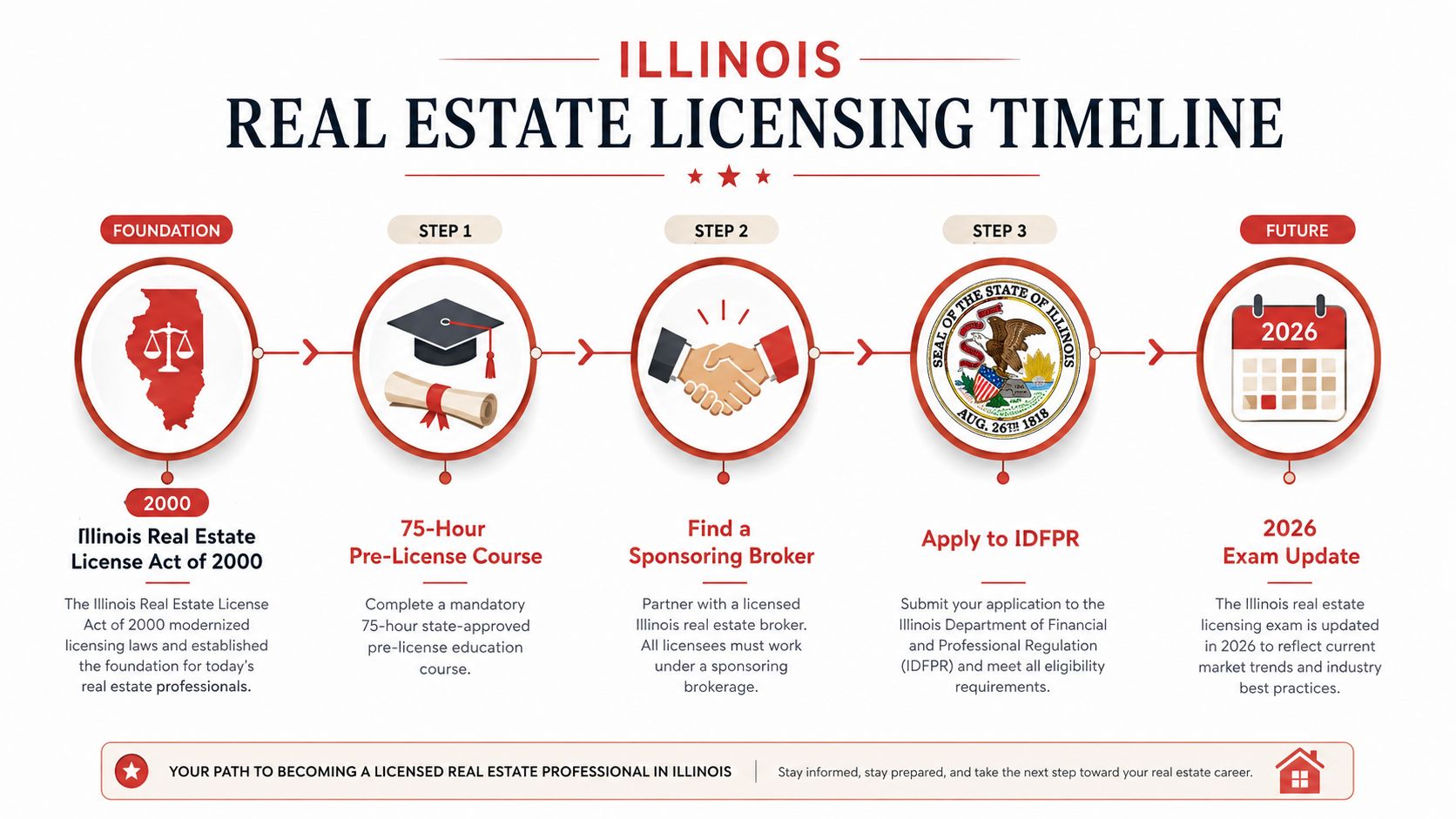
Illinois doesn't let someone hang out a shingle and improvise. A broker applicant has to be at least 18, hold a high school diploma or GED, complete 75 hours of pre-license education, pass the exam, and secure sponsorship from a managing broker before activation. After licensure, the first renewal cycle also requires 45 hours of post-license education (IDFPR real estate licensing requirements).
Why the 2026 exam update matters to consumers
The newer Illinois exam emphasis is not trivia. The redesigned Illinois portion now includes 40 scored questions across four areas, including 16 questions on the Real Estate License Act and 10 on disclosures, effective June 24, 2026, which tells you where the state thinks risk lives in real transactions (Illinois license act exam update). That matters because the people taking this test are being pushed harder on legal-process competence, not just memorization.
For a consumer, the takeaway is simple. If an agent was licensed before the update, they may still be capable, but they might not have been tested on the freshest Illinois-specific rules in the same way newer licensees were. That doesn't make them bad. It does mean you should ask sharper questions about disclosures, agency, money handling, and contract flow.
How to verify what you're actually hiring
Don't guess. Check the license status directly through IDFPR's lookup, and make sure the sponsor-broker relationship is active before you sign anything. The sponsoring brokerage matters because that's the structure that allows the agent to operate and receive supervision. If the business card or signature block doesn't clearly show that structure, ask why.
The practical difference is accountability. In Illinois, the license is only part of the story. The broker behind that license is part of the story too, and you want to know who is watching the transaction when something slips.
Agent vs Broker in Illinois and Why It Matters to You
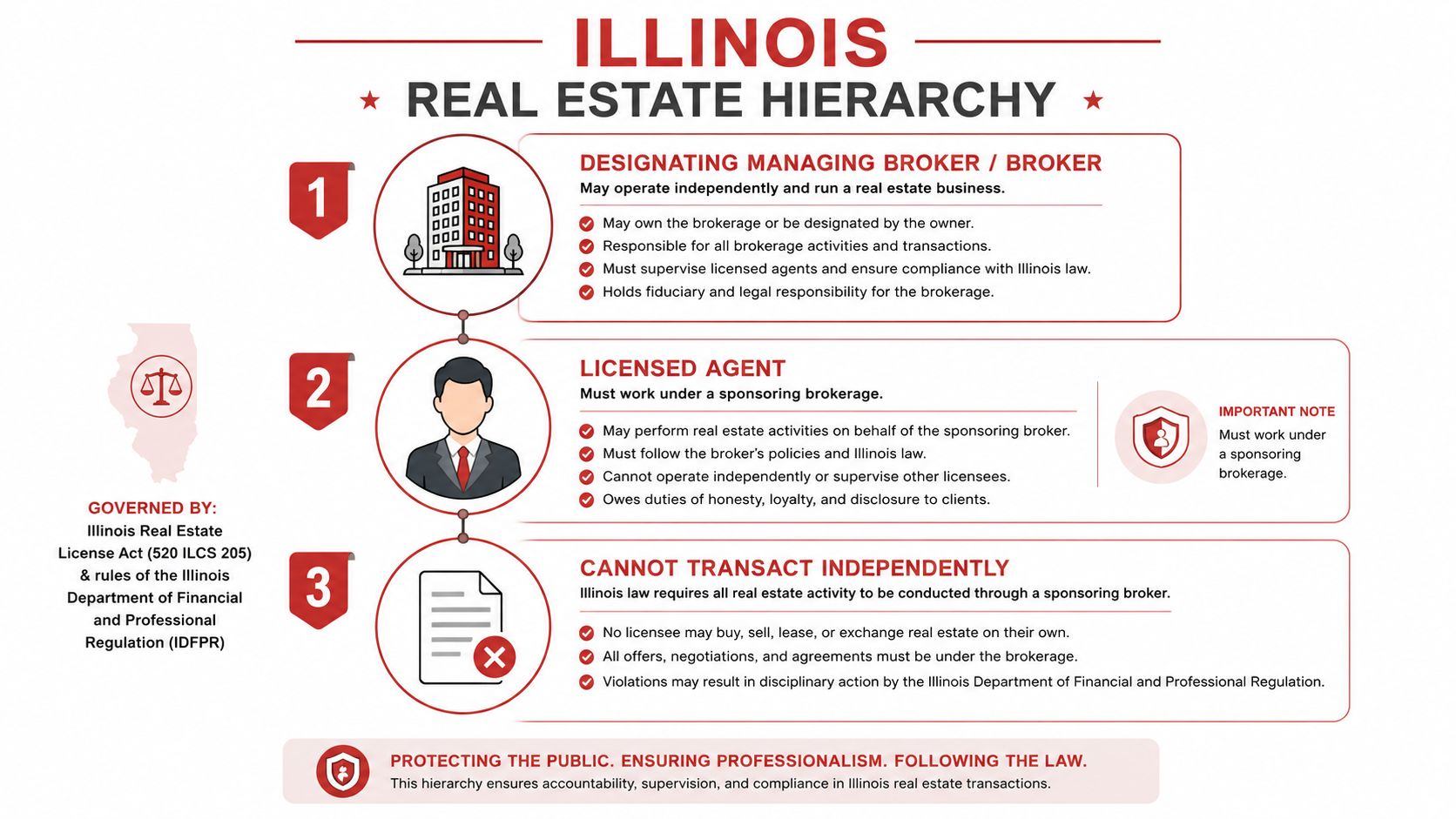
The title sounds simple, but the hierarchy matters. A licensed agent doesn't operate independently in Illinois. They work under a sponsoring brokerage, and the managing broker is the person with broader supervisory authority and more control over how the firm runs.
Who actually carries the responsibility
A broker can run their own firm if licensed at that level. A managing broker can supervise other agents, review contracts, and step in when a deal gets messy. The consumer-facing point is straightforward, the agent may be your day-to-day contact, but the brokerage structure determines who backs them up when the situation needs escalation.
That structure matters on listing agreements, earnest money handling, and accountability when a contract starts to wobble. If an agent is unavailable or misses something, the managing broker is the person who should be able to intervene. If there's no clear broker oversight, you're taking on more risk than you should.
Realtor is not the same thing as broker
The word Realtor is a membership designation tied to the National Association of Realtors and its code of ethics. It's not the same as being licensed in Illinois. Buyers and sellers often mix up the terms, but the distinction matters because licensing and professional membership are different layers of qualification.
What you want is not a fancy title. You want a professional who understands dual agency rules, required written disclosures, and how Illinois brokerage structure affects the way a deal is handled when it gets complicated. That's where the legal and practical value lives.
If the person can't clearly explain who represents whom, stop there. Confusion on agency is a bad sign.
The right takeaway is simple. Don't hire by logo. Hire by supervision, accountability, and legal clarity.
Why Your Chicago Suburb Changes the Agent Job
Chicago-area real estate isn't one market. It's a cluster of micro-markets with different buyer behavior, different property types, and different negotiation dynamics. That's why broad advice about “Illinois housing” usually misses the point.
In the broader nine-county Chicago Metro Area, July 2026 sales totaled 9,108 homes, with 13,970 homes for sale, a 11.9% year-over-year inventory decline, and a median price of $401,000, up 6.8% from the prior year (Illinois REALTORS July 2026 market report). That's a useful backdrop, but it doesn't tell you what a good agent does in one suburb versus another.
The job changes with the property type
A condo in Lincoln Park, a single-family home in Naperville, and a multi-parcel situation in Will County are not the same assignment. The paperwork, seller expectations, inspection norms, and local rules can vary enough that a generic agent ends up guessing. In one place, parking disclosure or condo association details can dominate the conversation. In another, school boundaries, lot size, or outlying utility issues drive the deal.
Here's the truth a lot of sellers don't want to hear. A shrinking inventory number does not mean every suburban segment is equally strong. Some attached-home markets can still show softer contract activity while prices hold up, which is why the agent has to know the segment, not just the county.
Local knowledge beats a broad brand
A suburban buyer in Oak Park does not need the same negotiation lens as someone moving into a newer Naperville subdivision. The first buyer may care about building rules and resale buyer pool, while the second may care about builder history, layout, and the pace of competing offers. That's why the right agent should talk in neighborhood terms, not statewide slogans.
This Chicago housing market resource is useful because it keeps the conversation anchored in local behavior instead of generic headlines. That's the standard to use when you interview an agent, too.
| Suburb/Market | Typical Price Band | Key Agent Differentiator |
|---|---|---|
| Lincoln Park | Condo-heavy, urban pricing pressure | Condo documents, association review, and fast negotiation |
| Naperville | Often single-family, family-oriented demand | School boundary awareness and comparable selection |
| Downers Grove | Mixed suburban inventory | Timing, condition, and realistic pricing discipline |
| Oak Park | Diverse housing stock and close-in demand | Property-specific disclosures and resale context |
| Will County edge | Larger lots and more variable transactions | Utility, parcel, and logistics expertise |
The right agent doesn't just know the ZIP code. They know how the deal behaves inside that ZIP code.
How to Vet and Choose the Right Illinois Agent
Stop leading with reviews alone. Reviews tell you whether someone was pleasant, responsive, or polite. They do not tell you whether the agent can handle Illinois disclosures, broker structure, or the mechanics of your specific property type.
Ask questions that expose real competence
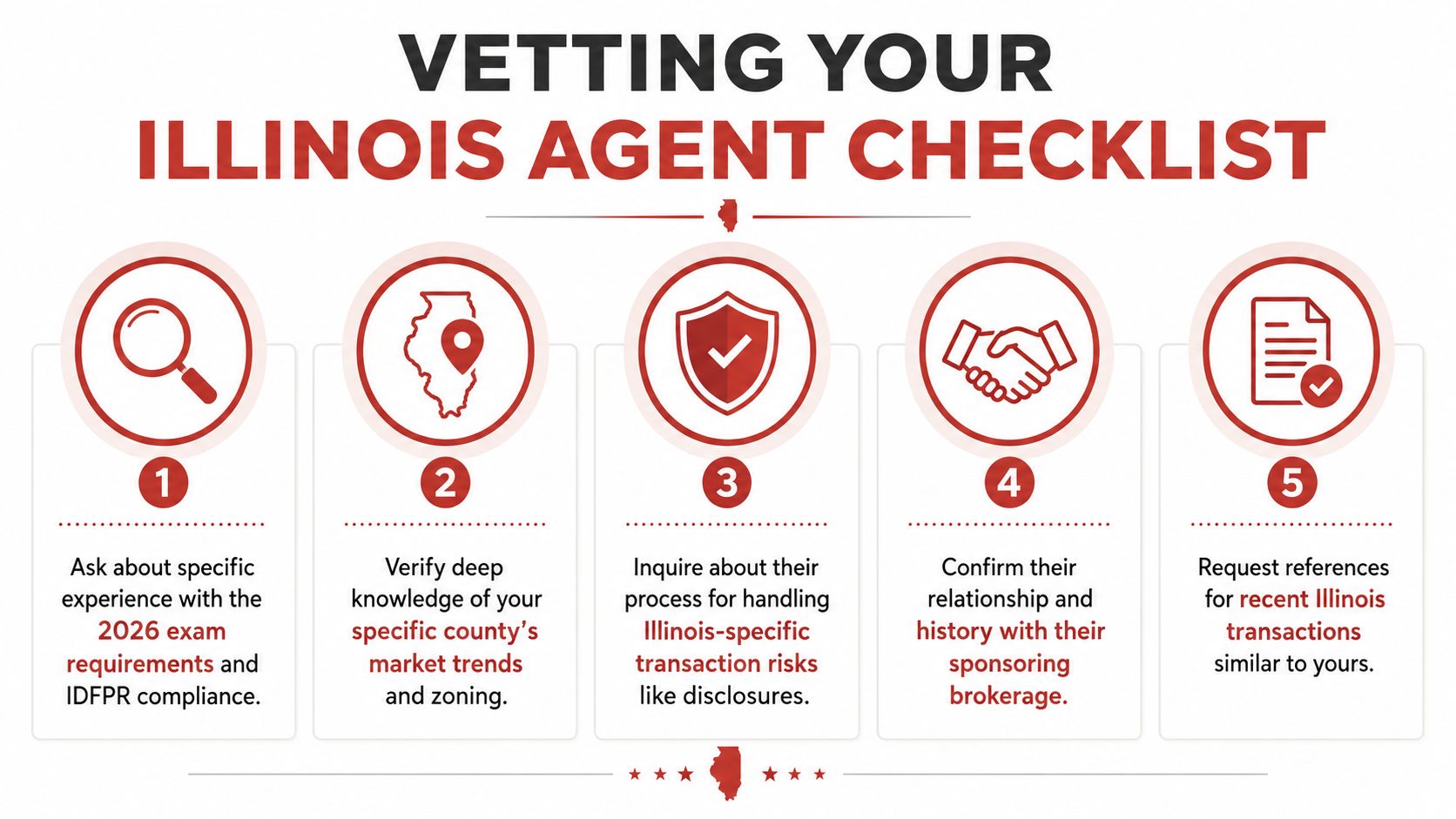
Start with the basics, then push harder. Ask how they handle the updated disclosure-heavy contract environment. Ask what they do with Illinois-specific issues like radon disclosure, well and septic requirements, and Chicago parking disclosure when those issues come up. If the answer is vague, you're talking to someone who works by habit instead of by process.
You should also ask how they work with their sponsoring brokerage. A strong answer includes who reviews contracts, who steps in if the agent is tied up, and how errors get caught before they become your problem. That's not a side question. That's the backbone of representation.
Red flags that should end the conversation
- No pre-listing or pre-offer walkthrough. That usually means they're skipping the step where mistakes get caught early.
- Dodges dual agency questions. That tells you they either don't know the rules well or don't want to be pinned down.
- Can't explain the difference between broker and agent. If they can't explain their own structure, don't trust them with yours.
- Talks only about marketing. Photos matter, but contracts and timing matter more.
- Refuses to discuss recent closings in your suburb. That's not humility, it's likely a lack of relevant experience.
Practical rule: Interview two or three people, and compare how they talk about your actual property type, not how they talk about themselves.
You can also check an active license through IDFPR, then ask for recent transactions similar to yours. A good agent won't hide behind generalities. They'll be able to tell you what they handled, where they handled it, and what came up.
For a more consumer-facing checklist, the right framing is similar to this guide on finding a good real estate agent. Use that kind of conversation as your filter, not just star ratings or referral hype.
What Good Agent Work Looks Like From Contract to Close
Good representation shows up after the contract is signed. A bad agent disappears into forwarded emails. A strong one keeps the timeline moving and catches problems before they become delays.
Once a Chicago-area purchase contract is accepted, the clock starts. The attorney review period begins, the inspection window matters, and the agent should track every deadline instead of waiting for panic. If the home needs follow-up on radon, repairs, or appraisal issues, the agent should push the other side with facts, not emotion.
What the agent should be doing
A well-run deal includes coordination with the lender, the attorney, the inspector, and the title side. The agent should keep pressure on the moving parts, confirm that the buyer understands what happens next, and make sure no one drifts. If the property is in a collar county with well and septic issues, that gets handled early, not treated like a surprise.
Seller-side work matters just as much. If repair credits are on the table, the agent should know when to push back, when to concede, and when to insist on cleaner terms. The point is to protect the client's position without blowing up the deal. For sellers, learning how to maximize value at closing matters too, and Chicago pocket listings and seller outcomes is a useful place to start.
The best agents don't create drama. They remove it.
Closing also demands discipline at the final walkthrough. No one should be winging it at the end. If something changed in the property or the agreed repairs were not completed, the agent needs to catch it before closing day. In a real Chicago transaction, that is where local judgment pays off, especially in suburbs where older homes, condo rules, or municipal requirements can change the timing fast.
That is the difference between representation and activity. One protects the client. The other just keeps messages moving.
Your Next Steps and a Practical Hiring Checklist
Pull three candidates from different brokerages, and make sure at least one works in the exact suburb or collar county you care about. Verify active sponsorship on IDFPR's license lookup before you interview anyone, then ask each person how they handle disclosures, deadlines, and your property type.
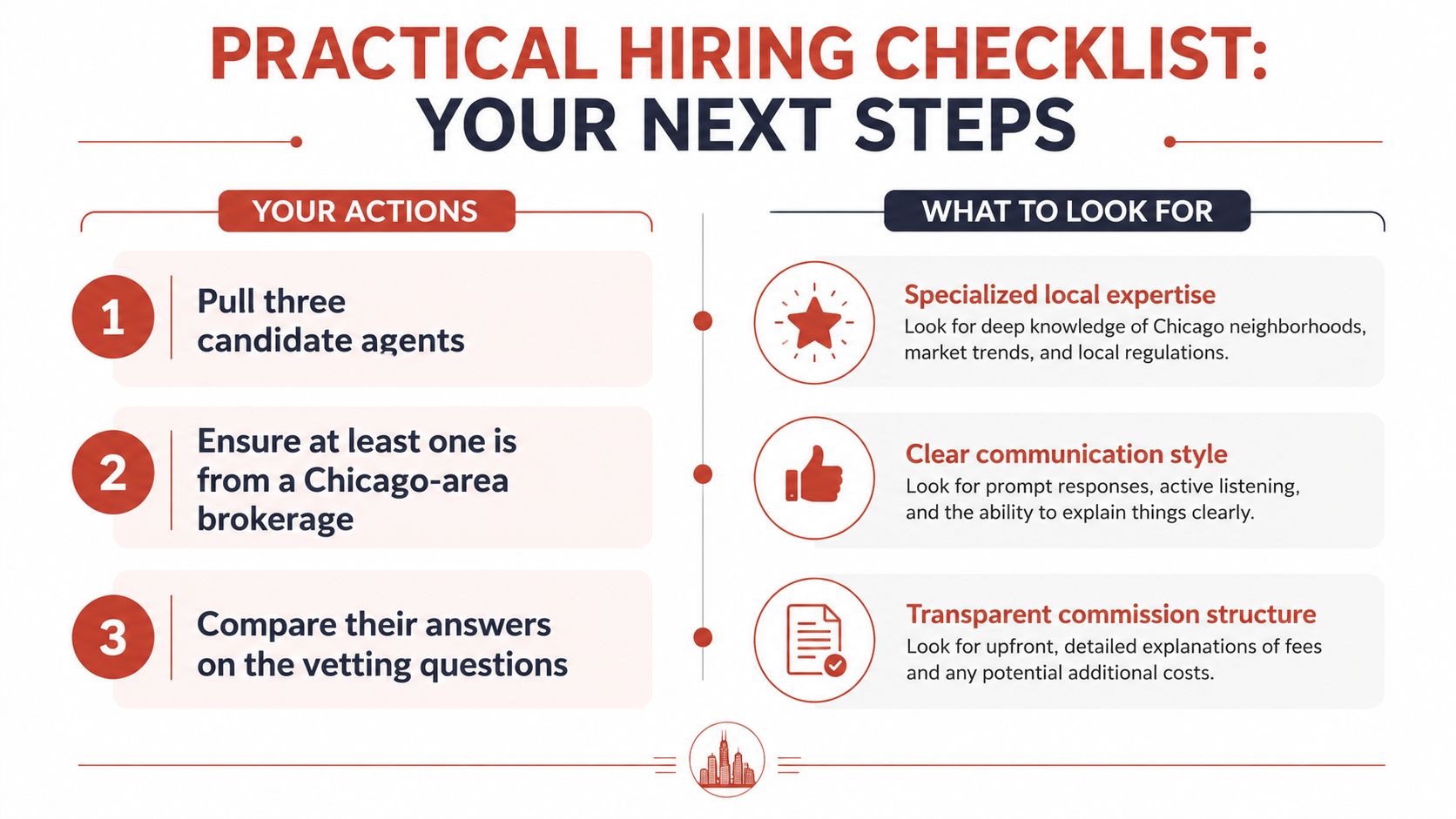
Brand size is secondary. Recent local closings, comfort with Illinois disclosures, and a willingness to bring in a real estate attorney when needed matter more. If you're buying or selling in Chicagoland, choose the person who can explain the process clearly and defend your interests when the deal gets real.
If you want practical help with a Chicagoland move, Homes By Carmen works with buyers, sellers, and renters across western suburbs like Melrose Park, Elmhurst, Downers Grove, Naperville, Oak Park, and Glen Ellyn. Start with Homes By Carmen if you want local guidance that's built around Illinois transactions, not generic advice.