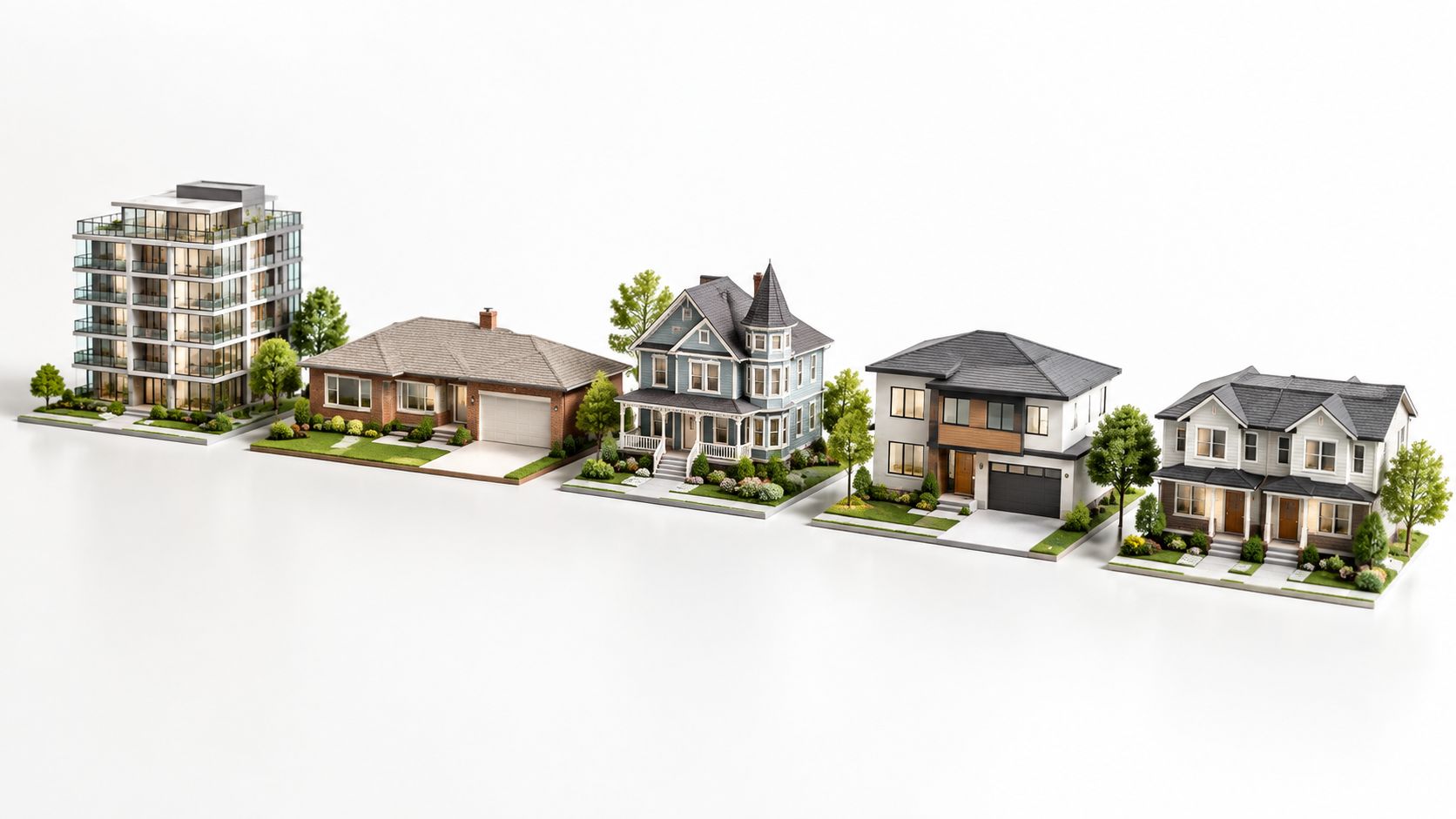
You've searched for homes for sale in Naperville and found a downtown condo, a west-side ranch, a historic house, a new construction property, and perhaps an investment duplex in the same results. The choices may all sit within one city, but they solve very different problems. One buyer wants Riverwalk access and minimal maintenance. Another needs bedrooms, a yard, a manageable commute, and room to grow.
This guide compares eight distinct Naperville home profiles across entry-level, move-up, luxury, low-maintenance, historic, new-construction, and income-producing options. Each profile connects the property type to a practical buyer decision, then adds questions about schools, transit, condition, taxes, HOA terms, and offer strategy.
Availability and pricing change quickly. Verify current listing status, property taxes, school boundaries, transit times, HOA documents, permits, insurance, and physical condition before making an offer. Homes By Carmen can support an MRED-powered search, tours, comparative analysis, offer strategy, inspections, and closing coordination for buyers evaluating Naperville and other western Chicagoland communities.
Table of Contents
- 1. Classic Colonial in Naperville's Central District
- 2. Contemporary Townhome in Naperville's Tech Corridor
- 3. Estate Home in Naperville's Prestigious Knoch Knolls Area
- 4. Starter Home or First-Time Buyer Ranch on the West Side
- 5. Luxury Condo in Naperville's Downtown District
- 6. Renovated Victorian or Historic Home in Naperville's Old Town
- 7. Investment Property in a Naperville Rental Corridor
- 8. New Construction or Builder Home in Naperville
- Homes for Sale in Naperville, 8-Property Comparison
- Turn a Shortlist Into a Confident Naperville Offer
1. Classic Colonial in Naperville's Central District
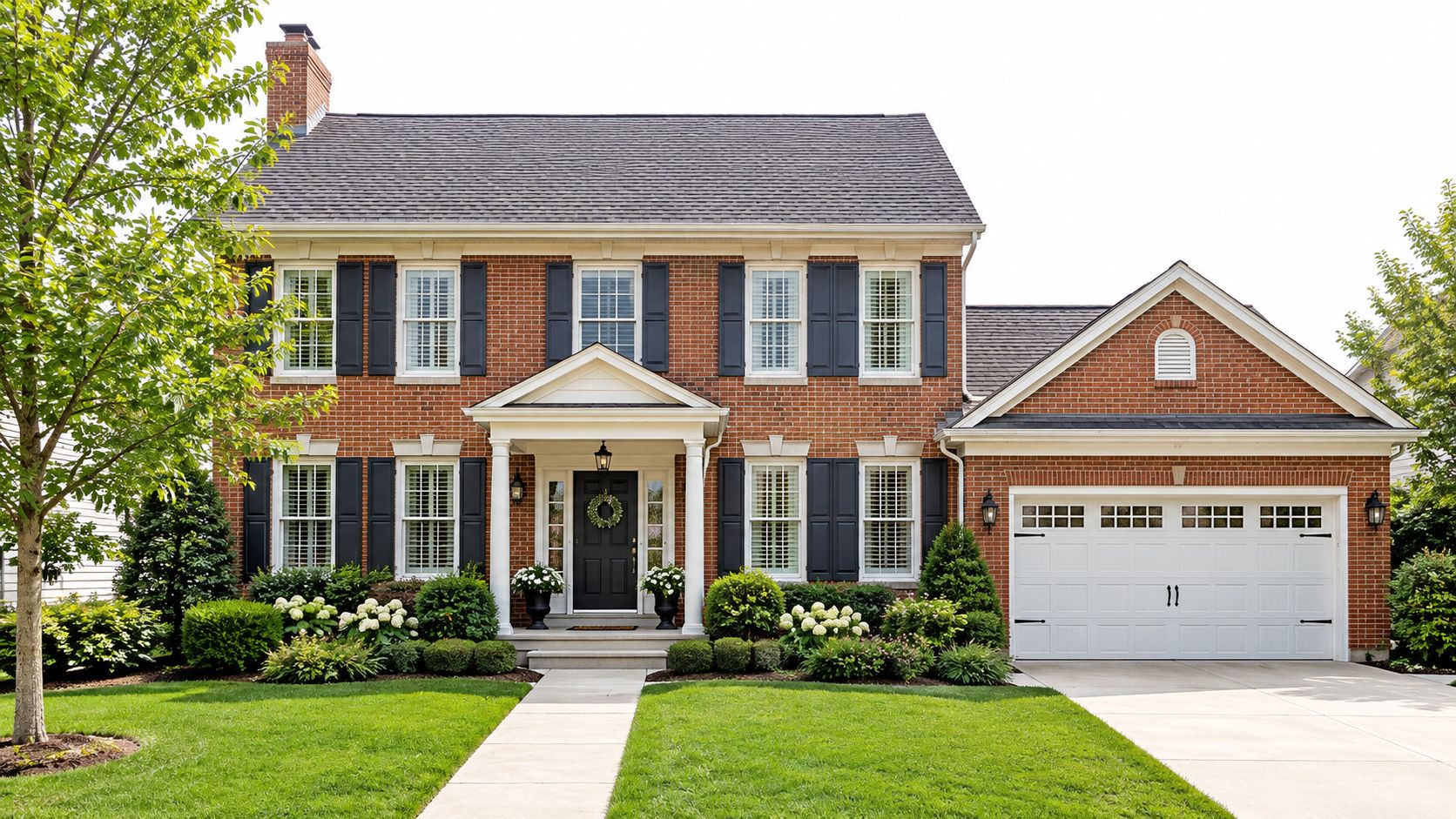
A traditional two-story colonial near central Naperville can suit a move-up buyer who wants more space without giving up access to downtown shops, restaurants, parks, and the Riverwalk. An updated kitchen and refreshed bathrooms may create a move-in-ready experience, while the established neighborhood provides mature landscaping and a settled streetscape.
The trade-off is that central convenience can bring more activity than a quiet outlying subdivision. A home near commercial areas, event routes, or popular pedestrian destinations may experience traffic noise, delivery activity, and increased weekend movement. Visit at different times, including normal business hours, before deciding that the location feels peaceful enough for daily life.
Practical rule: Walk the route you'd actually use, not just the route shown on a listing map.
Questions to answer before offering
Ask for invoices, permits, warranties, and contractor information for kitchen and bathroom work. “Updated” can describe anything from a cosmetic refresh to a complete system replacement, so the documentation matters. During the inspection, pay close attention to windows, drainage, roof condition, basement moisture, and older mechanical equipment.
You'll also want to review the property tax history and compare recent central Naperville sales with similar homes, not merely larger or more renovated properties. A current comparative analysis should account for lot size, finished space, garage configuration, updates, and location. Check municipal flood maps and ask how local drainage improvements affect the property.
Offer strategy
A strong offer should reflect verified condition rather than emotional competition. If comparable homes support the asking price and the updates are well documented, clean terms and a responsive inspection timeline may matter. If the seller can't substantiate renovation quality, preserve inspection protections and avoid paying a premium for vague upgrade language.
2. Contemporary Townhome in Naperville's Tech Corridor
A contemporary townhome can be a practical fit for young professionals, dual-income households, and corporate relocations that value modern finishes over extensive yard maintenance. Open living areas, attached parking, smart-home equipment, and proximity to employment centers can simplify weekday routines, especially for buyers who want a newer feel without managing a detached property.
The central question is what the HOA covers. A seemingly reasonable fee may include exterior maintenance, shared insurance, landscaping, snow removal, or amenities, while another community may leave owners responsible for more work. Compare the declarations, budget, reserve funding, recent meeting minutes, and any pending assessments before treating low maintenance as a guaranteed benefit.
Commute and technology due diligence
Verify drive times to employment centers such as Fermilab and Edward Jones offices during the hours you'll travel. A map estimate is only a starting point. Test the route yourself, then consider whether nearby roads, train access, bicycle routes, or remote-work needs change the value of the location.
Smart-home systems deserve their own review. Confirm whether equipment transfers with the property, whether subscriptions are required, and whether manufacturer support remains available. Ask for installation records and warranty terms for thermostats, cameras, locks, lighting controls, and network equipment.
Use an MRED-powered home search to compare townhomes by HOA cost, age, parking, included services, and location rather than relying on photographs alone.
Offer strategy
A seller may emphasize upgraded technology or designer finishes, but those features shouldn't replace a review of shared roofs, foundations, exterior walls, and reserve planning. Make the offer contingent on document review where appropriate, and price the home after comparing total ownership costs, not just the purchase price.
3. Estate Home in Naperville's Prestigious Knoch Knolls Area
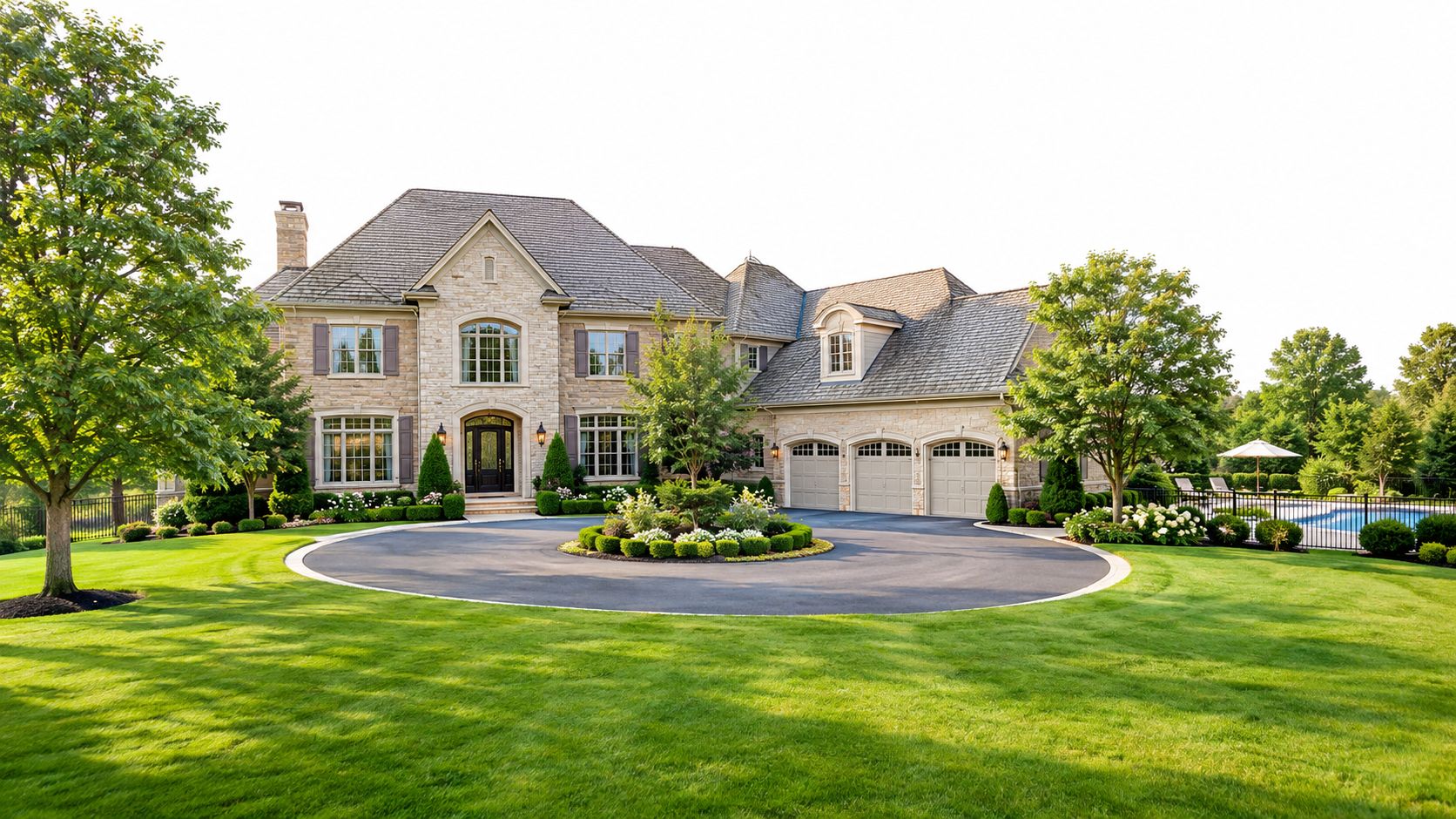
A large estate in Knoch Knolls serves a different buyer than a downtown condo. Executives, high-net-worth households, and multigenerational families may value privacy, mature landscaping, architectural character, expansive outdoor space, and room for guests or extended family. The property can feel more like a long-term compound than a simple residence.
That space comes with operating responsibility. Large roofs, long driveways, extensive landscaping, mature trees, private systems, and older mechanical equipment can create costs that aren't obvious during a polished showing. A buyer should assess the property as a collection of systems, not just as an impressive floor plan.
Large-lot ownership rewards preparation. The best offer is based on the next repair cycle, not the entry impression.
Inspection questions for a high-value property
Hire qualified professionals to evaluate the roof, foundation, HVAC, electrical service, plumbing, drainage, and any outbuildings. If the property uses a septic system, confirm its condition and maintenance history through a specialized inspection. Ask for records, tree-care reports, irrigation information, and documentation of major replacements.
Review the tax assessment history against comparable estates. A large home can be attractive while still carrying an assessment that deserves closer scrutiny. Insurance also needs early attention, particularly where the property includes unusual materials, extensive structures, high replacement values, or private systems.
Learn more about neighborhood amenities that can increase home value while keeping the analysis property-specific. Community appeal doesn't eliminate the need to inspect the individual home.
Offer strategy
If the roof, HVAC system, or another major component is near replacement, quantify the issue with contractor opinions before negotiating. A seller concession, repair agreement, or price adjustment may be more useful than accepting an unverified promise to address the problem later. Keep financing, appraisal, inspection, and document-review protections aligned with the property's complexity.
4. Starter Home or First-Time Buyer Ranch on the West Side
A west-side ranch can offer a more approachable entry into Naperville for a first-time buyer or a small household that values practical layout over grand scale. Single-level living, a manageable yard, and a basement can create flexibility without requiring the upkeep associated with a larger move-up home.
The right question isn't whether the payment works today. Ask how the home will function if you work from home, welcome a child, host relatives, or need a dedicated storage or recreation area. A basement may offer future potential, but finishing it requires planning for moisture control, egress, electrical capacity, insulation, permits, and heating.
Protect the first purchase
Get mortgage pre-approval before touring seriously. It helps define the realistic search range and gives your offer more credibility, but it shouldn't replace a full budget review. Include taxes, insurance, utilities, maintenance, repairs, and any planned basement work in the affordability calculation.
During inspection, focus on the roof's age, foundation movement, basement water intrusion, grading, HVAC, electrical service, plumbing, windows, and sewer condition. Request records for major updates. A seller's maintenance file can reveal whether the home received consistent care or whether several systems are approaching the same replacement period.
Offer strategy
A first-time buyer shouldn't waive important protections merely to appear competitive. Instead, strengthen the offer with clear financing documentation, a realistic closing timeline, and a focused inspection process. Compare similar west-side homes by condition and usable space. A lower-priced property needing several immediate repairs may cost more than a better-maintained home with a higher asking price.
If the basement is unfinished, value it as potential, not existing living space. Your offer should reflect what is legally usable now.
5. Luxury Condo in Naperville's Downtown District
A downtown luxury condo appeals to buyers who want restaurants, shops, cultural events, and the Riverwalk close by without handling a detached home's roof, lawn, or exterior maintenance. Empty-nesters may appreciate the simpler routine. Professionals may value the lock-and-leave setup. Urban-minded households may prefer a walkable setting to a larger suburban lot.
The building matters as much as the unit. A renovated kitchen and attractive view won't compensate for weak reserves, deferred maintenance, poor sound separation, or an upcoming capital project. Review the condominium declaration, bylaws, budget, reserve study, insurance, recent meeting minutes, and assessment history.
Building-level questions
Ask whether the association is planning work on elevators, façades, garages, roofs, windows, plumbing, or mechanical systems. Review the past year of meeting minutes for recurring disputes, water damage, owner delinquencies, or disagreements about repairs. Confirm what the monthly assessment includes and which utilities remain the owner's responsibility.
Visit the unit at different times to evaluate sound transfer from neighboring residences, hallways, traffic, restaurants, and building equipment. Check how HVAC, plumbing, and electrical systems are isolated from shared infrastructure. Ask your lender to review the building early, because commercial space, investor ownership, insurance issues, or association finances can affect financing eligibility.
Offer strategy
A condo offer should remain subject to document review and financing approval. If the association has uncertain reserves or a proposed assessment, price that risk into the offer rather than assuming the issue will resolve after closing. Also confirm flood insurance requirements for the building and unit, especially near waterways or areas identified in applicable flood mapping.
The lifestyle is low maintenance, not no maintenance. The association manages shared responsibilities, but owners still pay for unit repairs, assessments, insurance, taxes, and interior improvements.
6. Renovated Victorian or Historic Home in Naperville's Old Town
A restored Victorian in Old Town offers something a newer home usually can't reproduce, including distinctive proportions, period trim, mature trees, porches, and a direct connection to Naperville's architectural history. Buyers who care about design and neighborhood identity may accept a less standardized floor plan in exchange for character.
Historic ownership requires discipline. A renovation may look complete while concealing settling, plaster movement, outdated wiring, moisture problems, or incompatible materials. Hire an inspector experienced with older homes and ask the inspector to explain which conditions are normal for the structure and which require immediate action.
Preserve the character without losing practicality
Request permits, plans, invoices, contractor details, and product information for past renovations. Confirm that electrical, plumbing, structural, window, roofing, and insulation work complied with applicable requirements. An attractive restoration without clear documentation can complicate insurance, resale, and future remodeling.
Before planning exterior changes, contact the city's historic preservation office and review district guidelines. Restrictions may affect windows, siding, porches, additions, paint, landscaping, and other visible alterations. You should understand those rules before buying, not after deciding to remodel.
Character should be a deliberate choice, not a surprise maintenance obligation.
Insurance deserves early attention. Some carriers restrict coverage for older homes or apply different underwriting standards, so obtain quotes before the inspection period ends. Budget for specialized contractors and preservation-grade materials, then use curb appeal guidance for older homes that respects the property's architectural details.
Offer strategy
A historic home may attract buyers who respond emotionally to original features. Keep the offer grounded in inspection findings, insurability, permits, and realistic renovation plans. A seller credit can help with documented work, but it won't eliminate the need to understand future restrictions or maintenance methods.
7. Investment Property in a Naperville Rental Corridor
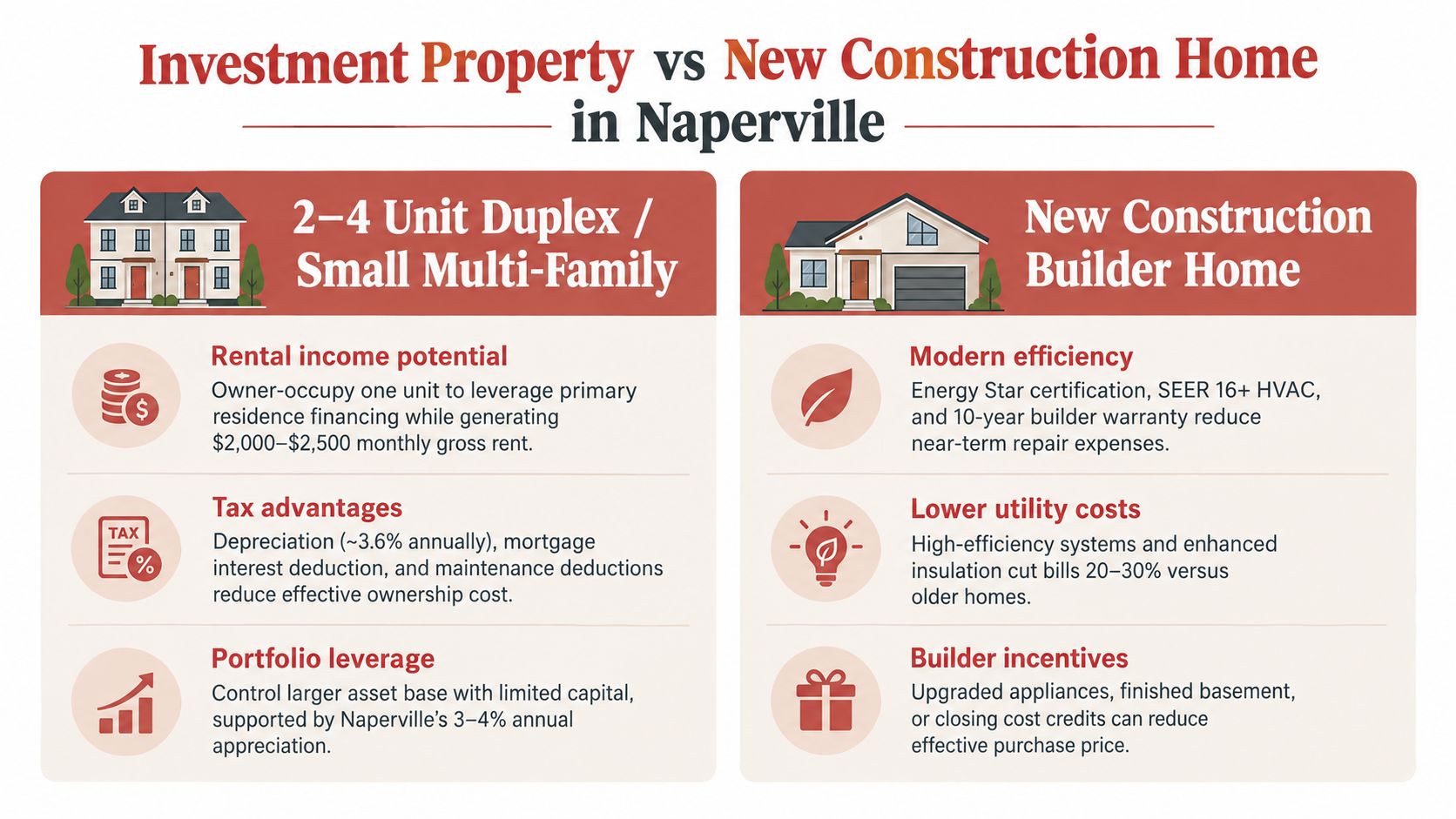
A duplex or small multifamily property can appeal to an investor seeking rental income, potential appreciation, and operational control. It may also suit an owner-occupant who wants to live in one unit while renting the other. The property's value depends less on staging than on legal use, actual income, expenses, tenant stability, and the condition of shared systems.
Start with the records. Request rent rolls, leases, payment histories, operating expenses, tax returns, utility bills, insurance information, repair invoices, and notices affecting the property. Compare the owner's claims with deposits and documented expenses. A projected rent figure isn't the same as collected income.
Underwrite the property conservatively
Model vacancy, repairs, capital replacements, taxes, insurance, utilities, management, and legal costs. Set aside reserves for roofs, HVAC systems, plumbing, electrical work, exterior maintenance, and unit turnover. If the property needs immediate improvements, separate those costs from recurring operating expenses so the first-year picture doesn't look artificially strong.
Verify zoning and permits independently for each unit. Some properties have informal conversions, unrecorded bedrooms, or rental arrangements that don't match municipal or association rules. Confirm occupancy requirements, fire safety, parking, licensing, and any restrictions on separate leases.
Offer strategy
An investor's offer should be based on verified operations and the cost to bring the property to a stable condition. Inspection needs to cover shared mechanical systems, foundations, sewer lines, roofs, electrical panels, and evidence of deferred maintenance in every unit. Include appropriate document and lease-review protections.
Consult a tax accountant and real estate attorney before selecting an ownership structure. Liability protection, financing, insurance, management, and tax treatment require professional advice. The attractive headline is rental income. The decision is whether the property can produce acceptable results after realistic expenses and active management.
8. New Construction or Builder Home in Naperville
A new builder home can offer contemporary layouts, energy-conscious construction, modern systems, customization choices, and a clearer early maintenance picture. It may suit a relocating family that needs a predictable move-in process, a move-up buyer who wants current design, or anyone who doesn't want to inherit years of deferred repairs.
New construction still requires buyer oversight. A builder warranty doesn't guarantee perfect workmanship, and a finished model can differ from the home delivered to you. Hire an independent inspector at appropriate construction stages when permitted, then complete a detailed final walkthrough with the builder representative.
Review the contract and community
Get warranty terms, exclusions, service procedures, and dispute-resolution provisions in writing. Confirm what the builder will repair, how requests are submitted, and whether deadlines apply. Document incomplete work, damaged finishes, missing fixtures, grading concerns, drainage issues, and appliance or system defects before closing.
Read the subdivision declarations, covenants, conditions, and restrictions, along with HOA budgets and reserve plans. Understand rules for fences, exterior changes, parking, landscaping, rentals, and future construction. Ask how the community will look when additional phases are built, because construction traffic and unfinished neighboring lots may affect the early ownership experience.
Offer strategy
Builder incentives can be useful, but compare their actual value. A closing-cost credit, rate-related assistance, appliance package, or upgrade allowance may affect your finances differently than a price reduction. Review competing builder terms and decide which concession helps your long-term budget rather than choosing the most visible promotion.
Verify the property tax assessment after completion and compare it with nearby resale homes of similar size and utility. A new home can reduce near-term repair uncertainty, but it won't remove taxes, HOA obligations, insurance, landscaping, or the possibility of community assessments.
Homes for Sale in Naperville, 8-Property Comparison
| Property | Purchase/Ownership Complexity | Resource Requirements | Expected Outcomes | Ideal Use Cases | Key Advantages |
|---|---|---|---|---|---|
| Classic Colonial (Central Naperville) | Moderate, competitive market, standard inspections | Medium, routine maintenance, monitor older roof/foundation, higher taxes | Steady appreciation, strong resale demand due to location | Move-up families, buyers valuing schools and walkability | Move-in ready updates, central location, top-rated schools |
| Contemporary Townhome (Tech Corridor) | Moderate, HOA/doc review, verify smart-system warranties | Low exterior burden but recurring HOA fees; modern systems lower repairs | Moderate appreciation; high demand from tech professionals | Young professionals, corporate relocates, low-maintenance buyers | Smart home features, energy efficiency, commute proximity |
| Estate Home (Knoch Knolls) | High, extensive due diligence, complex financing | Very high, acreage upkeep, specialized systems, premium taxes | Long-term premium appreciation, lower liquidity | High-net-worth buyers, multi-generational families | Large lot/privacy, luxury amenities, exclusive neighborhood |
| Starter Home (West Side Ranch) | Low–Moderate, simpler purchase but financing/PMI considerations | Low–Medium, lower utilities, possible near-term repairs | Modest appreciation; entry into Naperville market | First-time buyers, small families, investors | Affordability, single-story accessibility, school district support |
| Luxury Condo (Downtown High-Rise) | Moderate, condo docs, HOA/board and lender approvals | Medium–High, HOA fees cover maintenance but increase monthly cost | Stable appreciation in downtown market; lifestyle convenience | Empty-nesters, urban-minded buyers, downsizers | Walkability, building amenities, low exterior upkeep |
| Renovated Victorian (Old Town) | High, historic compliance, specialized inspections | High, preservation-grade maintenance, higher insurance | Niche appreciation; value for character-conscious buyers | Buyers valuing architecture, historic preservation enthusiasts | Distinctive craftsmanship, historic character, prime Old Town location |
| Investment Property (2–4 Unit Duplex) | High, pro forma underwriting, rent rolls, zoning checks | Medium–High, tenant management or property management fees, reserves | Cash flow plus tax benefits; moderate appreciation | Real estate investors, owner-occupiers leveraging rental income | Rental income, tax deductions, leveraged portfolio growth |
| New Construction / Builder Home | Moderate, builder contracts, warranty and incentive negotiation | Low–Medium, new systems reduce near-term repairs; possible HOA | Predictable maintenance, energy savings; appreciation varies by market | Move-up buyers, families wanting modern systems and warranties | Energy efficiency, customization options, builder warranty |
Turn a Shortlist Into a Confident Naperville Offer
The best choice among homes for sale in Naperville depends on the problem you're solving. Choose a central colonial if walkability and established neighborhood convenience matter more than maximum privacy. Consider a west-side ranch when lower entry cost and practical living are the priority. A Knoch Knolls estate offers space and privacy, but it demands a larger maintenance plan. A downtown condo trades yard work for association risk and building-level financial review.
The other profiles create equally clear trade-offs. A townhome can simplify ownership while making HOA documents central to the decision. A historic Victorian delivers character that new construction can't duplicate, but preservation rules, specialized repairs, and insurance require preparation. A duplex may support rental income, yet its success depends on verified leases, legal units, operating costs, and hands-on management. A builder home offers modern systems and warranty coverage, but buyers still need independent inspections, contract review, and community due diligence.
Market timing also needs a precise definition. Zillow reported an average Naperville home value of $629,473 in late July 2026, up 4.3% over the prior year, alongside 476 homes for sale, 226 new listings, a $600,500 median sale price, and a 13-day median time to pending in its market overview at Zillow's Naperville home values page. Redfin reported a $655K median sale price for the three months ending August 2026, up 4.7% year over year, with homes selling in about 49 days and 597 homes sold in August, compared with 579 a year earlier, as shown in its Naperville housing market report.
Those figures describe different measurements, not a contradiction to ignore. Realtor.com reported a 28-day median time on market, while the Chicago-Naperville-Elgin metro median was 36 days in August 2026, according to its Naperville market page. Pending speed, closed-sale timing, property type, price band, condition, and location can all produce different results. Ask how the specific home compares with similar recent sales instead of relying on one citywide average.
Before offering, follow a practical sequence:
- Confirm financing: Review pre-approval, cash reserves, projected payment, taxes, insurance, HOA dues, and planned repairs.
- Verify location details: Check school boundaries directly with the relevant districts and test actual transit or driving routes at realistic travel times.
- Compare full ownership costs: Include assessments, utilities, maintenance, insurance, rental management, landscaping, and likely capital projects.
- Study comparable sales: Match property type, condition, lot, updates, parking, location, and usable space.
- Schedule targeted inspections: Add specialists for historic construction, septic systems, roofs, trees, sewer lines, shared building systems, or multifamily operations when needed.
- Model the long term: Estimate how the home will work if your household, job, maintenance tolerance, or investment goals change.
Homes By Carmen can help narrow an MRED-based search, arrange tours, explain neighborhood differences, prepare comparative analysis, develop an offer strategy, coordinate inspections, and manage closing steps. Treat the profiles above as decision paths, not current listings. Availability, pricing, taxes, school boundaries, HOA terms, and condition must be verified for each property before you commit.
For current homes for sale in Naperville, Homes By Carmen can help with MRED-supported searches, neighborhood guidance, tours, comparable analysis, offer negotiation, inspection coordination, and closing support. Visit Homes By Carmen to start building a shortlist matched to your budget, lifestyle, and ownership goals.