
You're standing in a freshly painted bungalow in Melrose Park. The floors are clean, the kitchen appliances work, the basement has been swept out, and the MLS description says move in ready. You can already see where the sofa will go, and the listing feels easier to justify than the dated house down the block that needs obvious work.
That reaction is understandable, but the label doesn't answer the questions that can create the most expensive surprises. How old is the roof? Has the furnace been serviced? Is the electrical panel adequate? Has anyone scoped the sewer line, checked the window seals, or documented previous water intrusion? Before you write an offer, treat “move in ready” as a starting point for verification, not a substitute for it. A careful review of features that sell a house should include the features buyers can see and the systems they can't.
Table of Contents
- What a Buyer Is Actually Looking At
- Defining Move In Ready Beyond the Paint
- Why the Label Is Not a Standard
- Move In Ready Versus a Fixer-Upper
- Inspections and Contingencies
- Pricing and Market Behavior
- How Buyers and Sellers Should Use the Label
- Making the Right Call on Your Next Home
What a Buyer Is Actually Looking At
A polished showing tells you how the home presents today. It doesn't necessarily tell you how the home will perform after closing.
Start with the visible condition. Look at the paint, flooring, kitchen cabinets, countertops, fixtures, bathrooms, appliances, lighting, and basement cleanliness. Those details shape buyer emotion and often explain why a property feels easier to buy than a home with worn finishes. They also matter to sellers because buyers frequently compare the immediate experience of two otherwise similar homes.
Then slow down. Open cabinet doors, run faucets, flush toilets, turn on appliances, and look beneath sinks. Check whether doors and windows operate properly. In a western suburban home, a clean basement is encouraging, but it doesn't prove that the walls have stayed dry through heavy rain or that the floor drain and sump system are functioning properly.
The hidden questions matter more
Ask for the age and service history of the roof, furnace, air conditioner, and water heater. You don't need every component to be new, but you do need a realistic understanding of remaining service life and likely near-term maintenance.
Pay attention to the electrical panel and visible wiring. An updated kitchen can coexist with an older electrical system. The same applies to plumbing. New faucets and a renovated bathroom don't establish the condition of supply lines, drainage, or the sewer lateral.
The listing may not highlight:
- Roof condition: Ask when it was installed, whether repairs were completed, and whether the seller has invoices.
- Mechanical history: Request service records for the furnace, air conditioner, and water heater.
- Sewer risk: Consider whether a sewer scope is appropriate, especially for older housing stock.
- Moisture evidence: Check basement corners, window wells, ceilings, and areas near plumbing fixtures.
- Unpermitted work: Ask whether additions, finished basements, electrical changes, or plumbing work received required approvals.
- Disclosures: Read the seller's disclosures carefully instead of relying on the marketing description.
A home can look ready for furniture while still needing investigation. Your job during the showing is to separate ready to occupy from recently remodeled, because those aren't the same promise.
Defining Move In Ready Beyond the Paint
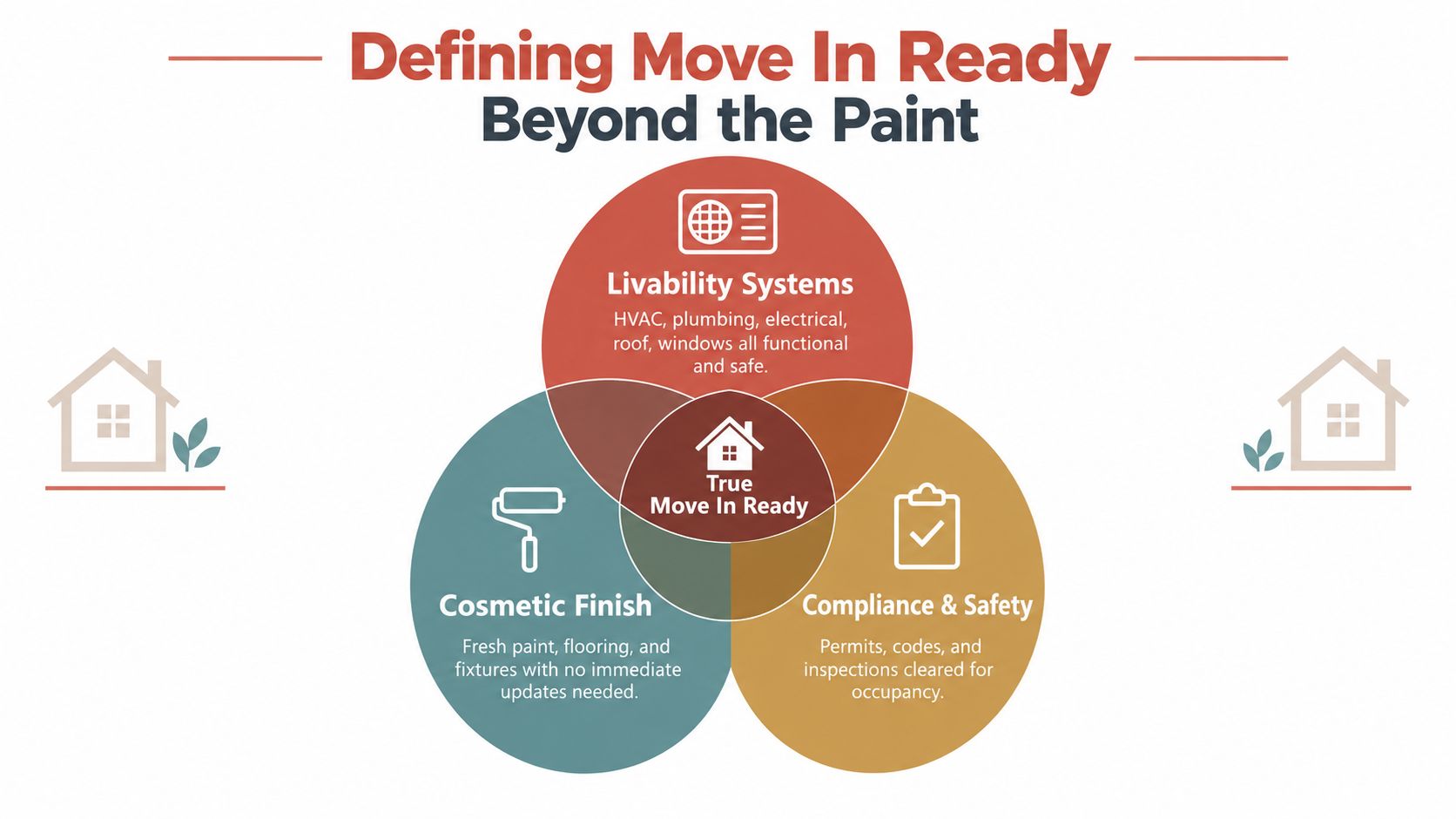
The practical definition has three layers. A property deserves the label only when those layers overlap well enough for ordinary occupancy without immediate major repair work.
Livability systems
The first layer covers the systems that let you live in the home safely and normally. Electrical, plumbing, roofing, heating, cooling, windows, and major appliances should function as represented. A home with a beautiful kitchen but a failing furnace doesn't meet the functional standard most buyers reasonably associate with move in ready.
A consumer explanation of the term describes immediate livability through working electrical, plumbing, roof, and HVAC systems, with no obvious safety or habitability defects, as outlined in this move in ready home definition. That doesn't mean every system must be new. It means the buyer shouldn't need to arrange urgent contractor work before normal use.
Compliance and safety
The second layer is basic habitability. Look for working heat, hot water, sanitary plumbing, functioning smoke and carbon monoxide detectors, and the absence of visible mold or active water intrusion. Known safety defects, exposed wiring, significant leaks, or nonfunctioning heating and cooling should immediately change how you evaluate the listing.
Permits also matter. A finished basement or remodeled bathroom may look complete, but documentation can affect future work, insurance questions, and resale discussions. Don't confuse attractive workmanship with proof that the work was properly approved.
Cosmetic finish
The third layer includes paint, flooring, fixtures, kitchens, and baths. This is the layer listing photography emphasizes because buyers can understand it instantly. It also creates the strongest emotional response, which is why sellers invest in presentation before listing.
Two homes can both be described as move in ready and still feel completely different. One may have new finishes and older but serviceable systems. Another may have modest cosmetic updates but a newer roof, documented mechanical maintenance, and clean inspection results. Before you judge the finish, review how to increase curb appeal as part of the broader presentation, then pressure test what the camera can't show.
Why the Label Is Not a Standard
Move in ready isn't a universal legal certification. There isn't a single required checklist that every seller, agent, inspector, or listing database applies before using the phrase. A consumer explainer describes the term as generally meaning suitable for immediate occupancy and consistent with local safety, health, and building-code expectations, while also noting that property condition isn't captured by a simple universal yes-or-no field in listing systems. You can review that distinction in this explanation of what move in ready means.
That gap creates a practical problem. Sellers may use the words to describe a home that needs no immediate work, or they may use them to emphasize fresh finishes while leaving system age unclear. Neither interpretation automatically tells you about a sewer lateral, hidden moisture, an aging furnace, window seal failure, or unpermitted construction.
What the phrase cannot replace
The label doesn't replace seller disclosures. It doesn't replace an inspection contingency, attorney review, title work, or contract language. It also doesn't create a promise that the seller will repair every issue an inspector finds.
Practical rule: Treat “move in ready” as marketing language until the inspection, disclosures, records, and contract give it measurable meaning.
In Illinois transactions, the inspection process and contingency terms depend on the contract you sign. If you waive an inspection contingency because the home looks finished, you may be giving up negotiating power over problems that were never visible during the showing. The same caution applies to attorney review and appraisal-related terms. A polished home can reduce your appetite for scrutiny, but it hasn't reduced the need for scrutiny.
Ask the listing agent direct questions. What repairs has the seller completed? Are there invoices? Has the basement ever taken on water? Are there open permits or known code concerns? Were any systems excluded from the seller's understanding of the term? The answers won't eliminate due diligence, but they can reveal whether the label reflects documented condition or attractive presentation.
Move In Ready Versus a Fixer-Upper
A move in ready home and a fixer-upper solve different problems. The first prioritizes an earlier, more predictable occupancy date. The second may offer a lower entry price or more control, but it puts the buyer in charge of scope, contractors, permits, scheduling, and cost risk.
The choice becomes clearer when you compare three factors: time, total out-of-pocket cost, and uncertainty. A buyer relocating for work or trying to settle children before a school year may value immediate usability more than a buyer with flexible timing and established contractor relationships. A remote worker may also place a higher value on having a functional office immediately rather than living through demolition.
Use qualitative estimates until contractors and inspectors provide real numbers. Listing photos shouldn't become a renovation budget.
| Factor | Move In Ready | Fixer-Upper |
|---|---|---|
| Time to occupancy | Usually supports earlier occupancy, subject to closing and inspection findings | May require repairs before normal use |
| Immediate cash needs | Often concentrated on maintenance, furnishings, and minor touches | Can include systems work, permits, materials, and temporary living costs |
| Budget certainty | Easier to evaluate because the finished condition is visible | Scope can expand after walls, floors, or mechanical areas are opened |
| Monthly carrying costs | More likely to support a cleaner transition from closing to occupancy | May require rent, temporary housing, or overlapping ownership costs |
| Buyer control | Less renovation control, but fewer project decisions | More control over layout and finishes |
| Inspection leverage | Buyers still need to test the condition behind the presentation | Major defects may be more obvious, but hidden conditions still matter |
| Best fit | Tight relocation, limited reserves, accessibility needs, or low project tolerance | Longer timeline, renovation experience, contractor access, and cash flexibility |
A fixer-upper isn't automatically a bad purchase. It becomes a bad purchase when the buyer underestimates the time without a usable home, lacks reserves for surprises, or assumes the discount covers every repair. A move in ready home isn't automatically overpriced either. Its premium makes sense only when the systems, documentation, and inspection support the convenience being sold.
Inspections and Contingencies
The buyer who says, “It's move in ready, so we can skip the inspection,” is taking the wrong lesson from the label. Finished surfaces can hide an older electrical panel, a defective sewer lateral, radon, failed window seals, deferred maintenance, or moisture that appears only under certain conditions.
The inspection doesn't guarantee a perfect home. It gives you information before your contractual deadlines and helps distinguish manageable maintenance from a defect that changes the economics of the purchase.
How the response usually develops
Suppose an inspector finds an older furnace with limited remaining service life but no current failure. That may support a maintenance plan or a request for a credit, depending on the contract and negotiation. If the inspector finds active water intrusion, unsafe wiring, or a major sewer defect, the buyer may seek repair, a credit, a price adjustment, or a contractual exit if the contingency permits it.
The seller's response depends on the agreement, the severity of the finding, market conditions, and the strength of the buyer's position. Don't assume the seller must correct every item. Don't assume the buyer must accept every item either.
A practical decision sequence looks like this:
- Confirm the finding. Get the appropriate specialist involved when the general inspection identifies a serious concern.
- Separate safety from preference. A cosmetic imperfection isn't equivalent to a failed system or active leak.
- Price the exposure. Obtain a realistic repair estimate and consider timing, access, permits, and disruption.
- Choose the remedy. The response may involve a repair, credit, price change, escrow arrangement, or termination where the contract allows.
- Document the agreement. Put negotiated work and credits in writing before deadlines expire.
“Move in ready” should make you more confident in the inspection process, not less willing to use it.
Waiving an inspection contingency, appraisal protection, or attorney review can make an offer more competitive, but each waiver removes a separate layer of protection. Waiving terms on a home described as move in ready is especially risky because the label may lower your guard without changing the underlying condition. On a tear-down, you already expect major work. On a polished home, you may fail to budget for it.
Pricing and Market Behavior
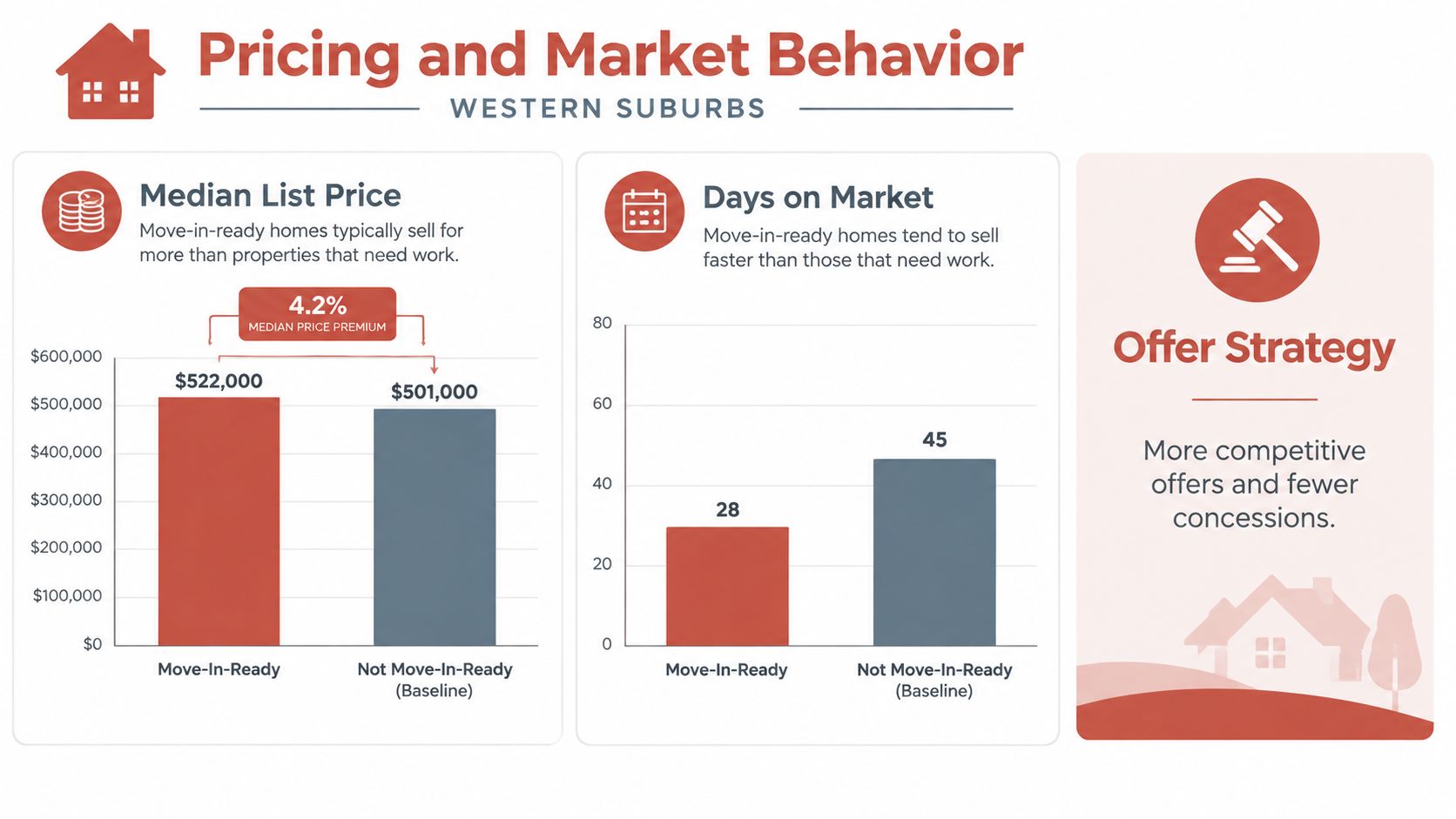
Move in ready condition influences pricing because buyers pay for more than square footage. They pay for a shorter path from closing to ordinary use, fewer immediate contractor decisions, and less disruption. Sellers who document condition can make that convenience easier for an appraiser and buyer to evaluate.
The supplied western suburban market data reports a 4.2% median price premium for move-in-ready listings in communities including Oak Park, River Forest, and Brookfield, along with 11 fewer days on market on average. Those figures should anchor a pricing conversation, not become an automatic markup for every listing using the phrase.
How the premium takes shape
Listing agents typically look at recent comparable sales, condition adjustments, renovation quality, location, lot characteristics, and buyer competition. A remodeled kitchen alone doesn't justify the same adjustment as a property with updated or well-documented major systems. Appraisers also need support for condition differences, which means invoices, permits, inspection information, and comparable sales can strengthen the argument.
A buyer's agent should test the premium rather than accept it. Compare the asking price with homes that have similar size, location, age, and condition. Then ask whether the difference reflects verifiable work or staging and fresh paint. The inspection becomes the market's reality check. If major systems remain uncertain, the buyer may have grounds to renegotiate despite the listing language.
Offer strategy also depends on season and financing conditions. During busier periods, buyers may compete more aggressively for clean, usable homes. When mortgage payments feel more sensitive to price, buyers may scrutinize the premium and request credits instead of stretching to the top of their budget. Read current Chicago housing market trends alongside the property's actual comparables, not as a replacement for them.
How Buyers and Sellers Should Use the Label
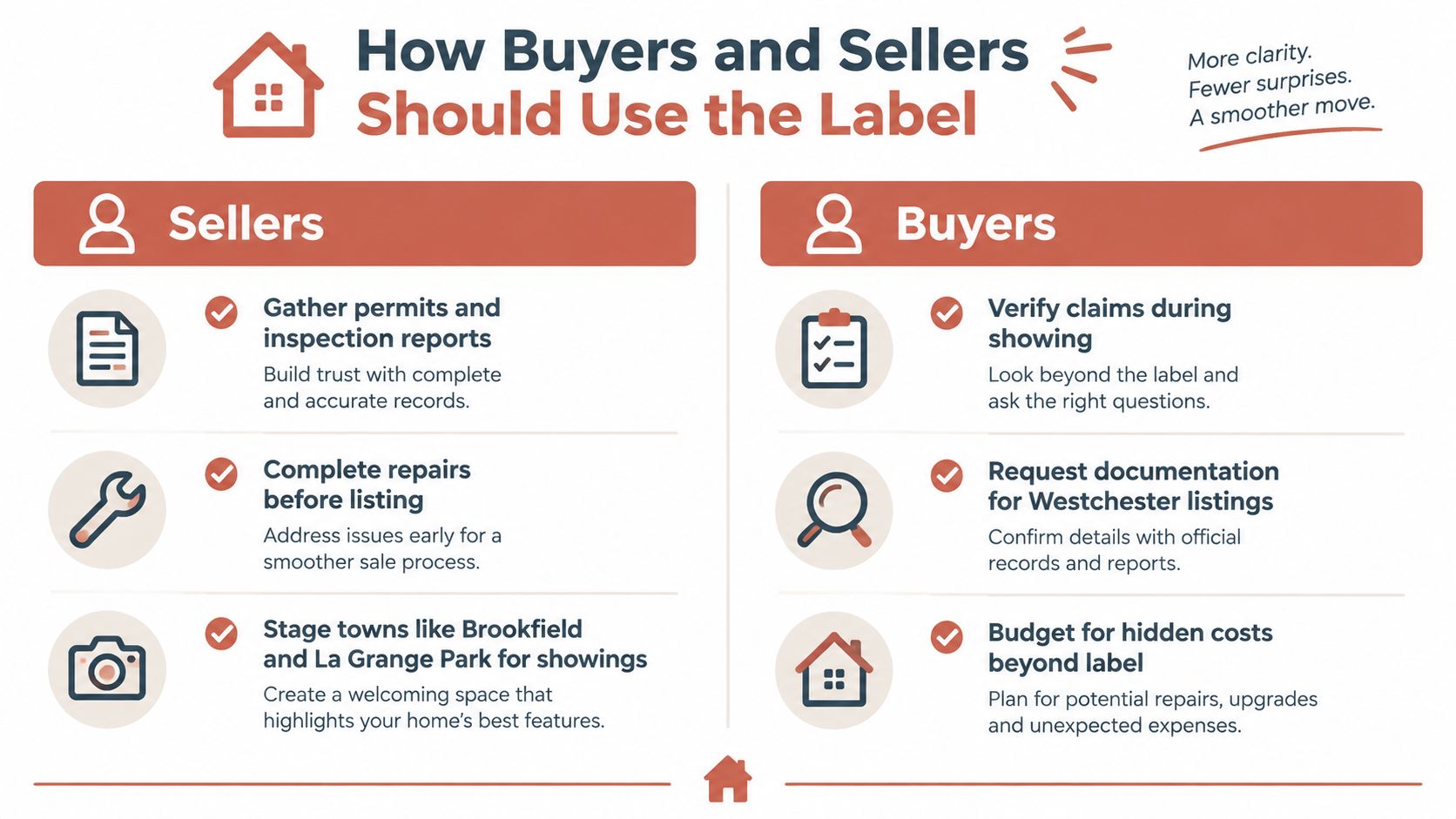
Sellers should earn the phrase before putting it in the headline. Buyers should verify it before allowing the phrase to influence an offer.
A seller's proof file
A seller in Brookfield, La Grange Park, or Westchester can reduce buyer uncertainty by gathering records before listing. The goal isn't to promise perfection. It's to show what was done, when it was done, and what remains ordinary maintenance.
- Gather documentation: Collect permits, inspection reports, repair invoices, appliance information, and service records.
- Record system condition: Photograph the furnace, water heater, electrical panel, roof areas where accessible, and basement utility spaces.
- Explain improvements accurately: State whether work was replaced, repaired, serviced, or refreshed.
- Disclose known issues: Don't bury water history, roof repairs, drainage concerns, or exclusions beneath broad marketing language.
- Prepare for questions: Be ready to explain what the phrase means in this particular home.
A dated photo of a mechanical system doesn't prove that it works today, but it gives the buyer a useful starting point. A permit record doesn't guarantee quality, but it helps establish that the work wasn't invisible to the municipality.
A buyer's verification list
During the showing, inspect function before style. Ask the listing agent about the roof's age, furnace and air conditioner service, water heater condition, electrical panel, window seals, appliance operation, basement moisture, sewer history, and known repairs. Then request supporting records where they exist.
At inspection, focus on the same items with professional testing and observation. Older Chicago-area homes deserve particular attention in basements, near foundation walls, around window wells, under plumbing fixtures, and at the connection between the home and the municipal sewer system.
Ask one question that often exposes the gap: “What did the seller leave out of the move in ready description because it wasn't considered an immediate occupancy issue?” The answer may identify older but functional systems, planned maintenance, excluded appliances, or work the buyer should price into the decision.
Sellers benefit from specific language because it builds trust. Buyers benefit from specific questions because it prevents a marketing phrase from doing the thinking for them.
Making the Right Call on Your Next Home
The right decision depends on your finances, timeline, and tolerance for uncertainty, not on whether the listing feels polished during a twenty-minute tour.
Paying a premium can be rational when you need to relocate by a firm date, lack renovation reserves, have accessibility or safety needs, or want a predictable transition from closing to occupancy. It can also make sense for a seller who wants a cleaner path to contract and more predictable proceeds, provided the asking price reflects documented condition rather than optimistic wording.
Negotiating around the label makes more sense when you have contractor relationships, time to manage a project, cash flexibility, and a clear renovation plan. In that situation, a dated home may offer more control and a better fit than a finished property priced for convenience. But you still need to separate a manageable cosmetic project from structural, moisture, electrical, plumbing, or permitting risk.
Use this final test:
- Can you occupy the home safely and normally after closing?
- Can you cover likely maintenance without depending on an immediate credit?
- Can your timeline absorb a delayed repair or contractor schedule?
- Will the inspection and contract preserve enough if the label proves incomplete?
- Does the price premium match verifiable systems and condition?
The national market evidence supports strong buyer preference for completed homes. Completed homes represented 42% of U.S. new-home sales in 2023, compared with an average of 37% from 2010 through 2020, according to this move in ready market overview. Consumer coverage also reports that 62% of homeowners bought a move-in-ready home, compared with 28.1% who bought a fixer-upper, while mid-2025 median market time was 53 days for fixer-uppers versus 50.5 days for similarly priced move-in-ready homes in the cited survey coverage (buyer preference and market-time report). Those figures show demand for convenience, but they don't prove that every labeled home deserves a premium.
My recommendation is straightforward. Price and negotiate the property you can verify, not the phrase printed in the MLS. A move in ready home should make the inspection cleaner and the transition easier, while still leaving you with enough information and contractual protection to make a disciplined decision.
Homes By Carmen helps buyers in Melrose Park and the western Chicago suburbs evaluate condition, compare move in ready homes with fixer-uppers, coordinate inspections, and shape offers around real risk. If you're buying or preparing to sell, visit Homes By Carmen to discuss your property, timeline, and next move.