
Illinois home prices pushed higher again in mid-2026, with the statewide median reaching $343,923 in June, up 6.5% year over year, while 36.0% of homes sold above list price and inventory still rose only modestly. That mix matters because it shows a market that's still competitive, but no longer uniform. In western Chicagoland, the story is even more specific, because a buyer in Naperville, Oak Park, or DuPage County is not shopping in the same market as someone relying on statewide averages.
Takeaway is simple. Illinois housing market headlines tell you direction, but they don't tell you pressure. In some suburbs, buyers have a little more breathing room than they did a year ago. In others, well-priced homes still move fast, and pricing mistakes still get punished quickly.
Table of Contents
- Current State of the Illinois Housing Market
- Long-Term Price Growth and Affordability Pressures
- Supply Constraints and What They Mean for Buyers
- Western Suburb Market Divergence in Action
- Strategic Moves for Sellers and Buyers Right Now
- Zoning Changes and Transit Projects to Watch
- Why Local Expertise Matters More Than Statewide Averages
Current State of the Illinois Housing Market
The clearest statewide read on the Illinois housing market starts with price. In June 2026, the median home price reached $343,923, a 6.5% increase from the prior year, while statewide sales totaled 11,611 homes, up 1.1% from 11,489 in June 2025. Illinois REALTORS also reported 14,374 statewide sales for June 2026, up 2.4%, with a monthly median price of $345,000, up 6.2% from $325,000 a year earlier. Those numbers don't describe a frozen market. They describe a market where buyers are still writing offers and sellers still have an advantage.
What the numbers say about pace
Competition is still present. In June 2026, 36.0% of homes sold above list price, and inventory rose only 3.0% year over year even as prices kept climbing. That combination usually means buyers can't assume broad negotiating room, especially in desirable school districts and commuter-friendly suburbs.
Practical rule: if a home is updated, correctly priced, and in a sought-after location, expect faster attention than the statewide average suggests.
Closed sales also matter because they show real demand, not just interest. Illinois REALTORS' July 2026 market stats showed 13,503 closed sales, up 0.8% from a year earlier, while active listings fell to 22,363, down 4.7% (Illinois REALTORS market stats). That's the kind of inventory pattern that keeps sellers in a decent position and forces buyers to stay prepared.
What this means for day-to-day decisions
For sellers, the baseline is still favorable if the house is market-ready. For buyers, the bigger adjustment is monthly payment math, not just list price. Even when competition isn't as frantic as it was at the peak, a home that appraises, inspects, and finances cleanly still beats a bargain that turns messy after contract.
Outmigration also matters here, because some corridors feel softer than others when households have more geographic flexibility. That doesn't erase demand in the strongest western suburbs, but it does dampen activity in areas where buyers have more alternatives and less urgency. The statewide picture is useful as a backdrop. It's not enough to price a home, or decide how aggressive to be, on its own.
| Metric | Current | Prior Year | YoY Change |
|---|---|---|---|
| Median home price | $343,923 | $323,?? | 6.5% |
| Homes sold statewide | 11,611 | 11,489 | 1.1% |
| Homes selling above list price | 36.0% | Not provided | Not provided |
| Inventory | Not provided | Not provided | 3.0% |
Long-Term Price Growth and Affordability Pressures
Illinois home prices have been climbing for years, and the long arc matters because today's affordability problem didn't appear overnight. The Federal Reserve's Illinois house price index reached 550.96 in Q1 2026, using 1980:Q1 as the base period (FRED Illinois house price index). Illinois REALTORS' annual report also shows statewide median sales prices rising from $269,000 in 2023 to $290,000 in 2024, while the Chicago metro median rose from $324,500 to $350,000 over the same period (FRED Illinois house price index). Those are not just annual increases. They're evidence of compounding pressure on entry points.
Why equity growth changes behavior
Once homeowners have meaningful equity, they don't move casually. Many stay put longer because selling one home and buying another means giving up a low monthly payment and paying more to replace it. That creates a supply effect that buyers feel immediately, even if they never see it on a spreadsheet.
The result is a market that keeps rewarding existing owners while making new entrants work harder. First-time buyers aren't just competing on price. They're competing against years of appreciation, limited turnover, and the fact that a seller who bought earlier is often sitting on a large equity cushion.
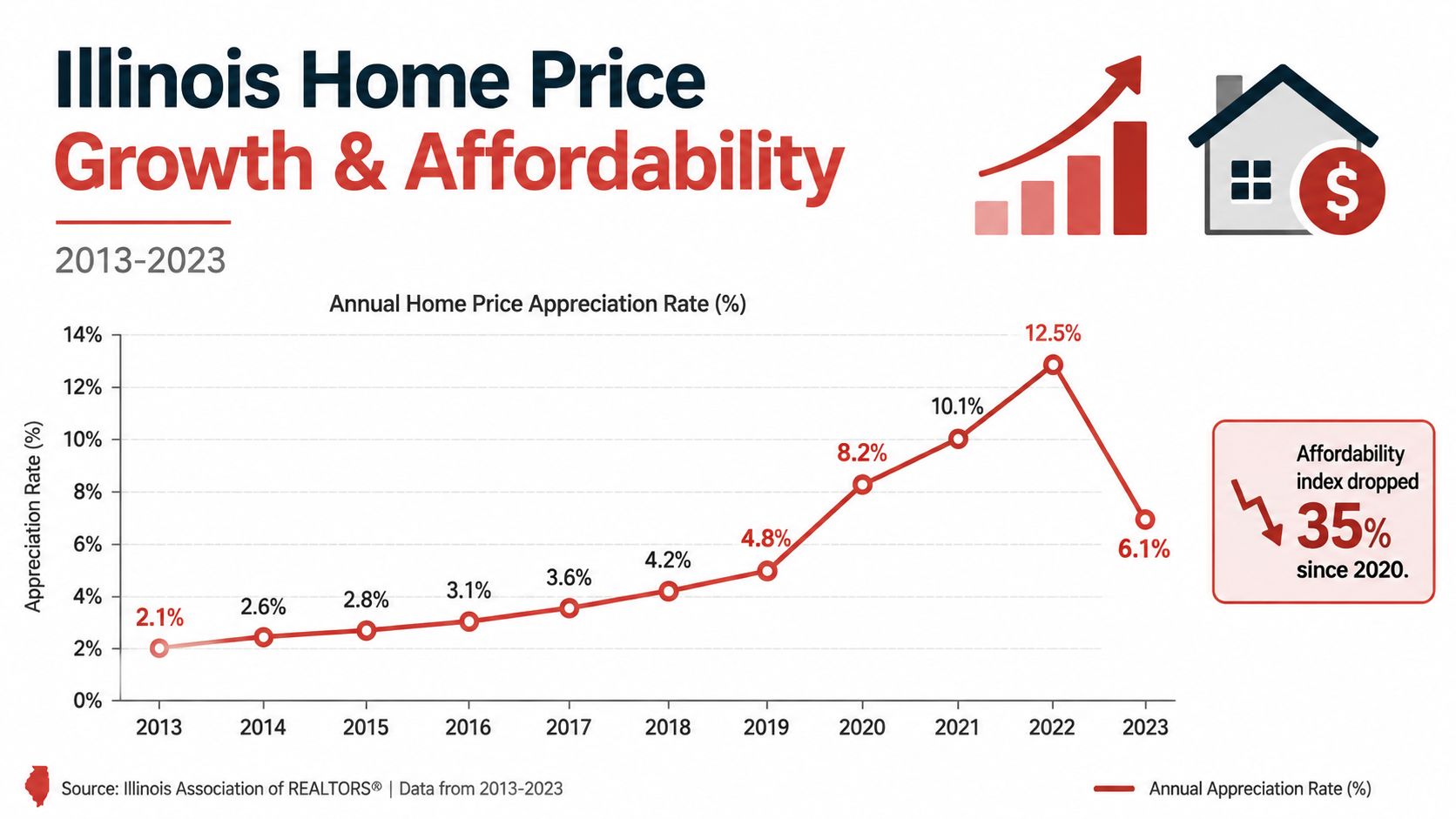
That's why affordability feels compressed even when appreciation cools from a peak. The market spent years building a higher floor under prices, then mortgage rates made the monthly payment gap harder to ignore. A buyer comparing today's payment to the payment from five years ago is usually reacting to both the price ladder and the financing ladder at the same time.
Bottom line: rising values build equity for owners, but they also raise the bar for everyone trying to buy their first home or trade up.
There's a practical lesson in that for buyers and sellers alike. Sellers may feel they've earned their pricing position, and in many western suburbs they have. Buyers, though, need to budget for a market where the number on the listing is only one piece of the affordability test. The other piece is whether the monthly payment still fits once the offer gets accepted.
Neighborhood features that affect value also matter more in a market like this, because buyers tend to justify higher prices when the location supports the long-term hold.
Supply Constraints and What They Mean for Buyers
Illinois inventory gives the first clue, but not the full answer. In July 2026, the state had 22,363 homes for sale, down 4.7% from 23,467 a year earlier, while closed sales still rose 0.8% year over year to 13,503 (Illinois REALTORS market stats). That combination keeps pressure on buyers, especially in western Chicagoland, where the best homes can still move quickly even when the broader market looks softer.
Why the western suburbs feel tighter
DuPage County showed that tension in July 2026. Active listings reached 3,830, up 10.2% year over year, and pending sales rose 6.6% to 1,092. Even with a bit more choice, 45.9% of homes sold above list price. Buyers have more options than they did a year ago, but the strongest listings still attract attention fast.
The pressure comes from familiar local constraints. New construction is limited in many built-out suburbs. Long-time owners often stay in place because they like the neighborhood or the payment they already have. Strong schools, walkability, and commuter access also keep turnover low. Those factors matter more block by block than they do in statewide averages.
Homes that are updated, well priced, and in the right location still draw the most attention, even when broader inventory is improving.
That scarcity shows up in real decisions. Buyers lose homes to faster offers. They weigh contingencies carefully. Some accept less room to negotiate just to stay competitive on a property that fits their budget and commute. Condos and townhomes can offer a little more breathing room than single-family homes in top-rated districts, but the exact block, association rules, and train access still shape the response.
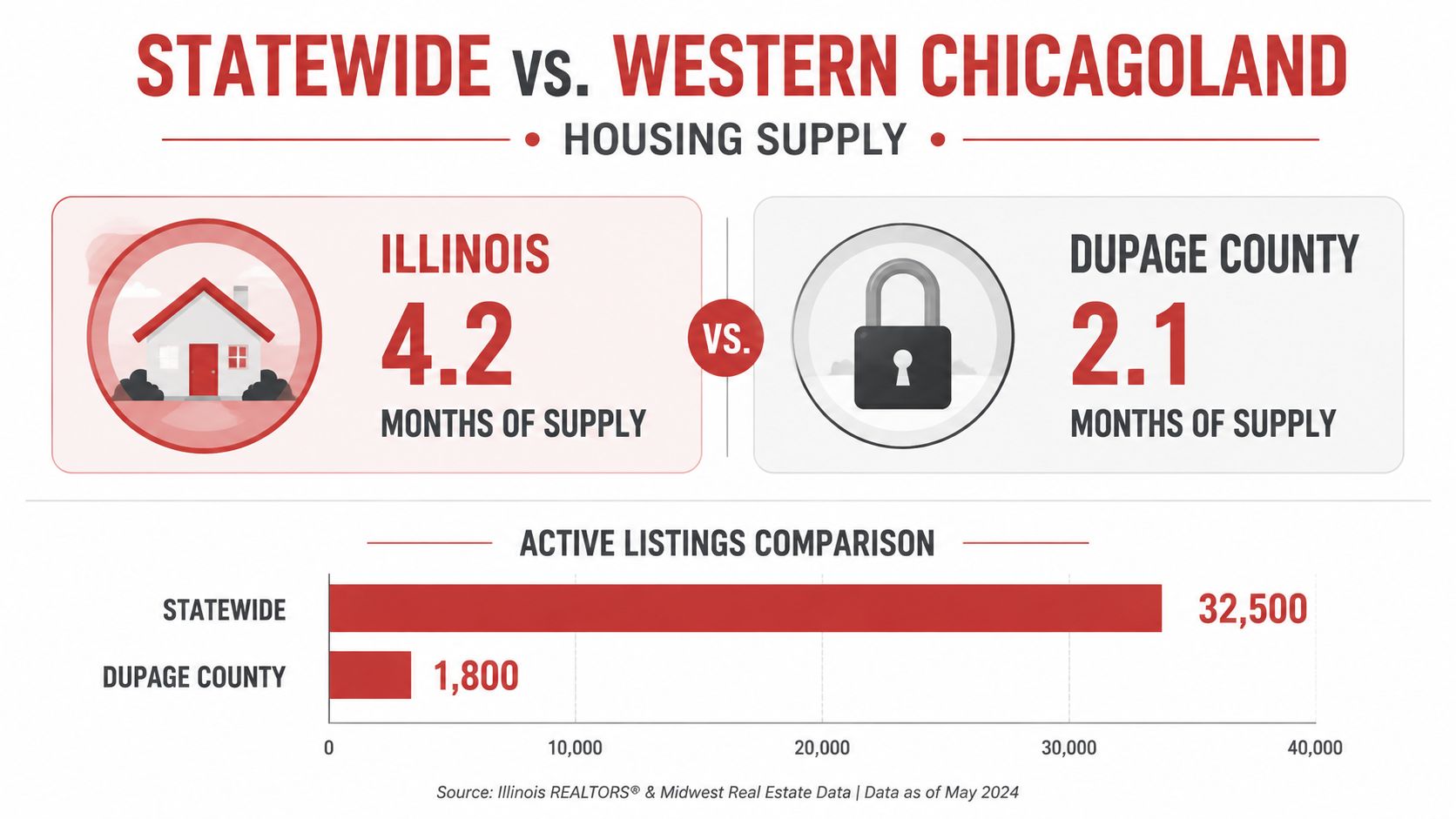
The takeaway is that competition persists even when headlines suggest softness. A buyer shopping in western Chicagoland needs to look at the number of good homes in a specific price band, school boundary, and commute corridor, not just the statewide total. In a tight pocket, preparation matters more than broad averages.
Western Suburb Market Divergence in Action
The best way to understand the western suburbs is to stop treating them as one market. In the most recent rolling three-month data through July 2026, Naperville's median sale price was about $632,000, while Oak Park's was about $572,000. Naperville was flat year over year, while Oak Park was up about 21%. That kind of split tells you more than a statewide average ever could.
Same region, different buyer logic
Naperville and Oak Park attract different buyers, and the housing stock behaves differently too. Naperville often pulls households prioritizing newer construction, larger lots, and suburban school demand. Oak Park draws buyers who care more about architecture, transit access, and a denser village feel. The result is that pricing, speed, and negotiating power can move in opposite directions even when the two places are part of the same broader suburban conversation.
A similar split shows up in nearby western suburbs where school district lines and commuter access change the tone of the market street by street. A home near a strong station area can command a very different response than a similar home a few blocks away. That's why block-level comps matter more than countywide medians.
What sellers and buyers should watch
- School district boundaries can change buyer depth fast, especially for move-up families.
- Metra access can support stronger interest when buyers want a manageable commute.
- Local tax rates affect monthly payment comfort, which influences how high buyers will stretch.
- Housing age and layout change demand because some buyers want turn-key homes while others will trade condition for location.
A 15-minute drive can absolutely mean a very different pricing conversation, especially when one pocket has more renovated listings and another has older stock that needs work.
The important part isn't just price. It's velocity. In some suburbs, homes that are ready to go still draw bidding activity quickly. In others, buyers will wait for a better fit, especially if they've already seen enough homes to know what feels overpriced. That's why a “western suburbs” label hides more than it reveals.
Strategic Moves for Sellers and Buyers Right Now
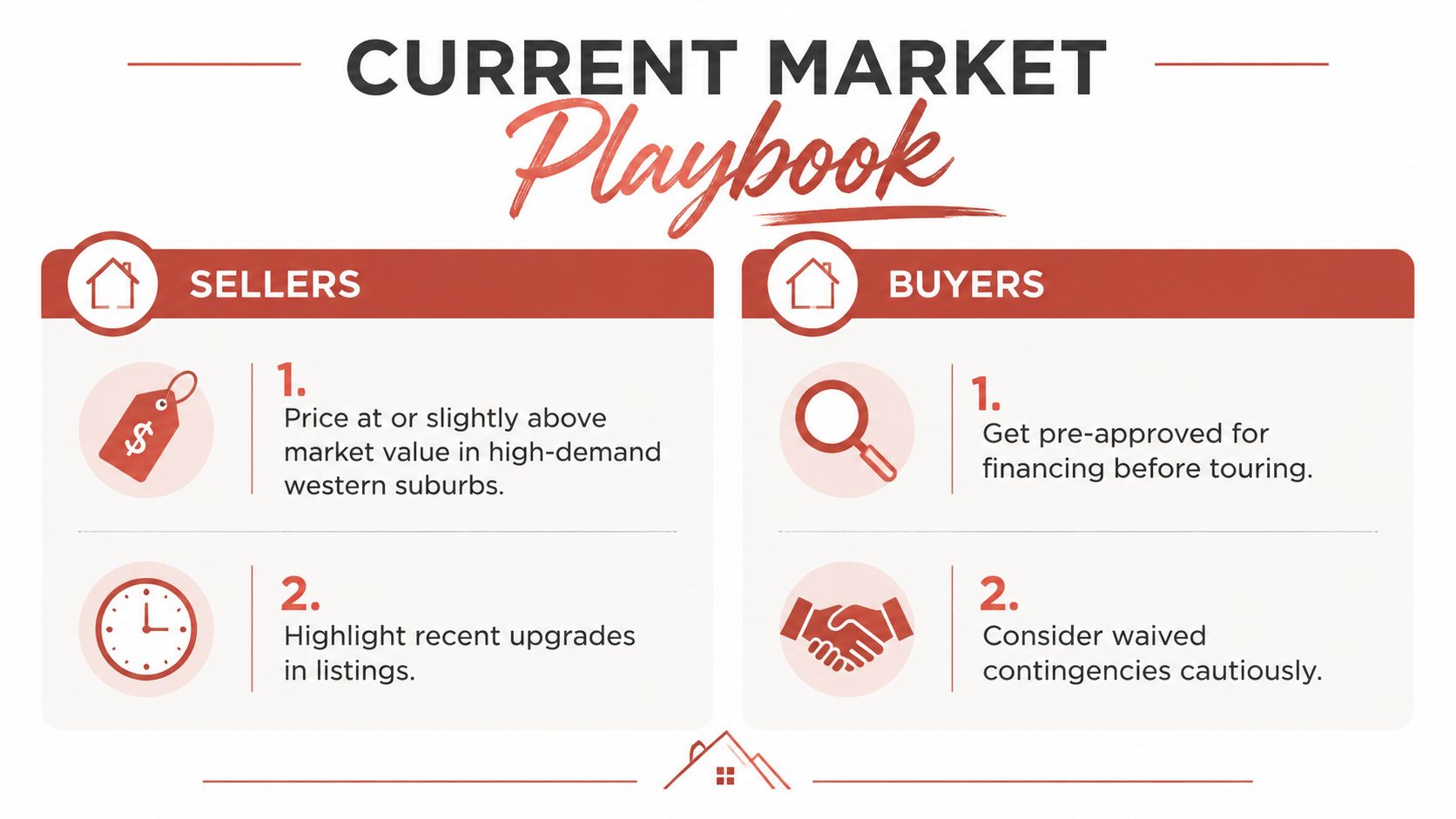
Sellers in stronger western suburbs should price for attention, not ego. If the home is clean, updated, and well located, a sharp initial price can create the kind of traffic that leads to stronger offers. Overpricing usually does the opposite. It forces reductions, extends time on market, and signals to buyers that the seller may be chasing the market instead of reading it.
What sellers can do that actually works
The most effective listings do a few things well. They look move-in ready. They avoid obvious repair questions. They hit the market with pricing that matches recent neighborhood demand rather than a wish list. That doesn't mean underpricing every home. It means pricing in a way that invites serious buyers to act, especially in submarkets where inventory is still thin.
If you're selling and want a read on what buyers are seeing, a local review of comps and showing activity matters more than broad county headlines. One useful place to start is a seller strategy consult through Homes By Carmen, where the focus is on pricing and offer structure in specific Chicago-area neighborhoods, not abstract averages.
What buyers should do before they write
- Get fully ready early. Pre-approval should happen before touring, not after you fall in love with a house.
- Use clean terms carefully. Flexible closing dates and strong earnest money can help without overreaching.
- Watch stale listings. Homes that have sat for 14 days or more often deserve a second look, especially if the finish level or pricing looks out of sync.
- Stay disciplined in bidding wars. Walk away if the price starts ignoring comps, inspection risk, or monthly payment comfort.
Financing strategy matters too. In higher-price towns like Naperville and Glen Ellyn, buyers need to pay close attention to how loan structure and any rate buydown affect the payment, not just the contract price. A strong offer is still only strong if it can close without creating stress later.
How to choose a good real estate agent matters here because the right guidance is often the difference between overpaying and winning sensibly. The best strategy is always local, always current, and always tied to the exact submarket you're in.
Zoning Changes and Transit Projects to Watch
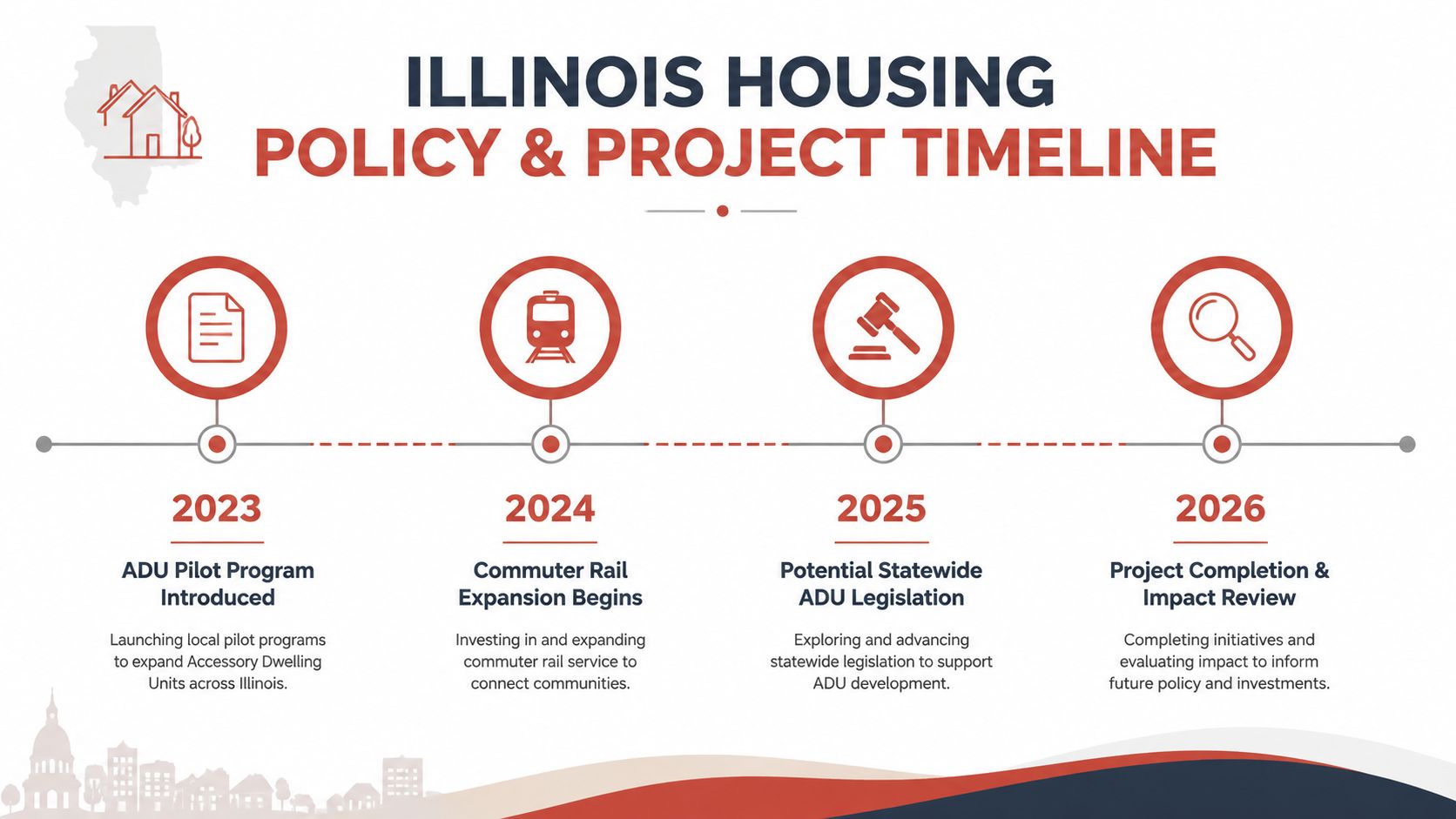
The biggest zoning issue in Illinois right now is whether accessory dwelling units, or ADUs, become easier to build in more places. Several 2026 proposals would limit municipalities' ability to prohibit ADUs and, in some versions, require them in single-family zoning districts beginning in 2027. Those ideas are still pending, so they aren't changing inventory today. What they do change is the political direction of the conversation.
Why reform may help, but not quickly
Some communities, including Oak Park and Evanston, already lean more ADU-friendly than many western suburbs. But local zoning, parking rules, lot-size requirements, and approval timelines still slow down new supply in many places. Even when rules loosen, construction costs and lot constraints can keep ADUs from becoming a meaningful inventory fix right away.
That's why it's risky to assume zoning reform alone will solve affordability. It can help over time, especially for rental and multigenerational living options. It just won't erase the resale shortage overnight. Buyers who expect an immediate flood of new homes usually overestimate how fast policy turns into actual units.
Transit projects could reshape value, not just supply
I'm also watching the long-term reconstruction of I-290 and the modernization of the CTA Blue Line Forest Park Branch. The broader plan involves rebuilding roughly 13.5 miles of the Eisenhower corridor, improving interchanges, bridges, transit speeds, and pedestrian connections. In July 2026, more than $18 million was secured for design work on rebuilding over 13 miles of Blue Line track and drainage (Blue Line design funding coverage). Oak Park is also studying expanded bridge decks over I-290 that could eventually create new public spaces, parks, and commercial development.
These projects may change where buyers see future value. They can improve access, attract investment, and alter neighborhood connectivity. They can also raise land values near stations without necessarily adding enough homes to ease the broader shortage. That's why anyone buying or selling near major transit corridors should watch planning agendas and project timelines closely, because infrastructure can change demand faster than it changes supply.
Why Local Expertise Matters More Than Statewide Averages
Broad statewide numbers can be useful, but they can also create a false sense of consistency. A seller in Naperville who gets multiple offers within 48 hours is operating in a very different market than a seller in a slower area with a longer marketing window. The same goes for buyers. Someone shopping near strong commuter access and top school boundaries is competing in a different universe than someone looking where turnover is easier and demand is thinner.
That's why statewide medians should be treated as a starting point, not a pricing strategy. In places like Downers Grove, Wheaton, and Oak Park, block-by-block comps, neighborhood condition, and station proximity often matter more than countywide trends. Buyers who understand those micro-markets can find value pockets. Sellers who price from the wrong benchmark can leave money on the table or sit too long and invite discount thinking.
The practical conclusion is blunt. In a fragmented market like Illinois, local expertise isn't a luxury. It's the difference between reading the market and reacting to it. If you want a sharper read on a specific suburb, school boundary, or price band, talk to an agent who works those streets every week, not just someone repeating statewide averages.
If you're comparing neighborhoods, pricing a home to sell, or trying to win a purchase in western Chicagoland, Homes By Carmen can help you sort out the local trade-offs. Visit Homes By Carmen to get neighborhood-level guidance, market context, and a practical plan for your next move.