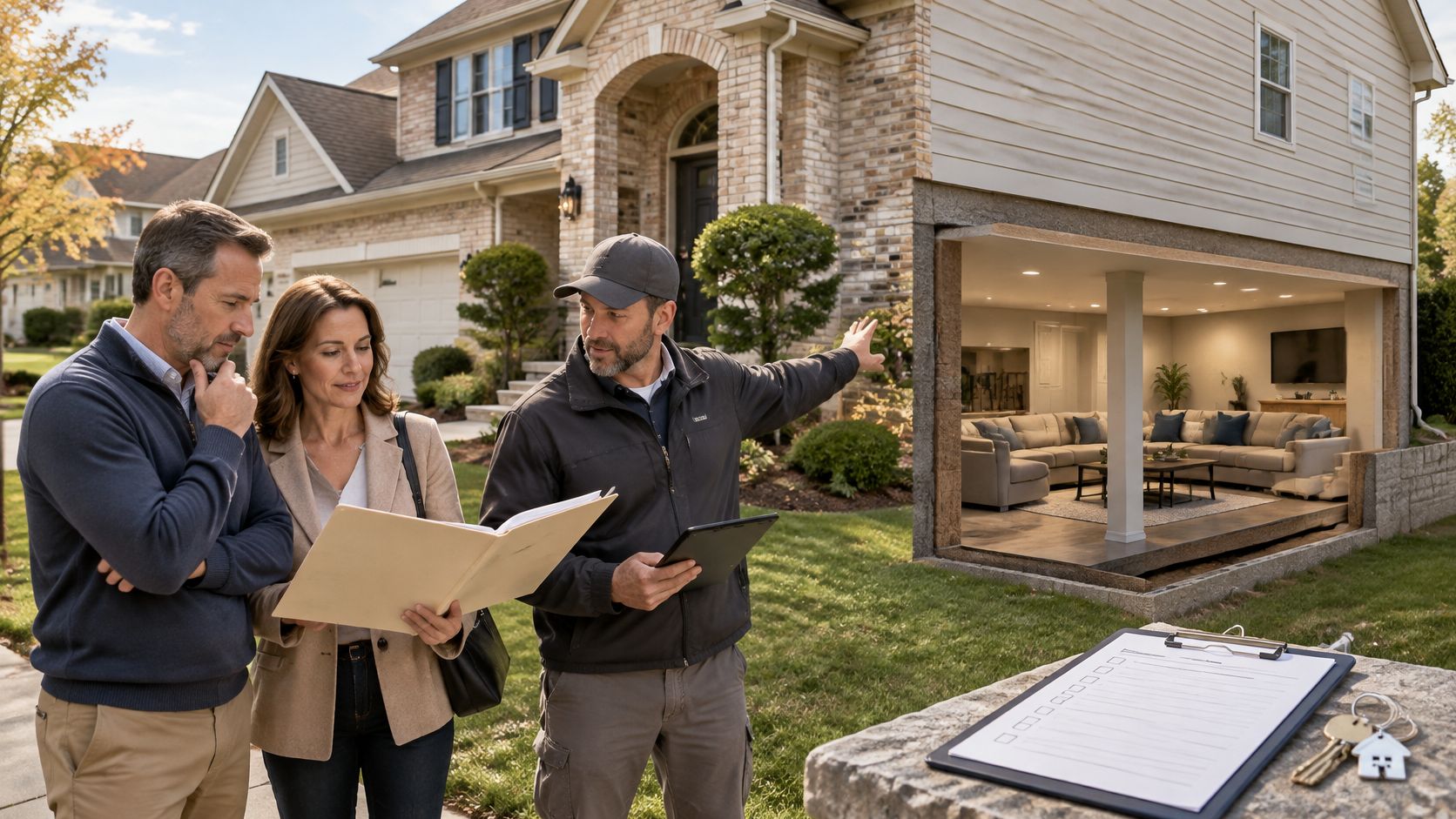
You finished the basement two winters ago. The drywall looks clean, the lights work, and the room has carried family dinners ever since. Two weeks before closing, the buyer's inspector writes one line that stops the file: finished basement, no permit on record. Your agent calls the village. The clerk finds nothing. The lender wants an answer before the inspection period ends.
Selling a house with unpermitted work is that moment. The work itself may be solid. The problem is that three separate reviewers can still treat it as unfinished business: the municipality, the buyer's lender and insurer, and the buyer sitting at the table.
Unpermitted work is any construction, alteration, or repair done without the required permit, or done outside the scope of a permit that was issued. It often goes unnoticed for years because the owner never planned to sell. A prior owner finished the space. A contractor skipped the paperwork. You painted over the seams and moved on.
Table of Contents
- Why Unpermitted Work Surfaces During a Sale
- Sort Your Unpermitted Work by Sale Risk
- Your Illinois Disclosure Duties Before Listing
- How to Legalize or Remove Unpermitted Work
- How Unpermitted Work Changes Your Asking Price
- Coordinate Lenders, Appraisers and Insurers Before You List
Why Unpermitted Work Surfaces During a Sale
Say the inspector is in that basement on a Thursday. The ceiling is too low in one corner. There is no egress window. The panel has two new circuits with no inspection sticker. None of that is a citation. A private home inspector cannot fine you. The report still becomes a paper trail the buyer, the lender, and sometimes the village will all read.
The same gap usually shows up in three places, and they do not always agree.
The buyer's inspection. The inspector compares what is built to how a permitted job would look. Mismatched framing, a bathroom where the original plans show a closet, or a furnace with no tag gets written up. That report gives the buyer bargaining power, even when the village has not opened a file.
The appraisal. The appraiser measures living area and has to decide whether the extra room counts. A well finished space can still be left out of the square footage the lender will finance.
The municipal records search. Title companies, attorneys, and lenders pull permit history. In Chicagoland that search is not one database. Chicago keeps its own system. Melrose Park, Elmhurst, Oak Park, and the other western suburbs each keep theirs. A clean village file does not erase a problem the buyer's inspector already photographed.
Older housing stock is why this comes up so often on the west side and in the near suburbs. Decades of owner renovations sit on top of houses built long before today's inspection routine. Permit rules also change at the municipal line, so a deck that needed nothing in one town needed a permit two blocks over.
Before you list, pull the address yourself. Permit record workflows from BatchData at permit record workflows from BatchData let you compare what was permitted, which trade it covered, and how the permit closed, against the rooms a buyer will walk through.
Unpermitted work rarely kills a sale by itself. It changes who pays, when the money moves, and how much of the finished space you can advertise. I would not promise a buyer that undocumented work will be accepted. I would answer three questions before the first showing: what you must disclose, what fixing the work costs in time and money, and how you keep the deal alive once someone finds it.
Sort Your Unpermitted Work by Sale Risk
The permits that matter most sit next to wiring, drains, and structure. Sort the work before you price it, fix it, or argue about it, because three parties will read the same project differently: the municipality holding the file, the lender and insurer underwriting the deal, and the buyer pricing the risk.
| Work type | Permit status | Main buyer concern | Usual fix |
|---|---|---|---|
| Cosmetic paint, flooring, or cabinets | Usually exempt | Low | None needed |
| Water heater or furnace swap | Permit usually required | Safety and insurance coverage | Permit record and final inspection |
| Electrical panel or new circuits | Permit required | Fire and insurance risk | Licensed work, permit, and final inspection |
| Plumbing moved or a new bathroom | Permit required | Water damage and drain venting | Permit with rough-in and final sign-off |
| Finished basement or added room | Permit required | Egress, ceiling height, and square footage claims | Legalize with plans or disclose as non-permitted |
| Converted garage living space | Permit required | Zoning, egress, and heating | Often hard to legalize; market it as non-living or remove it |
| Deck, fence, or shed | Required once size or height hits the municipal threshold | Low to moderate | Check municipal rules and records |
The rule that sorts the list
The closer the work sits to electrical, plumbing, structure, fire separation, or claimed living space, the harder a buyer, an underwriter, and an insurer will look. Paint, flooring, and a cabinet swap are usually exempt in Chicago and almost never move a price. A new panel, a relocated drain, or a room you are counting as a bedroom will.
Three edge cases do the most damage once the file reaches the buyer's side.
A bathroom that moved the drains. The tile can look perfect. If the trap, the vent, or the supply lines were relocated, a leak shows up inside a wall the buyer will not open until after closing. Buyers price that risk as water damage, not as a cosmetic update.
A permit that was opened and never closed. This one surprises owners. A missing final inspection can be worse than no permit at all. Someone started a legal job, then nobody verified the finished work. The file sits open. Lenders read an open permit as unfinished construction.
A garage turned into a bedroom. Zoning, a second means of egress, insulation, and heat all have to line up. Many of these conversions cannot be legalized without rebuilding the opening back to a garage. Selling it as a bedroom is the claim that fails first.
A closed permit with a final sign-off is what a lender can rely on. An open permit is a question, not a clean history.
Work the file in one order, and put the questions in writing. Tonight, list every project you know about. Date it, note who did it, and mark two boxes only: permit on file, and final inspection signed. Next, ask the municipality whether a permit exists for the address, whether any file is still open, and what a late permit would require. Then check which unmarked items a lender or insurer is likely to question, since anything touching wiring, drains, structure, or claimed living space reaches underwriting before it reaches the buyer. Whatever you still cannot mark is the item you disclose, legalize, or stop counting as living area.
Your Illinois Disclosure Duties Before Listing
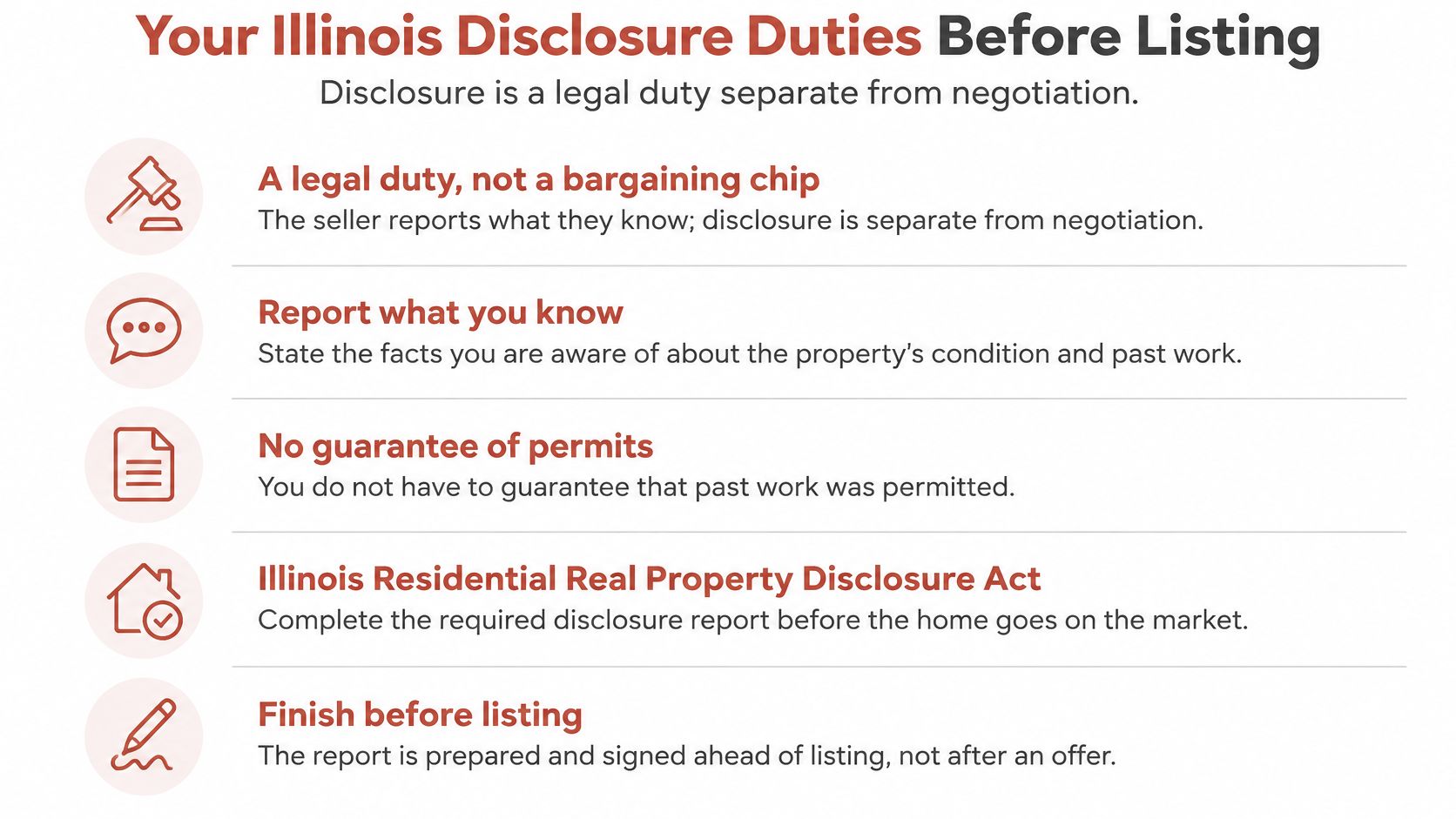
Illinois requires a written disclosure report before you market the home. You report what you know.
That one form answers three audiences at once. The municipality's clerk will produce the permit history, the buyer's lender and insurer will read it, and the buyer will price whatever you admit. Nobody expects you to guarantee that a prior owner pulled every permit.
What the Illinois form actually asks
The Illinois Residential Real Property Disclosure Act sets the form a seller of residential property must complete. It asks about known material defects and about remodeling or additions you know about. A finished basement, an added bath, or a garage conversion you know was never permitted belongs on that form in plain language. "Finished lower level, no permit located" is clearer than a vague note about updates.
You are not warranting the whole history of the house. If you do not know whether a prior owner permitted a deck, say you do not know, then pull the record before you sign. Guessing "yes" is the answer that creates a later claim.
The file you should have before you sign
Build the packet in this order.
- Permits and finals: Every issued permit and every final inspection for additions, electrical, plumbing, HVAC, and structural work.
- A project list: Year, contractor, and whether you or a prior owner did the work.
- Open or failed inspections: List a missing final as its own line, separate from "no permit."
- Receipts and plans: Invoices, drawings, and photos from before the walls closed.
- Municipal mail: Any correction notice, stop-work order, or email from the building department.
Chicago's own records show why "it looks finished" is not a defense. The city's published building data includes work done without a permit and work that departed from an issued permit, which gives buyers and attorneys a long file to search. A 2023 audit by the City of Chicago Office of Inspector General found buildings in the Department of Buildings' permit-and-inspection system that lacked all required inspections even though construction had finished. Several of those properties were single-family homes, and some had already been sold or listed for sale.
Why saying it early costs less
Silence feels cheaper until the buyer finds the work after closing and calls a lawyer. A known, disclosed condition lets you set the price and any credit before the offer, instead of rewriting the contract under a deadline. An as-is home sale still requires that same honest report. As-is limits repair demands. It does not erase what you already know.
Practical rule: Confirm the municipality first. Chicago and a suburb such as Melrose Park do not share one permit desk, and each code sets its own fees and authority.
Send the records request in writing before you sign the disclosure. Ask the clerk three questions: which permits exist for the address, which of them are still open, and whether any violation notice or stop-work order sits on file. Those are the same questions the lender's underwriter and the buyer's insurer will ask later, so written answers now let you fill the form on facts rather than memory. If an item stays unresolved, write "unknown, records requested" and update the form when the clerk answers. Do not assume completed construction satisfied the code.
How to Legalize or Remove Unpermitted Work
Every fix has to satisfy three different readers: the municipality that issues the permit, the lender and insurer that underwrite the buyer, and the buyer who inherits whatever stays undocumented. Each project gets its own path.
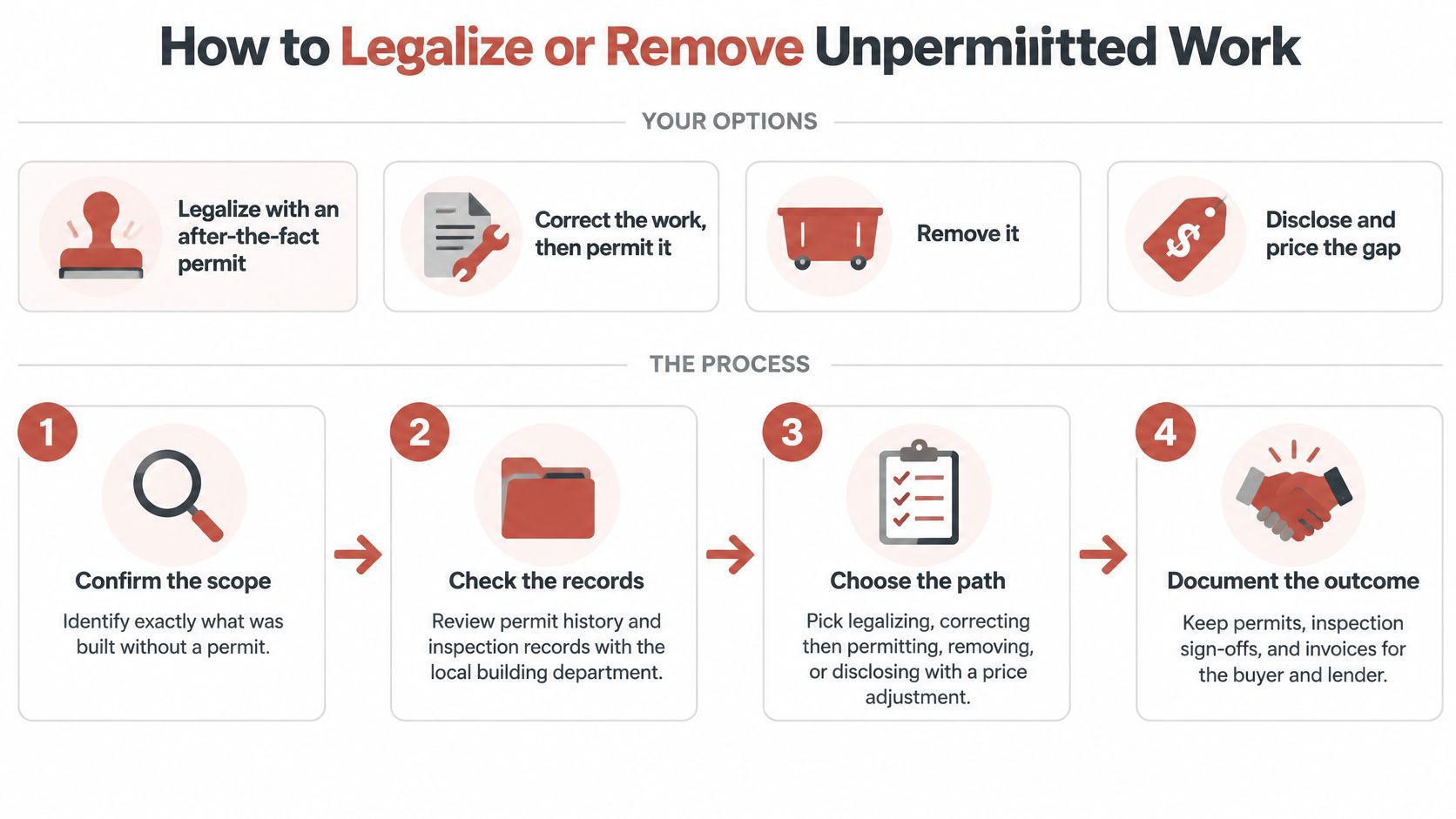
| Option | When it fits | Main cost driver | Timeline |
|---|---|---|---|
| Legalize with an after-the-fact permit | Work is sound and accessible | Plan review and opening walls for inspection | Plan review plus field inspections; the municipality sets the calendar |
| Correct, then permit | Work fails inspection | Repairs to electrical, plumbing, or structure | Repair, then reinspection before you list |
| Remove the work | Unsafe, or nobody can verify it | Demolition and restoration | Demolition, then restoration of the original space |
| Disclose and price the gap | Time is short, or you will not fix it | Credit or price reduction | Negotiated at the offer |
The sequence that keeps you out of a rebuild
Most construction, demolition, rehabilitation, and repair work in Chicago needs a building permit before work begins, because the permit check is how the city confirms minimum safety standards, and only a limited set of nonstructural repairs and minor alterations is exempt. If the city finds non-permitted work, the City of Chicago building permit FAQ says a stop-work order may be issued, and work resumes only after the proper permit is obtained and a penalty of $1,000 or an associated stop-work fee is paid. In Melrose Park or another western suburb, the fee schedule belongs to the village. The technical risk is the same: plan review, opened walls, and possible reconstruction where concealed work cannot be verified.
- Name the authority. Chicago Department of Buildings or the suburban building department, whichever holds jurisdiction over the address. Pull the full permit and inspection history, including expired and open permits.
- Ask one direct question. Does this department offer after-the-fact permits, legalization, or a certificate of correction for work already built? Get the answer in writing.
- Open what you cannot see. Hire a licensed electrician, plumber, or structural engineer before you promise a buyer the work will pass. Concealed junctions, missing fire blocking, and undersized beams are what force a rebuild.
- Submit plans and pay the fees. Do not start "corrective" demolition until the permit path is clear, or you can trigger the stop-work problem above.
- Book every required inspection. Rough-in and final are different sign-offs. Keep each one.
- Hold the final in writing before you list the space as legal living area. Save every email from the municipality with the disclosure file.
The slip that blows the budget
Owners assume finished drywall will pass because it has been lived in. Inspectors often need to see framing, wiring, and drains. If those cannot be verified, the path flips from "legalize" to "correct or remove," and the budget follows it.
Run the paperwork on the same clock. When the clerk's answer lands, the written reply goes into the disclosure file and the form gets updated before the listing launches, so the buyer's attorney reads the corrected version instead of a stale one.
Price the contract around those known costs. Do not tell a buyer the village will accept the work, and do not promise the buyer's lender or insurer will either. Disclose the condition, and keep the correspondence.
How Unpermitted Work Changes Your Asking Price
Appraisers do not ignore a room because you like it. They value what they can support, and the seller has to price around three reactions at once: the municipality's record, the buyer's lender and insurer, and the buyer's willingness to take risk. That is why I use one sequence for pricing: confirm the paper, set the appraisal range, then choose the contract move.
| Situation | How the appraisal or buyer reads it | Pricing move |
|---|---|---|
| Permitted and documented | Full contributory value | Price to comparable sales |
| Unpermitted, sound, plans available | Possible partial credit, not full contributory value | Legalize before listing, or offer a credit |
| Unpermitted, unsafe, or unverifiable | Appraisal may be subject to repairs | Repair first, or price to the repaired condition |
| Unpermitted, disclosed, buyer accepts the risk | Buyer discounts for the risk | Lower price reflects that discount |

What the appraisal must actually say
When an appraiser finds an addition without the required permit, Fannie Mae's appraisal guidance says the report must comment on the work's quality and appearance and assess its impact, if any, on market value. The same guidance requires the appraiser to address conditions that affect safety, soundness, structural integrity, or marketability. Incomplete or deficient work can produce an appraisal subject to specified repairs or completion, not an unconditional as-is value. Completion rules require improvements and repairs to be complete, while certain postponed items may be finished within 180 days of the note date if the program rules are met, according to Fannie Mae's appraisal guidance.
There is no universal percentage discount. Scope, quality, safety, local records, and comparable sales set the dollar effect. An unpermitted finished basement, addition, or converted space may not receive full contributory value, even when the carpet is new. The practical question is whether the space can be counted as living area, treated as useful but not legal area, or left out of the value picture until repairs are done.
A pricing method you can run this week
Pull a comparative market analysis on two sets of sales. One set includes homes whose extra space is permitted and closed out. The other set is similar houses without that space. Compare the median sale price in each set. The most the gap supports is the difference between the two median sale prices. That number gives you a disciplined range for the value of legalizing, and for the discount a buyer may expect when the space stays undocumented.
Then choose one move.
- Price the gap into the list price when you will not legalize and you are marketing only the documented living area.
- Offer a credit when the buyer will close on a financed loan and you would rather not open walls during the contract.
- Legalize before you list when the work is sound and the extra square footage is a large share of the price.
Legalizing spends money now and protects the full price if the finals come back clean. A lower price with a clear disclosure protects speed and leaves money on the table. I would not do both, a full-price listing and a hope that the appraiser counts the room anyway. Assemble permits, plans, sign-offs, and contractor invoices before the first showing so the appraiser is not guessing from photos.
Coordinate Lenders, Appraisers and Insurers Before You List
Conventional lenders do not hand down a single verdict on unpermitted work. Whether a financed buyer can close depends on which reviewer is answering, and sellers who assume a blanket rejection talk themselves into a cash-only panic they may not need.
Three parties review the same room and ask different questions. The appraiser asks whether the space is useful and safe. The underwriter reads legality, collateral, and loan-program rules. The insurer asks whether a later fire or water claim would be paid. Those answers can split on one conversion.
Take a garage converted to a bedroom in a western suburb. The appraiser may measure it as a sleeping room because it has heat and a closet. The underwriter may refuse to count it because zoning still calls it a garage and there is no second exit. The insurer may ask whether the new circuits were inspected before covering a fire that starts there. Chase's mortgage education on unpermitted work frames the practical question the same way: the sale stays viable when you deal with safety, habitability, collateral value, and loan-program rules rather than waiting for a blanket yes or no. That guidance also notes unpermitted work can bring lender scrutiny, appraisal complications, failed inspections, or insurance limits, without automatically forcing a cash sale or a dead deal.
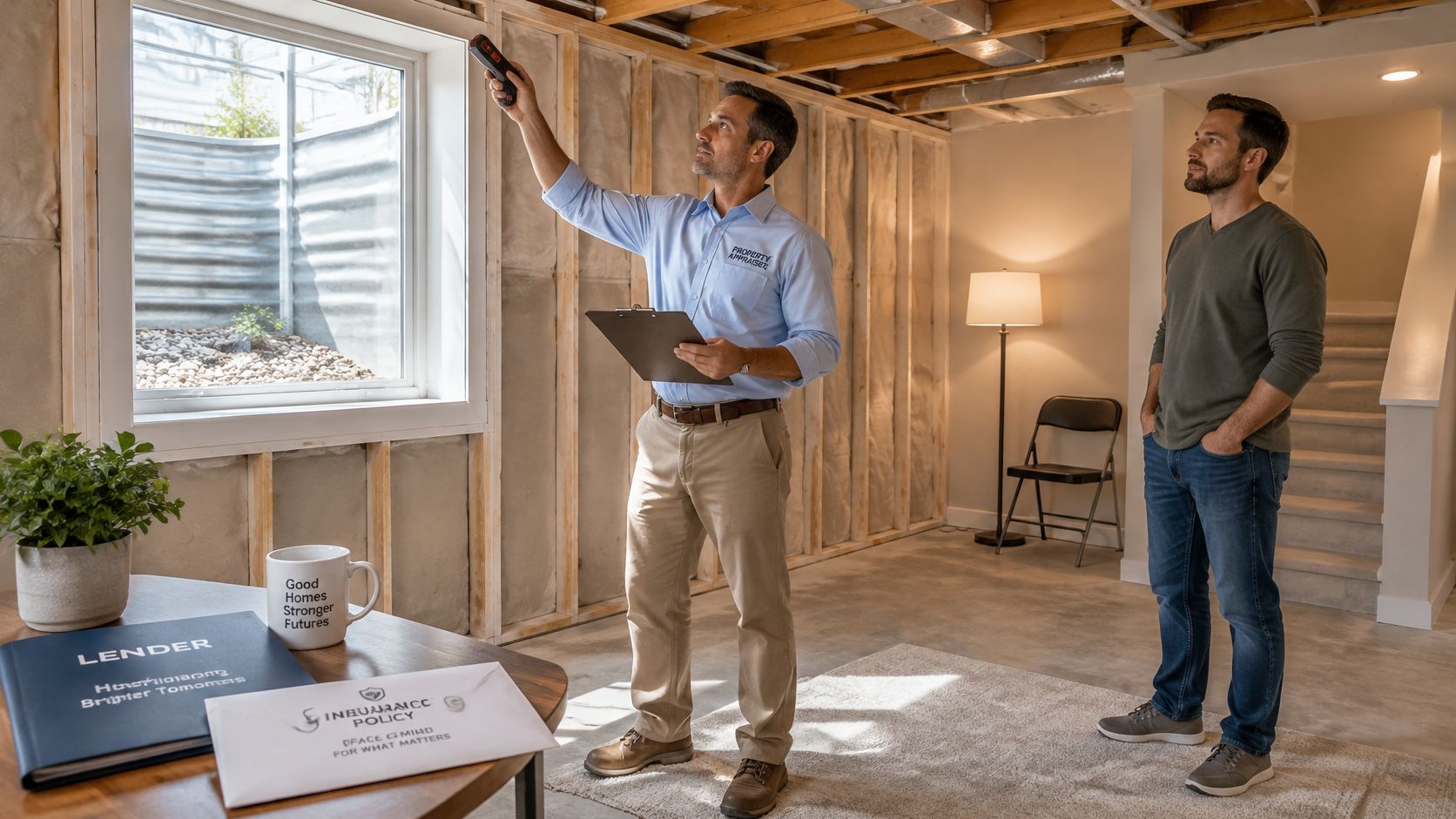
The City of Chicago's permit guidance states that work should not start without the required permit except in emergencies. Melrose Park applies the same standard, requiring a permit for a finished basement. Paperwork is what lets the three reviewers converge on one answer.
One order, before the sign goes up
Run this once, in this order. Skipping ahead is how sellers discover the insurance problem on the day of the appraisal.
- Pull the municipal permit and inspection history for the exact address.
- Mark every project permitted, unpermitted, or unknown.
- For each item, decide to legalize, correct, remove, or disclose. Do not leave a project in "we'll see."
- Complete the seller disclosure with those same facts, including open permits.
- Price documented living area apart from undocumented space in the listing remarks and in your pricing notes.
- Send the file to the buyer's lender and to the insurer early, before the inspection contingency expires, and require the buyer to confirm that financing and insurance are feasible.
An appraisal gap gets wider when the contract price counted a room the appraisal will not. Settling that in the list price costs less than renegotiating after the report lands.
Questions to send in writing
Do not ask "will you take this house?" Ask questions a reviewer can answer with a document.
Municipality
- Is after-the-fact legalization or a certificate of correction available for this scope?
- Which inspections are still open, and what must be exposed?
- Will you treat the converted space as habitable if we submit plans?
Lender and appraiser
- Will the unpermitted space be included in gross living area, and on what conditions?
- Must a repair be complete before funding, or can the loan close with a documented credit?
- Which papers will underwriting accept: finals, engineer letters, or both?
Insurer
- Will the policy cover a loss that starts in unpermitted electrical or plumbing?
- Do you need a final inspection before binding, or will you exclude that portion?
- What happens to the premium if we legalize after closing?
Put the answers in the file next to the disclosure. A verbal "should be fine" from a loan officer is not a commitment the underwriter has to honor.
Records, disclosure, insurance review, lender sign-off, and a contract plan for credits or permit work keep a financed buyer in the deal. This route is slower than hoping nobody asks. It is faster than losing the contract in the last two weeks.
If you are pricing a Chicagoland house around a finished basement, an open permit, or a garage that was never legalized, Homes By Carmen can walk the permit file, the disclosure, and the list price with you before buyers tour. Homeowners thinking about selling can get a free expert home valuation and strategy call, grounded in how lenders and villages treat undocumented work. Visit Homes By Carmen to set that up.