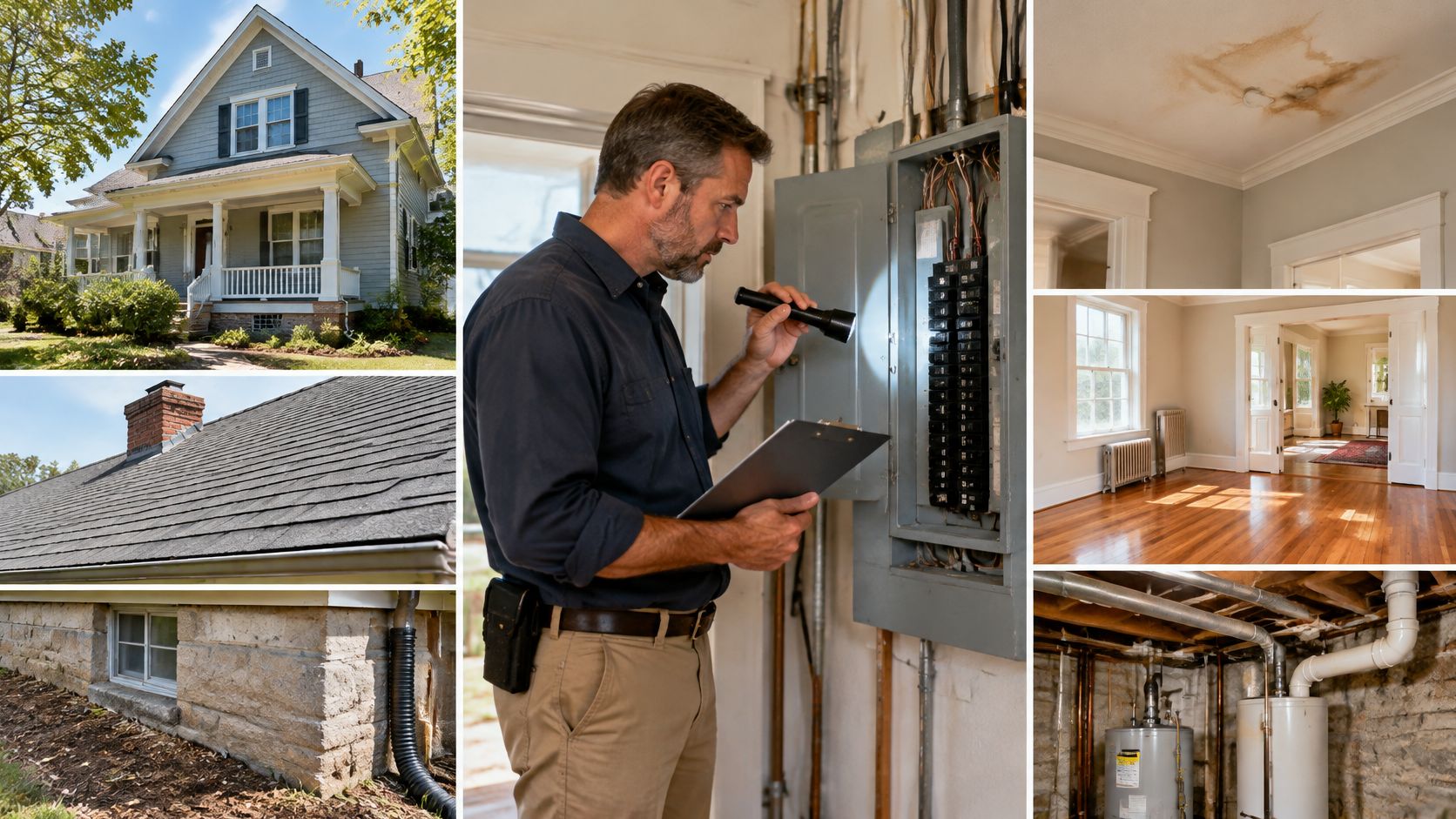
You've found a house in Melrose Park with a bright kitchen, original hardwood floors, and enough room to finally stop renting storage space. The price looks manageable. Then you head downstairs and notice fresh paint on a basement wall, an old electrical panel, and a sump pump you don't know how to evaluate.
The photos sell the house, but the inspection reveals it. Knowing what to look for when buying an older home means separating attractive finishes from the structure, systems, and repair obligations you're purchasing.
Work through the checks below during your inspection period, while your contract may still give you options to investigate, negotiate, or reconsider. Ask your agent and attorney to confirm the deadlines and notice requirements. Don't assume you can request more time after a specialist finds something concerning.
The seller's preparation matters, too. These home inspection tips for Utah sellers offer a useful seller-side perspective, but your western Chicagoland purchase needs property-specific inspections and local records.
Bring the disclosures, a list of planned renovations, and questions about anything described as updated. Updated doesn't necessarily mean fully replaced, permitted, or insurable.
Table of Contents
- 1. Foundation and Basement Structural Condition
- 2. Electrical System Safety and Capacity
- 3. Plumbing Materials and Water Supply Lines
- 4. Sewer Lateral and Drainage Condition
- 5. Roof Condition, Flashing, and Attic Ventilation
- 6. Lead-Based Paint and Asbestos Hazards
- 7. Heating and Cooling System Age and Performance
- 8. Windows, Doors, and Building Envelope Insulation
- 9. Moisture, Mold, Water Intrusion, and Radon
- 10. Permits, Unpermitted Work, Zoning, and Historic Restrictions
- Key Inspection Areas for Older Homes at a Glance
- Turn This Checklist Into Your Inspection Plan
1. Foundation and Basement Structural Condition
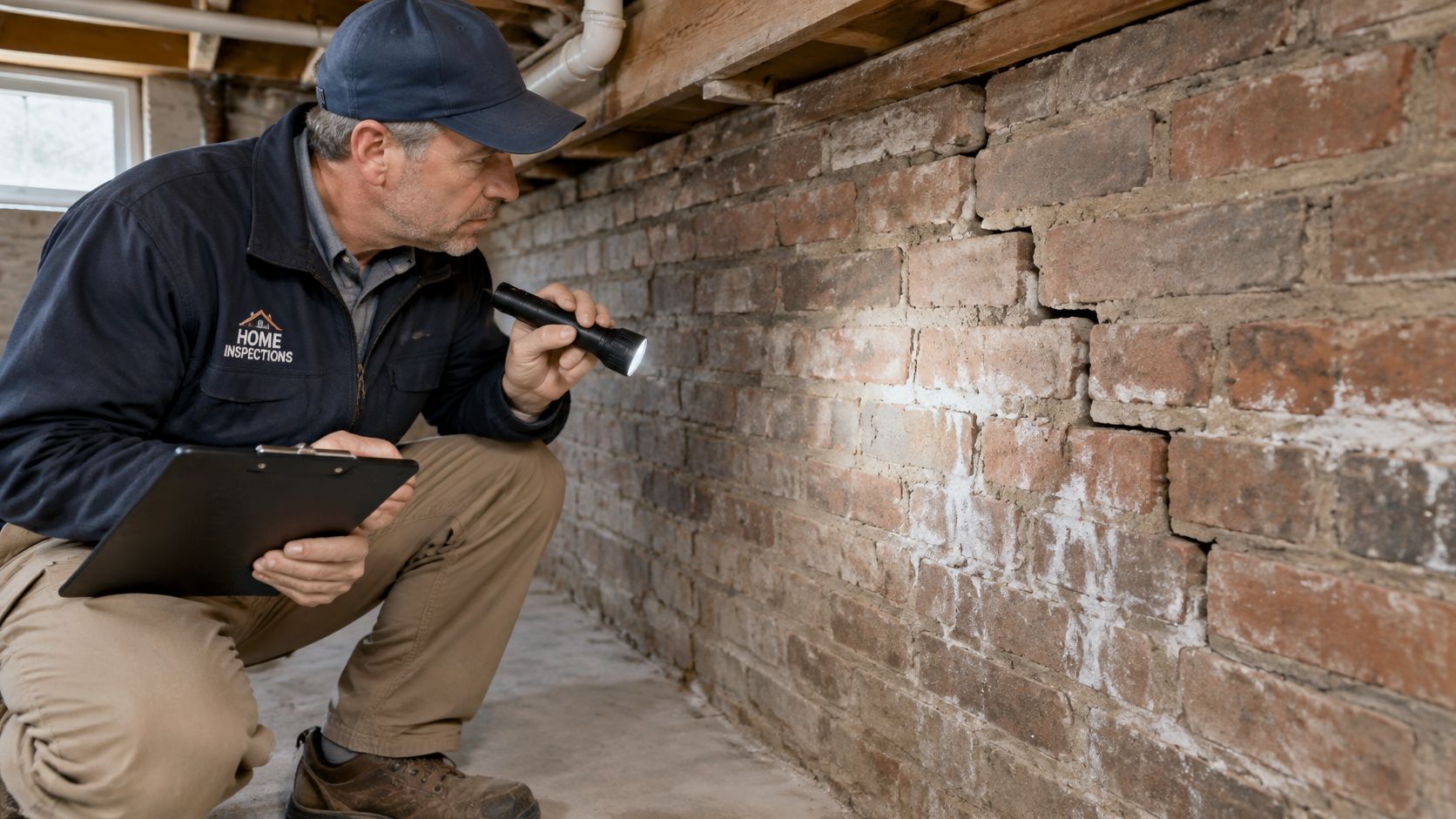
Start downstairs before you spend another hour choosing furniture locations. Ask the inspector to identify the foundation material, examine accessible walls, and trace how the floors above are supported.
Look for horizontal cracks, stair-step cracks, bowing walls, deteriorated mortar, and improvised support posts. Upstairs, sticking doors and sloping floors provide additional clues. None establishes a diagnosis by itself, but a combination deserves more than a casual explanation about an old house settling.
Verify the repair, not just the patch
Ask the seller what prompted any wall bracing, drain tile, crack injection, or fresh masonry coating. Request invoices, permits, engineering documents, and warranty terms, including whether coverage transfers.
- Ask the inspector: Does this require a structural engineer, or is ordinary maintenance appropriate?
- Ask the seller: Has anyone monitored movement or recommended work that wasn't completed?
- Check access: Have stored belongings moved so the inspector can see suspect walls and framing.
Say a house in Elmhurst has a bowed basement wall behind shelving. Don't negotiate from a waterproofing quote alone. Get an engineer's assessment and a contractor's written scope addressing the actual structural concern.
Use that documentation when deciding how to negotiate repairs after a home inspection. A credit is useful only when you understand what it must pay for.
2. Electrical System Safety and Capacity
A newer breaker panel doesn't prove the house has newer wiring. Ask the inspector to distinguish service capacity, panel condition, and branch-circuit wiring rather than treating them as a single upgrade.
The stakes justify a dedicated review. NFPA estimates that electrical-distribution or lighting equipment was involved in an annual average of 31,650 U.S. home fires during 2019–2023.
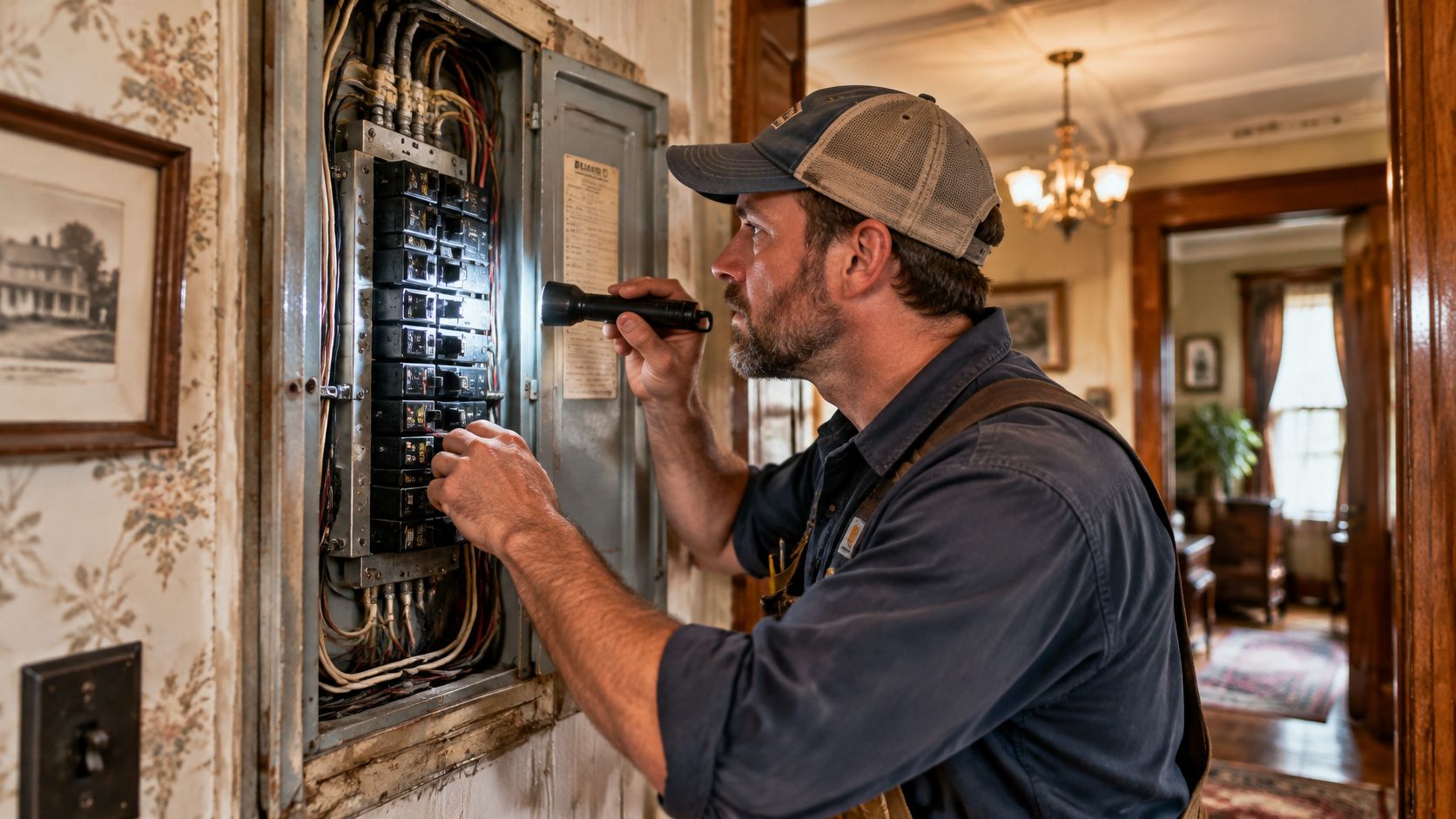
Have a licensed electrician investigate visible knob-and-tube wiring, aluminum branch wiring, overheating, double-tapped breakers, missing junction-box covers, and questionable grounding. Buyers shouldn't remove panel covers or test exposed wiring themselves.
Practical rule: Price the electrical work around the circuits and loads you need, not just the appearance of the panel.
For example, a Downers Grove buyer planning induction cooking and an electric-vehicle charger needs a load evaluation. A panel replacement alone may not provide sufficient service capacity or correct concealed wiring defects.
Ask the seller for electrical permits and invoices specifying which rooms or circuits were rewired. Have the inspector check accessible receptacles, GFCI and AFCI devices, and smoke and carbon-monoxide alarms.
The seller-focused guidance on how to pass a home inspection can help you frame questions, but documented testing matters more than assurances that everything works.
3. Plumbing Materials and Water Supply Lines
Turn on the shower while someone runs the kitchen faucet. Then flush a toilet and watch what happens to flow, drainage, and visible connections.
That simple test isn't a complete plumbing evaluation. It does help expose a house that performs acceptably at an isolated fixture but struggles during normal household use.
Ask the inspector to identify supply piping, drain piping, and the incoming service line separately. A copper pipe beneath the kitchen sink doesn't establish what remains inside walls or underground.
- Supply materials: Identify galvanized steel, copper, PEX, or other visible materials and document mixed sections.
- Leak evidence: Check cabinet bottoms, shutoff valves, ceiling patches, and water-heater connections for staining or corrosion.
- Service-line records: Ask the water utility what material records exist and which portions have been replaced.
- Replacement scope: Request invoices showing whether previous work covered the entire house or only remodeled rooms.
Price access and restoration
Say a Glen Ellyn house has a remodeled bathroom but weak flow at an upstairs shower. A plumber should investigate the cause before you assume a new shower valve will solve it.
If repiping is recommended, request a quote that includes access openings, permits, wall repair, and finish restoration. A pipe-replacement estimate that excludes plaster and tile repair isn't your total project budget.
Ask the seller about recurring leaks, frozen pipes, drain cleaning, and the water heater's installation history. Send the identified pipe materials to your insurance agent before committing.
4. Sewer Lateral and Drainage Condition
Order a sewer-camera inspection during the inspection period. Request the recording, written findings, and the location of any defect. Ask the contractor to identify the pipe material, accessible route, roots, offsets, standing water, and damaged sections.
If the camera cannot complete the inspection, ask why and what access or follow-up work is needed. An incomplete view leaves part of the lateral unassessed.
Neighborhood drainage is a separate question. The Chicago Sun-Times reports that Chicago's sewer network is designed for roughly two inches of rain. That city-specific limit does not establish a suburban property's risk. It does show why a private sump pump alone cannot answer every drainage question.
Separate private defects from municipal risk
- Ask the municipality: Who owns and maintains the lateral? Are sewer-backup concerns documented near this parcel?
- Ask the seller: Have drains backed up during storms? Are claims, cleanup invoices, or sewer-repair records available?
- Inspect the lot: Trace downspouts, low spots, window wells, and water routes toward basement entrances.
- Check protections: Is there a backwater valve or sump backup? Does the homeowner's insurance include water-backup coverage?
Where mature trees border a Naperville property, roots on the camera recording call for a contractor's repair assessment. Lining, excavation, and maintenance address different conditions. Ask which option fits the defect and whether the estimate includes restoration.
5. Roof Condition, Flashing, and Attic Ventilation
Ask for the roof invoice before accepting the seller's description of a newer roof. You need to know what was replaced, whether old roofing was removed, and whether flashing and damaged decking were included.
The inspector should examine the roof using a safe, appropriate access method. If weather or access prevents a meaningful assessment, arrange a roofer's evaluation rather than treating the limitation as a clean bill of health.
Follow the water path
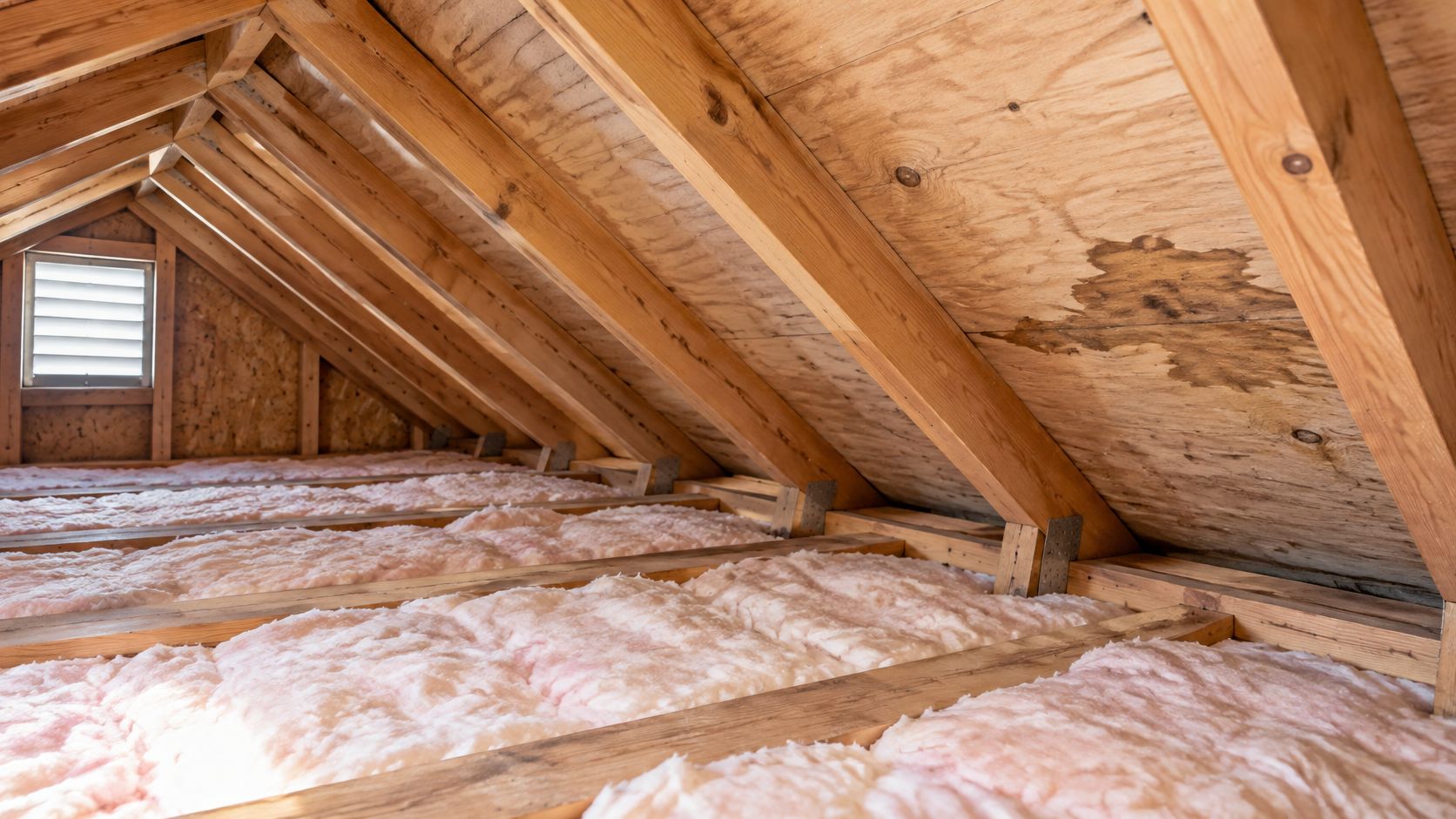
Have the inspector check chimney flashing, roof penetrations, valleys, gutters, and downspout discharge. In the attic, look for stained sheathing, damp insulation, deteriorated wood, blocked ventilation, and bathroom exhaust ducts that terminate inside.
A stain needs an explanation, not an immediate verdict. Ask whether it's dry, what caused it, and what documentation supports the claimed repair.
Say an Oak Park home has attractive shingles but staining below a chimney. Request a roofer's diagnosis that separates flashing repairs from chimney masonry work and roof replacement.
A roof that looks good from the sidewalk can still need work at the places where different materials meet.
Ask whether warranties transfer and what they exclude. If replacement is recommended, compare written scopes that address tear-off, decking repairs, flashing, ventilation, cleanup, and permits. Don't compare bottom-line prices for different jobs.
6. Lead-Based Paint and Asbestos Hazards
Your renovation plans matter as much as the house's appearance. Sanding trim, replacing windows, removing flooring, or opening walls can disturb materials that a normal showing leaves untouched.
The EPA reports that approximately 87% of homes built before 1940 contain some lead-based paint, compared with 24% of homes built from 1960–1978. Treat construction age as a reason to investigate, not as a test result.
Request the seller's lead disclosures and consider a certified paint inspection or risk assessment. Ask the assessor to address painted friction surfaces, including windows, doors, stairs, and railings.
- Before demolition: Identify suspect materials within the actual work area.
- For lead-related work: Use an EPA-certified Renovation, Repair and Painting contractor when disturbing lead paint in applicable older housing.
- For suspect asbestos: Arrange professional evaluation and sampling rather than cutting or scraping material yourself.
- For budgeting: Separate testing, containment, clearance testing where appropriate, disposal, and finish restoration.
For example, replacing painted windows in a Melrose Park house isn't just a window-ordering exercise. Include safe removal and cleanup in the scope before comparing bids.
A fresh coat of paint doesn't establish that underlying layers are lead-free. Likewise, a general inspection shouldn't be mistaken for asbestos testing. This explanation of separate asbestos checks during home purchases helps clarify why you should arrange that service specifically.
7. Heating and Cooling System Age and Performance
Ask the inspector what heating and cooling equipment they operated, what they could not test, and whether any findings need review by an HVAC technician. A thermostat response alone cannot confirm safe combustion, sound equipment, or even room temperatures.
Record the model and serial information for the furnace, boiler, air conditioner, and related equipment. Request installation invoices and service records, not just the seller's recollection.
Test the system you're buying
- Heating operation: Ask the inspector to assess accessible equipment, venting, heat distribution, and visible leakage.
- Combustion safety: If the home has gas-fired equipment or the inspection raises concerns, ask a qualified technician to assess its safety.
- Cooling operation: Confirm whether conditions and equipment requirements allow the system to be tested.
- Room comfort: Ask the seller which rooms stay cold, whether radiators have problems, and whether the system is noisy or requires supplemental heaters.
In Glen Ellyn, a house with radiator heat and window air conditioners may be a good fit if you plan to keep the existing setup. Adding central cooling calls for an installation estimate that accounts for duct routes, electrical capacity, condensate drainage, and equipment placement, not just the price of an air conditioner.
Ask whether a proposed replacement includes chimney or vent modifications, controls, disposal, permits, and distribution repairs. Have the inspector check smoke and carbon-monoxide alarm placement against applicable local requirements.
If the seller agrees to an HVAC repair, require an invoice that describes the diagnosed problem and completed work. A generic service receipt does not show whether the specific defect was corrected.
8. Windows, Doors, and Building Envelope Insulation
Don't assume every original window belongs in a dumpster. Separate repairable wear, failed operation, water damage, and comfort complaints before choosing replacement.
Open and close accessible windows and exterior doors during the inspection. Check locks, sash supports, glazing, weatherstripping, soft sills, and staining beneath openings.
For a western-suburb house with sound wood windows, sash repairs and storm windows may deserve a quote alongside replacement. For a rotten frame with damaged surrounding framing, a simple insert-window price may leave out the actual repair.
Investigate comfort before buying equipment
Ask the seller for utility-bill history covering heating and cooling seasons. Treat those bills as context, not a promise, because thermostat settings, occupancy, and weather affect consumption.
- Check the attic: Identify accessible insulation gaps, open bypasses, and compressed or wet material.
- Check the openings: Distinguish drafts from water entry and failed insulated-glass seals.
- Check past upgrades: Request window warranties and the scope of insulation work.
- Check the plan: Consider an energy assessment before committing to extensive weatherization.
Use a coordinated approach to control moisture when retrofitting insulation. Adding insulation without addressing leaks, ventilation, and unsafe concealed conditions can create a different problem.
Ask for repair and replacement options where both are realistic. Preserving sound original features can make sense, but preserving concealed rot doesn't. Confirm any historic-review requirements before making exterior changes part of your purchase budget.
9. Moisture, Mold, Water Intrusion, and Radon
Ask the seller how the basement has handled heavy rain, snowmelt, and power interruptions. Request details about past seepage, flooding, sump-pump failures, and any water or mold remediation.
Have the inspector examine basement corners, crawl spaces, window wells, accessible sill plates, and areas beneath plumbing. A moisture meter can help investigate staining, but the inspection should also identify the likely source.
Request records of previous water events, mold remediation, and insurance claims. Compare the seller's account with invoices and visible conditions.
Before accepting remediation: Confirm who corrected the moisture source, not just who cleaned or painted the affected surface.
In Downers Grove, a musty smell behind a finished-basement storage closet warrants further investigation. Ask the seller for access and, if needed, request a specialist's assessment. A dehumidifier may reduce dampness, but it does not explain where the moisture came from.
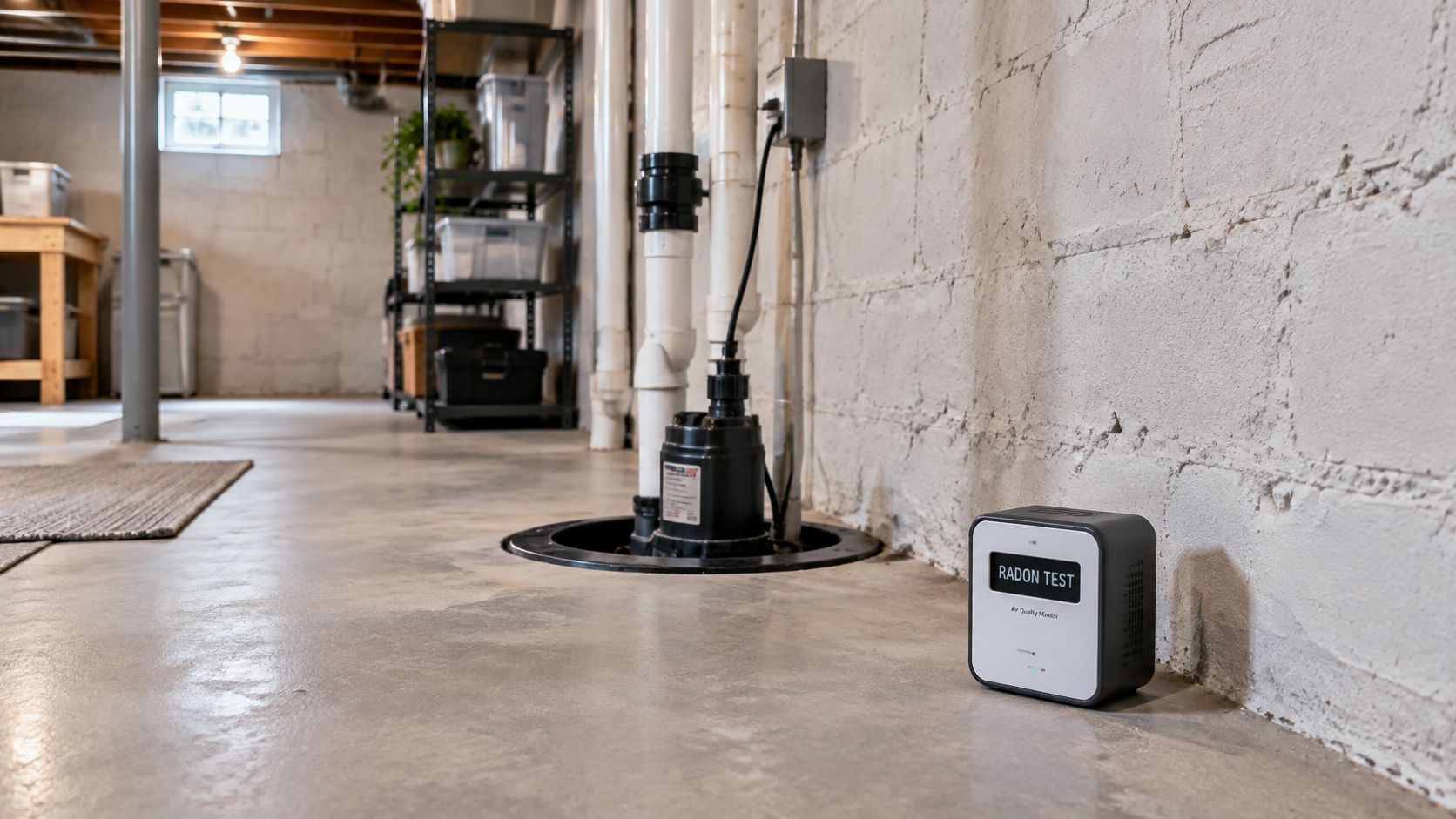
Arrange radon testing as a separate inspection service with a qualified tester. Ask about testing conditions, monitor placement, the written report, and the next step if mitigation is recommended.
If a radon mitigation system is already installed, request its installation documents and arrange testing rather than relying on the equipment's presence. Have the inspector check whether the sump pump operates and ask the seller about backup arrangements and maintenance. A clean-looking basement does not answer either question.
10. Permits, Unpermitted Work, Zoning, and Historic Restrictions
Say you're buying an Oak Park house because you plan to replace the front windows and enlarge the porch. Before counting those projects as straightforward upgrades, verify the parcel's designation and approval requirements with the municipality.
Your intended use is part of due diligence. A finished basement, converted attic, or extra kitchen shouldn't be accepted as an approved bedroom, dwelling unit, or rental arrangement just because it appears in listing photos.
Match the house to the records
Request the municipal permit history and compare it with visible additions, bathrooms, structural alterations, and major system upgrades. Ask whether permits received final approval, not merely whether someone applied.
- Ask the seller: What work was completed without permits, and who performed it?
- Ask the building department: Are there open permits, unresolved violations, or records relevant to the planned work?
- Ask about zoning: Is your intended occupancy, addition, garage, or rental use allowed?
- Ask your attorney: What must be resolved before closing, and what obligations could remain afterward?
Missing records don't automatically prove defective work. They do mean you may need further investigation, written municipal guidance, or a revised budget.
A house marketed as move-in ready still deserves this review. Cosmetic completion isn't proof of permit approval.
For example, an investor considering a finished basement apartment in Melrose Park should verify legal use before calculating rental income. If the purchase only works with that income, unresolved approval isn't a minor paperwork issue.
Key Inspection Areas for Older Homes at a Glance
Use this table to match each inspection concern with the seller records that can clarify the home's history. Request available maintenance records, invoices, test results, and permits during your inspection period. Older materials or equipment are not automatic defects; condition, safety, and remaining service life matter.
| Inspection area | Records to request from the seller |
|---|---|
| Foundation and basement | Past water-control or foundation work, contractor invoices, and any related inspection reports |
| Electrical system | Electrical upgrade records, panel or wiring invoices, and documentation for known service issues |
| Plumbing and water supply lines | Pipe replacement records, plumbing invoices, and notes about leaks or water-pressure problems |
| Sewer lateral and drainage | Sewer scope reports, lateral repair records, and documentation of backups or drainage work |
| Roof, flashing, and attic ventilation | Roof invoices, warranty documents, and records of leak repairs or attic ventilation work |
| Lead paint and asbestos | Existing lead or asbestos testing, risk assessments, and records of removal or encapsulation |
| Heating and cooling | Equipment service records, replacement invoices, and maintenance documentation |
| Windows, doors, and insulation | Replacement records, insulation invoices, and documentation of air-leak or moisture repairs |
| Moisture, mold, water intrusion, and radon | Radon test results, water-intrusion repairs, and any mold assessment or remediation records |
| Permits, unpermitted work, zoning, and historic restrictions | Permit applications and approvals, contractor records, and written municipal information relevant to the property |
A missing record does not establish that work was defective. It does leave a gap to resolve. Ask the seller what work was done, when it was completed, and whether invoices, permits, or test results are available. Compare those records with the home's visible condition and your inspection findings.
Turn This Checklist Into Your Inspection Plan
Start by requesting seller disclosures and municipal permit history before making an offer, whenever access and timing allow. Identify your intended renovations early so your agent, inspector, and attorney understand what needs verification.
Once you're under contract, schedule the general inspection promptly. Add the specialty services that match the house and your plans, including a sewer scope, radon testing, and a lead assessment where construction history and anticipated work warrant it.
Repair costs deserve serious attention. In U.S. News & World Report's 2025 survey of 1,200 U.S. homeowners, 97% considered potential future repair costs important in their home-buying decisions. The useful next step is turning concern into written scopes rather than collecting vague allowances.
Sort findings into decisions
- Safety issues to resolve before move-in: Prioritize unsafe electrical conditions, combustion concerns, structural instability, and exposure hazards.
- Costs to negotiate: Obtain written estimates for roof defects, sewer repairs, plumbing replacement, and other defined work.
- Items to monitor: Document functioning older equipment and maintenance needs that can fit a realistic ownership plan.
Build an insurability audit alongside the repair list. The Urban Institute's property-insurance affordability analysis connects older housing with greater insurance burden, making early coverage verification relevant to the purchase decision.
Send actual inspection findings to your insurance agent. Ask about eligibility, required repairs, exclusions, deductibles, replacement-cost coverage, sewer-backup protection, and service-line coverage. Confirm lender requirements before assuming a seller credit will solve a condition that needs correction before closing.
A credit can give you control over the contractor and repair quality, but it doesn't create unlimited cash or override financing rules. A seller-completed repair can help satisfy a closing requirement, but only with an agreed scope, qualified contractor, documentation, and appropriate verification.
Carmen Salerno's step-by-step first-time buyer's guide helps organize the purchase process around these decisions. Keep your inspection report, estimates, disclosures, and deadlines together so unresolved questions remain visible.
The right older home isn't necessarily the one with the shortest inspection report. It's the one whose condition, repair scope, insurance options, and renovation limits fit your budget and plans. If a major unknown remains unresolved, ask your agent and attorney about your contractual options before the deadline passes.
Homes By Carmen offers buyer representation, inspection coordination, offer negotiation, and closing support in Melrose Park and western Chicagoland. Visit Homes By Carmen to discuss your older-home search and build an inspection plan around the property's condition, your renovation goals, and your budget.