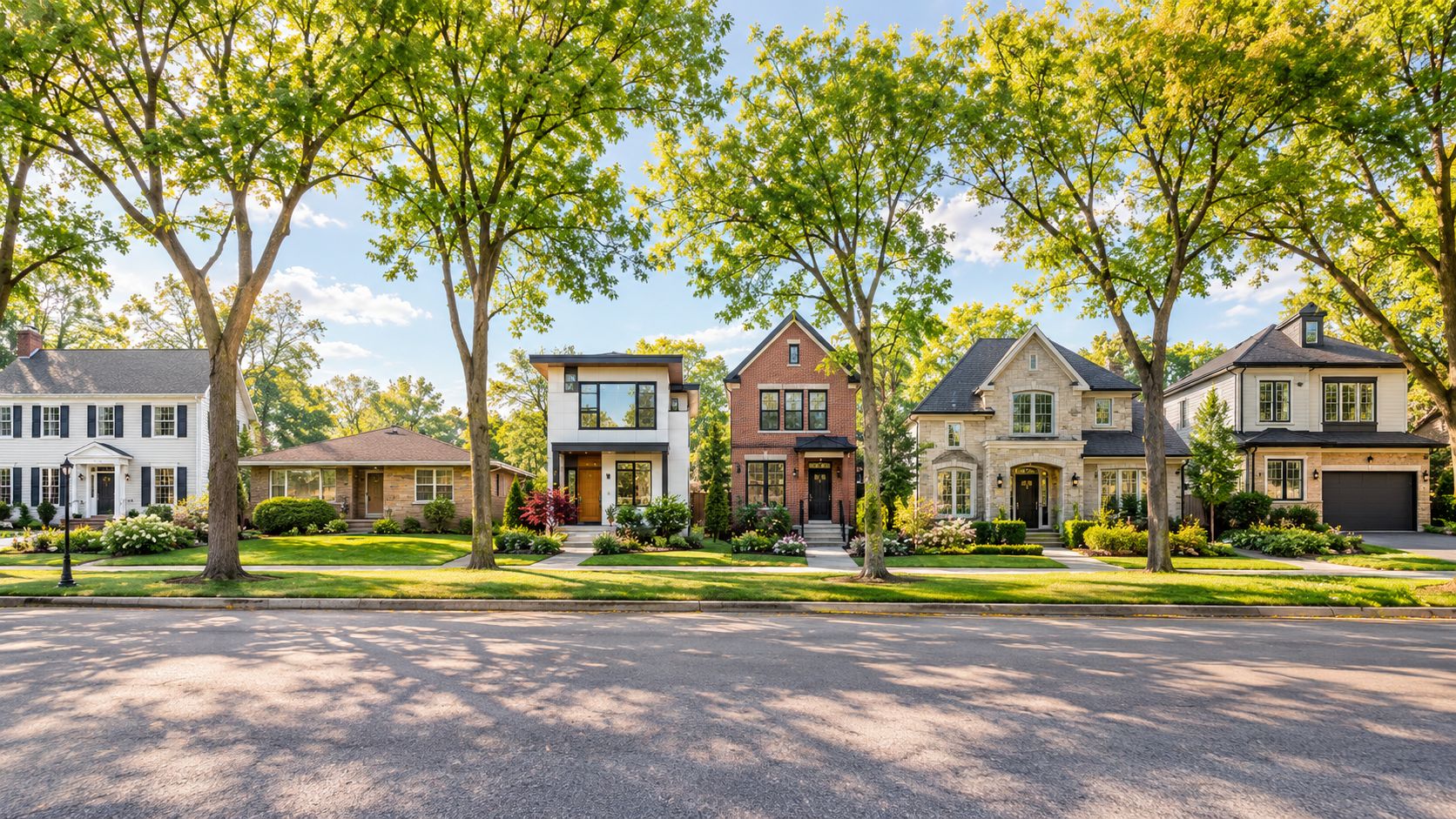
You're searching for homes in Downers Grove, IL, and the listing results don't look like one market. An older brick ranch, a renovated colonial, a downtown condominium, a luxury estate, an income-producing duplex, and a new construction home can all appear in the same search while carrying very different inspection risks, ownership costs, and resale considerations.
The right question isn't which property looks best online. It's which type fits your budget, maintenance tolerance, timing, and intended use. The sections below organize the listing mix by property type, then connect each option to local context, price positioning, likely trade-offs, and questions to answer before touring.
Downers Grove remains a competitive suburban market. Zillow estimated the typical home value at $513,663 as of July 31, 2026, up 6.0% over the prior year, with homes going pending in about 9 days. The listing snapshot also included 153 homes for sale, 72 new listings, a $487,133 median sale price, and 50.8% of sales closing above list price according to Zillow's Downers Grove housing data. Verify current availability, pricing, taxes, HOA terms, and condition before relying on any aggregated listing. Homes By Carmen can support MRED-powered searches, tours, offer strategy, inspections, and closing coordination.
Table of Contents
- 1. Classic Single-Family Homes From the 1950s Through the 1980s
- 2. Updated and Renovated Homes With Modern Kitchens and Bathrooms
- 3. Townhomes and Attached Condominiums for Low-Maintenance Living
- 4. Luxury and Executive Homes With High-End Finishes
- 5. Investment and Multi-Unit Properties
- 6. Estate and Probate Sales With As-Is Conditions
- 7. New Construction and Modern Suburban Developments
- 7-Point Comparison of Downers Grove Home Types
- Turn the Roundup Into a Shortlist
1. Classic Single-Family Homes From the 1950s Through the 1980s
A brick ranch near Herrick Lake, a split-level in the Middlebury area, or a colonial along Forest or Maple Avenue may offer mature trees, an attached garage, a basement, and a larger lot than newer attached homes. These properties form a substantial part of the homes in Downers Grove, IL market, but their similar construction eras do not make them interchangeable. Street character, school location, lot drainage, and renovation history can change both value and ownership costs.
The trade-off is usually condition. An older home may cost less than a fully updated alternative, yet that difference can reflect an aging roof, furnace, windows, electrical components, plumbing, or basement water management. Cosmetic work can be staged. A failing mechanical system, poor grading, or recurring moisture deserves attention before a buyer commits to a price.
Practical rule: Judge the entire house, not only the kitchen. The inspection should show whether the major systems support the asking price and the buyer's repair budget.
Where the value can hide
A dated ranch or colonial can suit a buyer who values location, yard space, and neighborhood character, then plans improvements over time. That approach requires cash reserves after closing and a clear order of work. Request records for roof repairs, electrical rewiring, plumbing changes, HVAC replacement, and basement remediation. An energy audit may also identify insulation, air-sealing, or heating improvements that should precede cosmetic projects.
Broad housing figures offer context, but they do not price an individual property. The Downers Grove profile reports a 75.3% owner-occupied housing unit rate, a $439,000 median value for owner-occupied housing units, and $1,589 median gross rent in the CMAP Downers Grove housing profile. A home's street, updates, lot, taxes, and condition remain more useful for evaluating a specific offer.
2. Updated and Renovated Homes With Modern Kitchens and Bathrooms
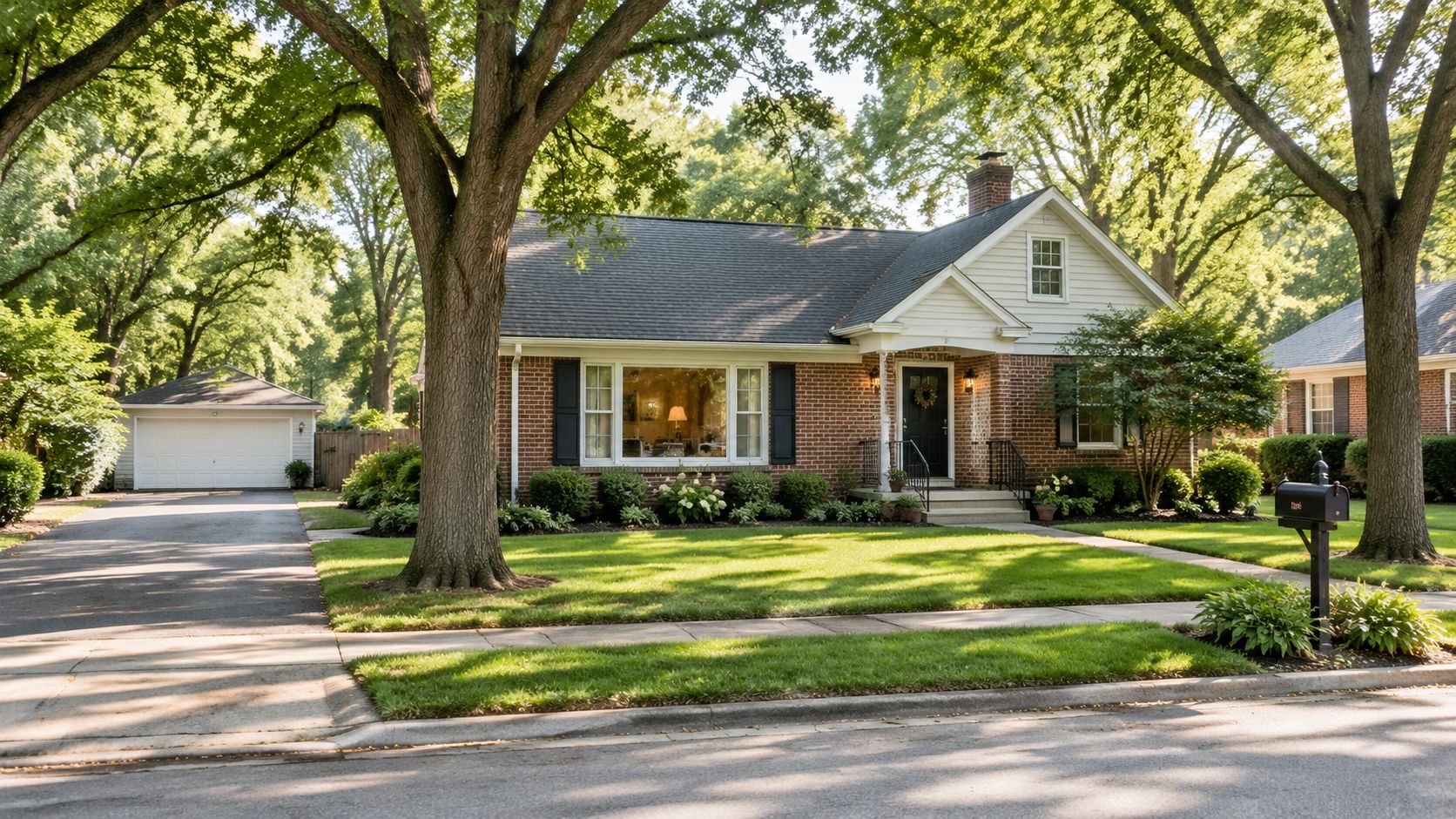
Renovated homes appeal to buyers who want an established Downers Grove lot and neighborhood without immediately taking on a major project. A Forest Avenue home with an open kitchen, a brick ranch near the Downers Grove Library with updated bathrooms, or a Herrick-area split-level with a newer roof and HVAC can feel move-in ready while retaining the proportions and landscaping of an older suburb.
The important distinction is between a home that looks fresh and one that has been responsibly updated. New cabinets and counters improve daily life, but they don't automatically address wiring, drainage, roof life, insulation, or furnace age. A buyer should treat the renovation story as a claim to verify, not a reason to waive diligence.
Separate cosmetic work from risk-reducing work
Request invoices, permits, warranties, and contractor information for major renovations. If the seller can't produce documentation, ask your attorney and inspector how that gap affects your decision. For substantial work, verify that required approvals were obtained and that contractors were paid. Unresolved permitting or lien issues can create avoidable closing complications.
Prioritize updates that reduce near-term uncertainty:
- Mechanical systems: Confirm the age and service history of the roof, HVAC, water heater, electrical service, and plumbing.
- Water management: Check grading, gutters, downspouts, sump equipment, basement walls, and signs of previous seepage.
- Permit history: Ask whether structural changes, additions, finished basements, and electrical work received the necessary approvals.
- Renovation economics: Compare the premium against nearby comparable sales, not against the seller's renovation receipts alone.
A polished renovation can justify a premium when the work is documented and the layout fits local buyer demand. It doesn't justify paying for expensive finishes that don't improve function or address major system risk. Buyers evaluating exterior presentation can also use this guide to increasing curb appeal as a practical reference, but curb appeal should remain secondary to structure, systems, and comparable value.
3. Townhomes and Attached Condominiums for Low-Maintenance Living
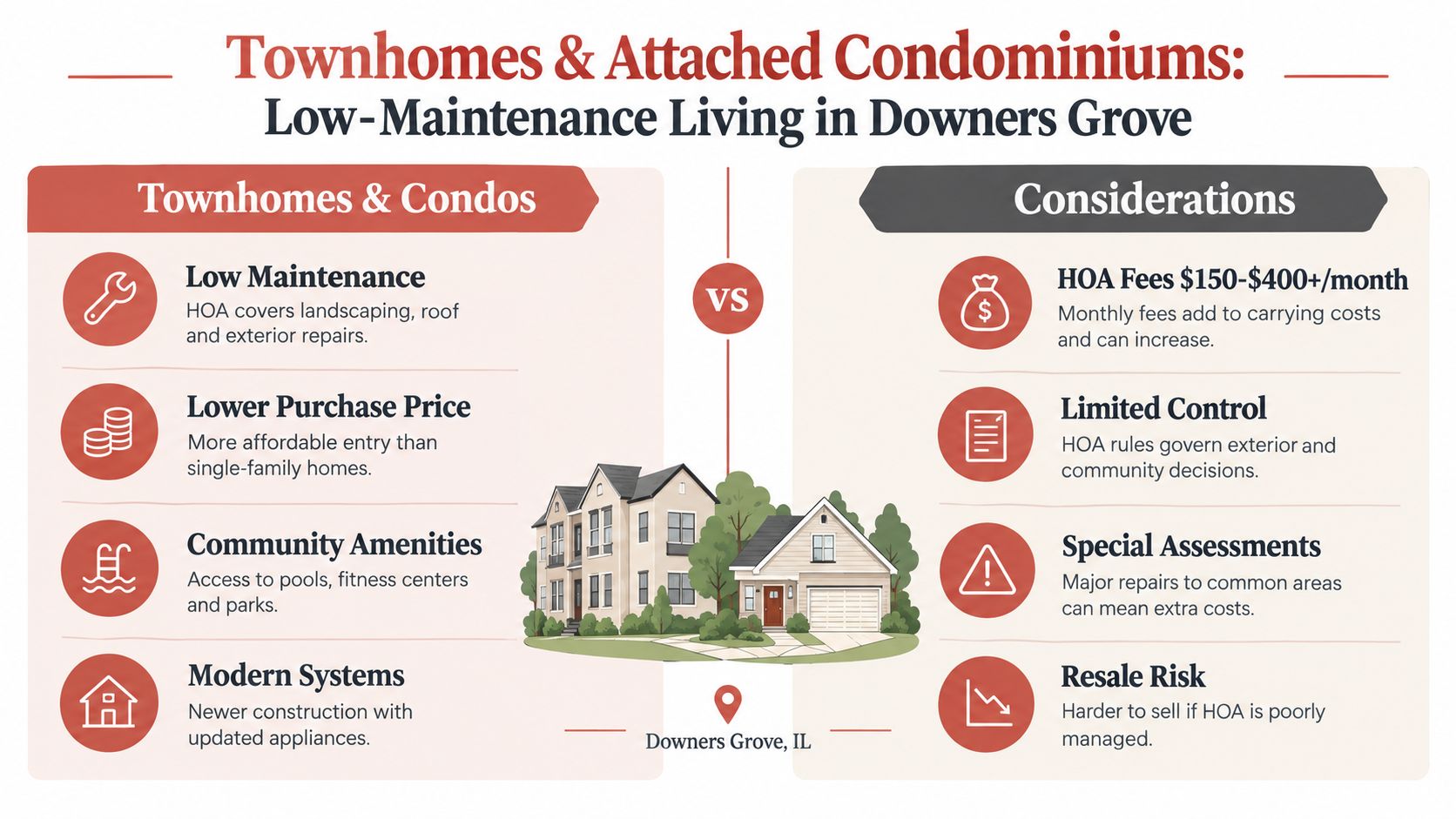
Attached properties change the affordability calculation because the purchase price is only one part of the monthly obligation. Townhomes, duplex-style attached homes, and condominiums near the Downers Grove Town Center, Main Street, commuter rail, Butterfield Road, and Park District facilities can provide convenience that a detached house may not. Landscaping, snow removal, exterior maintenance, and shared facilities may be handled through an association.
That convenience comes with less control. The association decides how common areas are maintained, how reserves are built, and when owners may face special assessments. A unit may look inexpensive until the buyer adds mortgage, property taxes, insurance, and HOA dues. The total payment determines affordability, not the listing price.
Read the association documents before you fall in love
Request the declaration, bylaws, current budget, insurance information, recent meeting minutes, reserve study if available, assessment history, and details of pending projects. Look for roof replacement, masonry repairs, parking lot work, elevators, balconies, windows, siding, and plumbing infrastructure. A low monthly fee isn't automatically good if the association has weak reserves.
The right condo can be an efficient choice for a first-time buyer or downsizer. The wrong one can exchange private maintenance for unpredictable shared costs.
Inspect more than the unit. Walk garages, hallways, roofs where accessible, mechanical rooms, landscaping, drainage areas, and parking surfaces. If you're considering rental use, confirm leasing rules, owner-occupancy requirements, minimum lease terms, pet policies, and approval procedures in writing. An MLS-powered search with filters for attached housing and location can make the initial process more efficient, and this guide to searching MLS listings explains the value of using detailed search criteria rather than relying only on public portals.
4. Luxury and Executive Homes With High-End Finishes
Luxury listings in Downers Grove aren't larger versions of ordinary houses. Buyers may be evaluating custom architecture, larger lots, walk-to-town convenience, privacy near Herrick Lake, premium interiors, outdoor living, and proximity to parks and established community amenities. Willow Hill, Herrick Lake, Downers Grove Park District areas, and carefully planned executive communities can attract buyers who value setting and design as much as bedroom count.
Luxury homes also require more disciplined analysis because comparable sales can be less interchangeable. A custom home with a distinctive floor plan may have a narrower buyer pool than a conventional four-bedroom residence. High-end finishes can be expensive to replace, yet they won't always return their full cost if the layout, lot, or location misses the next buyer's priorities.
Evaluate the property as a complete package
A luxury buyer should inspect the same fundamentals as any other buyer, then add specialized reviews where appropriate. Depending on the home, that may include masonry, roofing, drainage, retaining walls, fireplaces, pools, elevators, smart-home systems, generators, elaborate landscaping, and private roads or shared access arrangements.
Marketing matters if you're selling. Professional photography, accurate floor plans, video, thoughtful staging, and a pricing strategy based on comparable homes help buyers understand what they're seeing. Overpricing can cause a distinctive property to sit while buyers wait for a correction. Buyers should examine days on market, price changes, tax history, quality of construction, and the cost of maintaining every major feature.
High-end finishes don't eliminate ownership risk. They make the inspection and operating-cost questions more important.
Neighborhood context can also influence long-term appeal. Review the neighborhood amenities that can increase home value as one framework, then apply it to the specific property rather than assuming every nearby amenity carries the same weight for every buyer.
5. Investment and Multi-Unit Properties
A duplex, three-flat, or small income-producing building can meet different buyer goals. An owner-occupant might live in one unit and rent another, while an investor may prioritize rental income, operating costs, and long-term performance. In Downers Grove listings, examples may include duplexes along Forest Avenue, three-flat properties near Downers Grove South High School, and older Victorian-era multifamily homes requiring renovation.
Property type and legal status deserve early attention. In the local listing database, filter for legal multi-unit use and verify the configuration with the village, rather than assuming a finished basement or converted space qualifies as a rentable unit. That check can affect financing, insurance, taxes, and resale value.
Gross rent is only the starting point. Build the analysis around property taxes, insurance, owner-paid utilities, repairs, capital improvements, vacancy and turnover, legal compliance, management, and financing. A property with strong advertised rents can still perform poorly if the roof, exterior, plumbing, electrical system, or life-safety features need substantial work.
Underwrite the building, not the listing description
Request current leases, security-deposit records, payment history, utility responsibilities, repair records, and tenant-related notices. Confirm that every unit is legally configured and that the intended use meets applicable local requirements. An attorney, inspector, lender, and insurance professional should each review the issues within their expertise.
An owner-occupant may prefer a maintained duplex over a larger building with extensive renovation needs. That choice reduces privacy and adds landlord duties, but rental income may offset part of the housing cost. An absentee investor faces a different calculation and may need professional management immediately.
Before offering, compare verified income and expenses with nearby rental alternatives. Do not base the pro forma on projected rents without checking comparable demand. Confirm whether the loan requires owner occupancy, whether insurance covers the intended use, and whether the seller's records support every assumption. Also budget for reserves, because one major system failure can change the property's returns quickly.
6. Estate and Probate Sales With As-Is Conditions
Estate and probate listings often come from long-time family homes in established Downers Grove neighborhoods. The seller may be an executor, trustee, or group of heirs, and the property may contain original systems, personal belongings, deferred maintenance, or incomplete records. Some sellers live out of state and may prefer a straightforward sale without undertaking repairs.
The opportunity is real, but so is the uncertainty. An as-is contract doesn't mean the buyer should skip inspection. It means the buyer should understand that the seller may have limited knowledge and limited willingness to correct defects. Your offer, inspection strategy, financing, and closing timeline need to account for that reality.
Clarify authority and timing early
Ask who has authority to sign, whether court approval is required, whether other heirs must consent, and whether there are known liens, unpaid taxes, or title issues. Your attorney can explain the probate timeline and coordinate title review. A buyer should avoid assuming that an emotionally motivated seller can close quickly if the legal process says otherwise.
A careful offer can include an inspection contingency and enough time to obtain repair estimates. The inspection should cover structure, roof, electrical, plumbing, HVAC, basement moisture, sewer conditions where appropriate, and environmental concerns suggested by the property's history. If the home has been vacant, pay particular attention to freeze damage, leaks, pests, and neglected mechanical systems.
The attractive part of an estate sale is often the property's location and potential. The cost is that you may have to discover and price the problems yourself.
Budget for more than visible repairs. Older homes may require coordinated work across several systems, and an inherited property may not come with reliable maintenance records. Homes By Carmen's professional network can help buyers identify inspectors, contractors, lenders, and attorneys for the specific questions that arise during due diligence.
7. New Construction and Modern Suburban Developments
New construction appeals to buyers who want current layouts, newer systems, energy-conscious materials, and fewer renovation decisions. In Downers Grove, buyers may encounter planned communities off Butterfield Road, attached and detached homes near transit-oriented areas, and newer subdivisions close to schools and parks. These properties can suit households that value predictable maintenance and contemporary design more than mature landscaping or an established streetscape.
New doesn't mean defect-free. Construction quality can vary by builder, trade, supervision, and site. Buyers should arrange inspections before drywall when the builder permits it, during construction if possible, and before closing. A final walk-through should verify that agreed repairs, finishes, appliances, grading, drainage, and punch-list items are complete.
Compare builder promises with written documents
Review the purchase contract, specifications, upgrade sheet, delivery language, warranty terms, and procedures for reporting defects. Ask whether the warranty transfers to a future buyer if resale is possible within the buyer's expected ownership period. For an attached home or planned community, review HOA budgets, reserve planning, rules, insurance, and projected assessments before signing.
Builder incentives can improve the economics, but buyers should compare a financing credit, appliance package, flooring upgrade, or closing-cost contribution against the price of receiving that benefit directly. A costly upgrade isn't automatically valuable if it doesn't fit your needs or improve future marketability.
Inspect energy-related features rather than accepting broad marketing language. Ask for equipment specifications, insulation details, window information, ventilation design, and utility expectations. Also examine the surrounding development. New streets may have active construction, incomplete landscaping, changing traffic patterns, or association rules that affect daily life.
7-Point Comparison of Downers Grove Home Types
| Property Type | Implementation complexity | Resource requirements | Expected outcomes | Ideal use cases | Key advantages |
|---|---|---|---|---|---|
| Classic Single-Family Homes (1950s–1980s Colonial & Ranch) | Low–Medium, straightforward ownership; moderate renovation needs | Moderate purchase price; budget ~10–15% for near-term repairs | Stable family demand; steady appreciation; value-add via renovations | First-time buyers, families, move-up buyers, value investors | Established neighborhoods; larger lots; strong school access; lower entry price |
| Updated & Renovated Homes (Modern Kitchens & Bathrooms) | Medium, fewer immediate upgrades required; verify workmanship | Higher purchase price reflecting renovation premium; verify permits/warranties | Move-in ready; reduced near-term repair risk; premium resale potential | Move-up buyers, time-constrained families, turnkey investors | Modern finishes and systems; faster inspections; higher buyer appeal |
| Townhomes & Attached Condominiums (Low-Maintenance Living) | Low, less exterior maintenance but HOA governance required | Lower purchase price; ongoing HOA fees ($150–$400+/mo) | Low-maintenance living; steady rental/resale demand; predictable upkeep | Downsizers, first-time buyers, those seeking convenience | Minimal exterior upkeep; community amenities; affordability vs SFH |
| Luxury & Executive Homes (High-End Single-Family Residences) | High, complex marketing, maintenance, and customization | Very high purchase price; elevated taxes and maintenance budgets | Strong appreciation potential in affluent pockets; niche resale market | Executives, high-net-worth buyers, corporate relocations | Prestige locations; premium finishes; large lots and top schools |
| Investment & Multi-Unit Properties (Duplexes & Income-Producing Rentals) | High, active landlord responsibilities; tenant management | Moderate–high capital; reserves for vacancy, maintenance; possible property management | Multiple income streams; higher cash-flow potential; equity growth | Real-estate investors, owner-occupant landlords, portfolio buyers | Diversified rental income; favorable owner-occupant financing; tax deductions |
| Estate & Probate Sales (As-Is & Inherited Properties) | High, legal/probate steps and multiple decision-makers | Potentially lower purchase price; significant repair and legal due-diligence costs | Discounted acquisition; renovation upside; timeline uncertainty | Renovation investors, bargain buyers, heirs needing sale | Motivated sellers; negotiate favorable terms; flexible closing options |
| New Construction & Modern Suburban Developments (Planned Communities) | Low–Medium, simplified systems but builder/HOA interactions | Higher purchase price; builder incentives possible; HOA fees | Low-maintenance, energy-efficient homes under warranty; modern appeal | Young professionals, tech-forward relocators, first-time buyers | New systems and warranties; energy savings; contemporary design and amenities |
Turn the Roundup Into a Shortlist
Broad browsing becomes useful when you stop comparing every listing against every other listing. Start by identifying your essential needs. A family that needs bedrooms, a yard, and room for gradual improvements may prefer a classic ranch, colonial, or split-level. A buyer who wants predictable maintenance may accept HOA dues for an attached home. An investor needs legal configuration, reliable records, and an operating plan. A relocating executive may place greater value on finish quality, privacy, and proximity to community amenities.
The broader market context supports careful preparation. One MRED-based Q2 2026 market readout reported a $581,000 median sale price, 7 median days on market, 56.5% of closings above list price, a 101.4% median list-to-sale ratio, and 1.3 months of supply in Downers Grove in the Redfin market report. Inventory at that level is below the roughly 4 to 6 months often used as a balanced-market reference. The practical result is a compressed decision window, especially for accurately priced homes in desirable condition.
That doesn't mean you should waive protections to win. It means you should complete the work before the right listing appears. Have financing documentation ready, understand your maximum monthly payment, identify inspection professionals, and know which contingencies protect your situation. For condos and townhomes, association documents belong in that preparation. For investment properties, leases and expense records matter. For estate sales, authority and probate timing may control the transaction.
Make each tour answer a decision
Before scheduling a showing, verify the listing status, taxes, included items, HOA terms, room dimensions, property type, and known condition issues. During the tour, focus on questions that change your offer or your willingness to proceed:
- Is the asking price supported by comparable sales and the home's condition?
- Which repairs are immediate, and which can wait?
- What will the full monthly carrying cost be?
- Are additions, finished spaces, and conversions documented?
- Does the property fit your planned holding period and resale audience?
- What information must your attorney, lender, inspector, or insurance professional confirm?
Homes By Carmen can help turn those questions into an actionable search. The service includes MLS-powered property searches through MRED, neighborhood guidance, tour scheduling, comparative analysis, offer strategy, inspection coordination, and closing support. The aim isn't to push every buyer toward the same kind of home. It's to narrow the choices to properties whose costs, condition, location, and legal details match the buyer's actual plan.
If you're comparing homes in Downers Grove, IL, use Homes By Carmen for an MRED-powered search, targeted tours, local neighborhood guidance, and offer support. Contact Carmen Salerno to build a shortlist around your budget, maintenance tolerance, financing, and intended use before the strongest listings move.